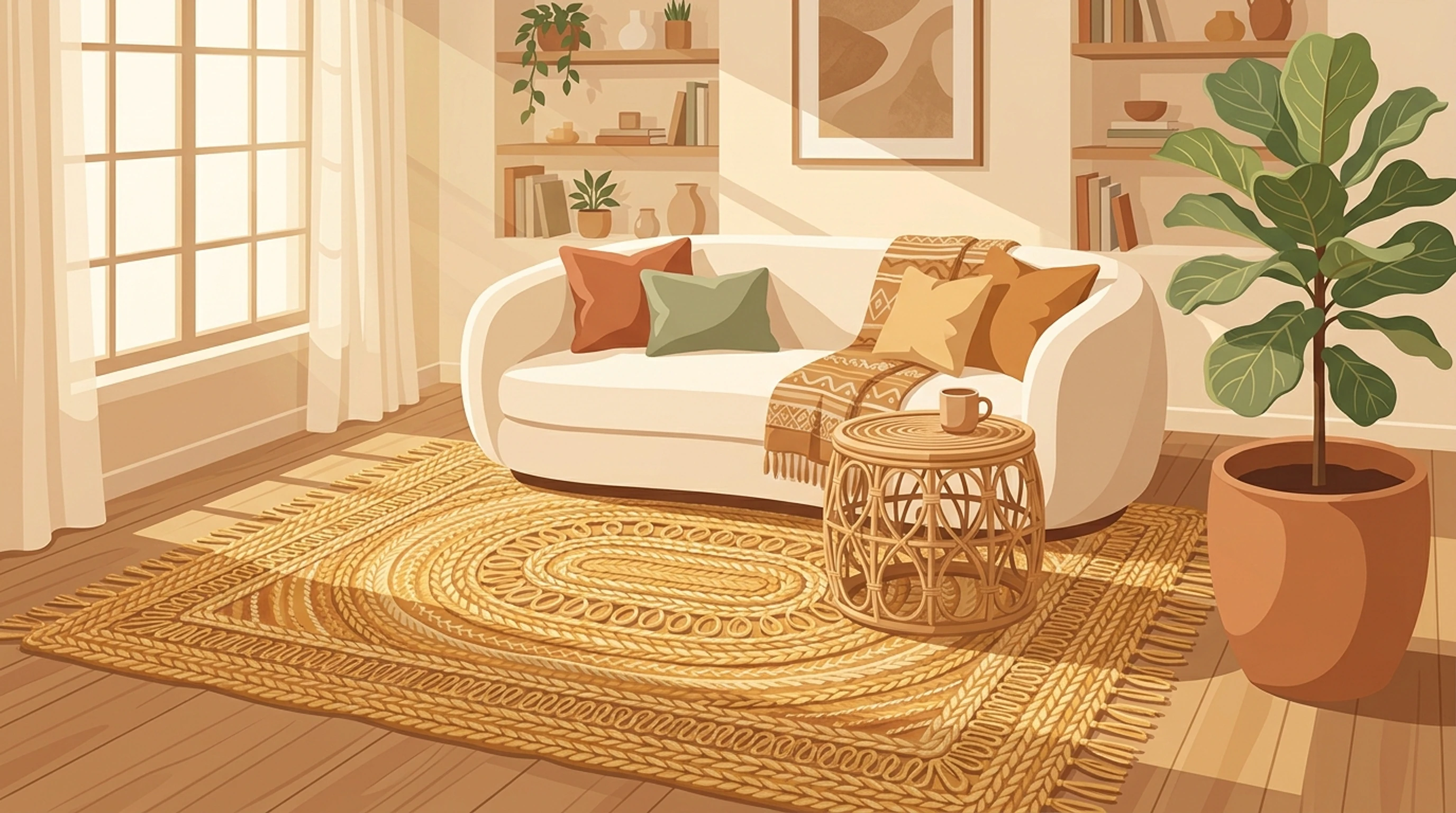
A jute rug is the easiest way to bring natural texture into a room. It looks relaxed, works with almost any style, and costs less than wool. It also has real limits, so here is what to know before you buy.
What is a jute rug?
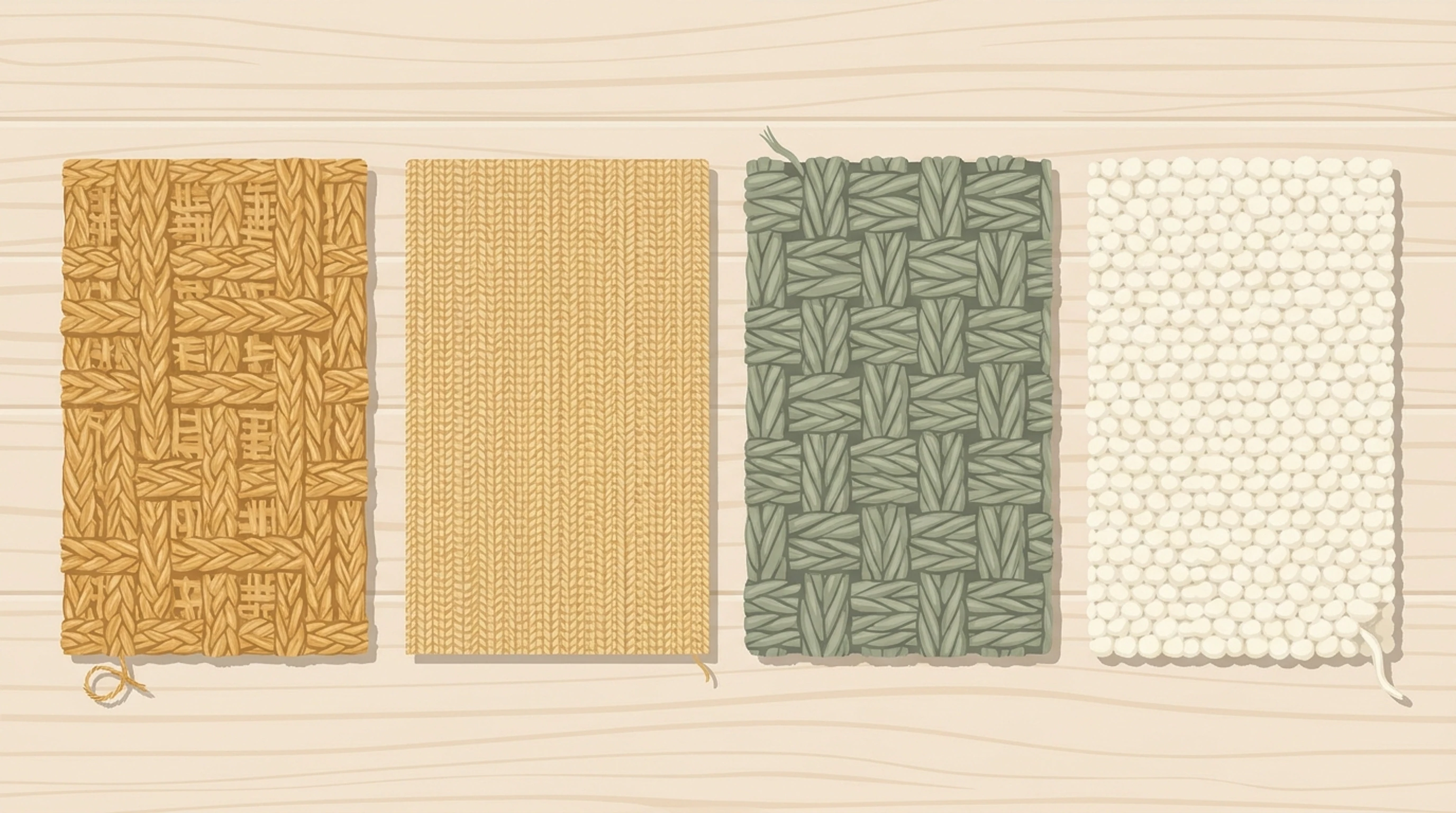
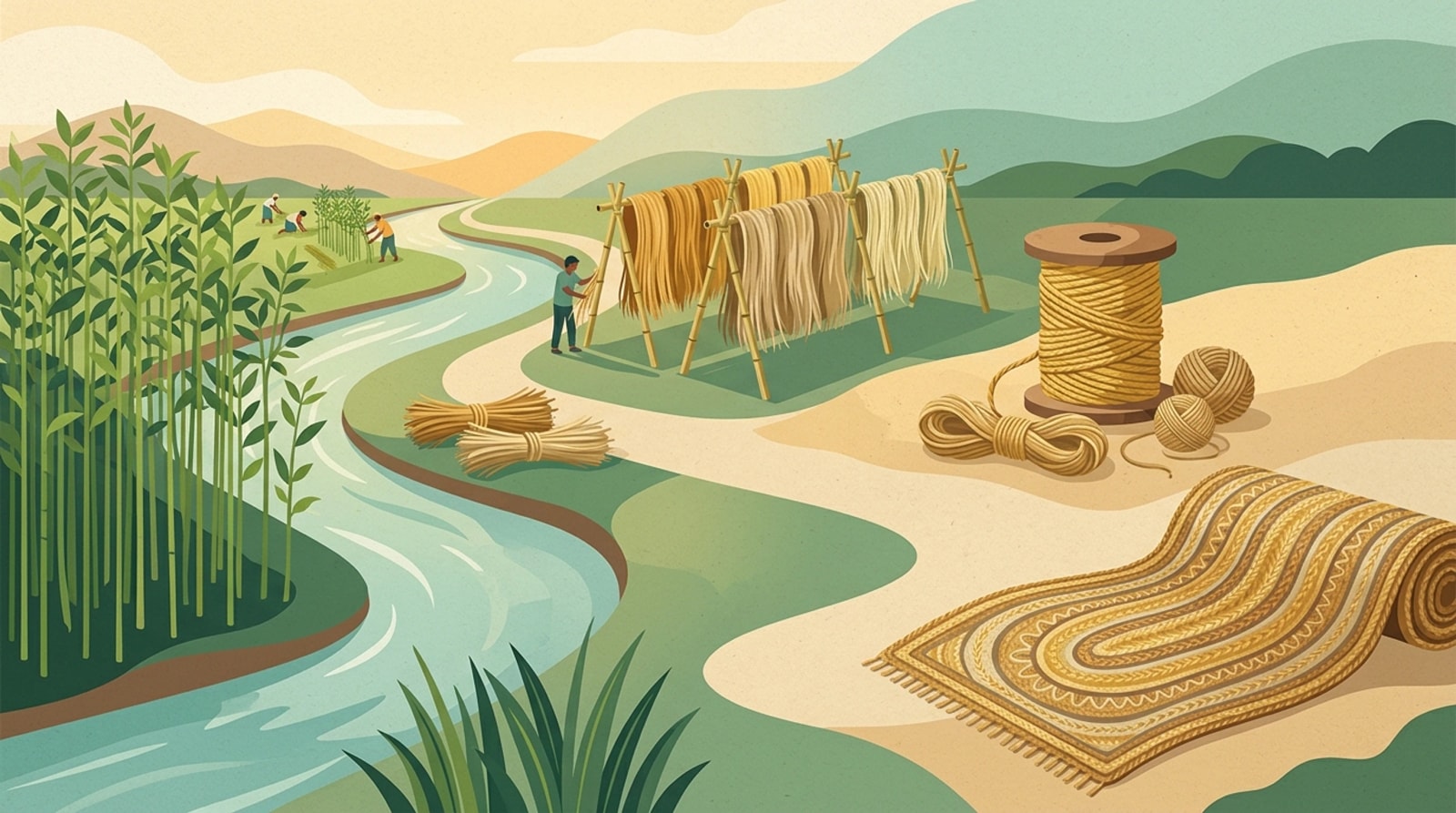
Jute is a long, soft plant fiber taken from the stalks of the Corchorus plant, grown mostly in India and Bangladesh. The fibers are spun into yarn and then braided, woven or looped into rugs. Jute has a warm golden-tan color that varies naturally from one rug to the next, which is part of its charm.
Because it is a plant fiber, jute is sometimes grouped with sisal, seagrass and hemp as a natural fiber rug. It is also renewable and biodegradable, which appeals to anyone building a more sustainable home.
Pros of jute rugs
- Texture and warmth. The woven surface adds depth to a room without competing with other patterns.
- Softer than other natural fibers. Jute is gentler underfoot than sisal or seagrass, so it suits living rooms and bedrooms.
- Affordable. Jute is usually less expensive than wool or silk.
- Easy to style. The neutral tone suits modern, coastal, farmhouse, Scandinavian and bohemian rooms.
Cons of jute rugs
- It does not like water. Jute absorbs moisture, which can leave stains and encourage mildew.
- It sheds, especially at first. Expect loose fibers for the first weeks. This is normal and settles down.
- It wears faster than wool. Jute is less resilient, so heavy-traffic areas will show wear sooner.
- It is not washable. You cannot put it in a washing machine or soak it.
Jute vs sisal
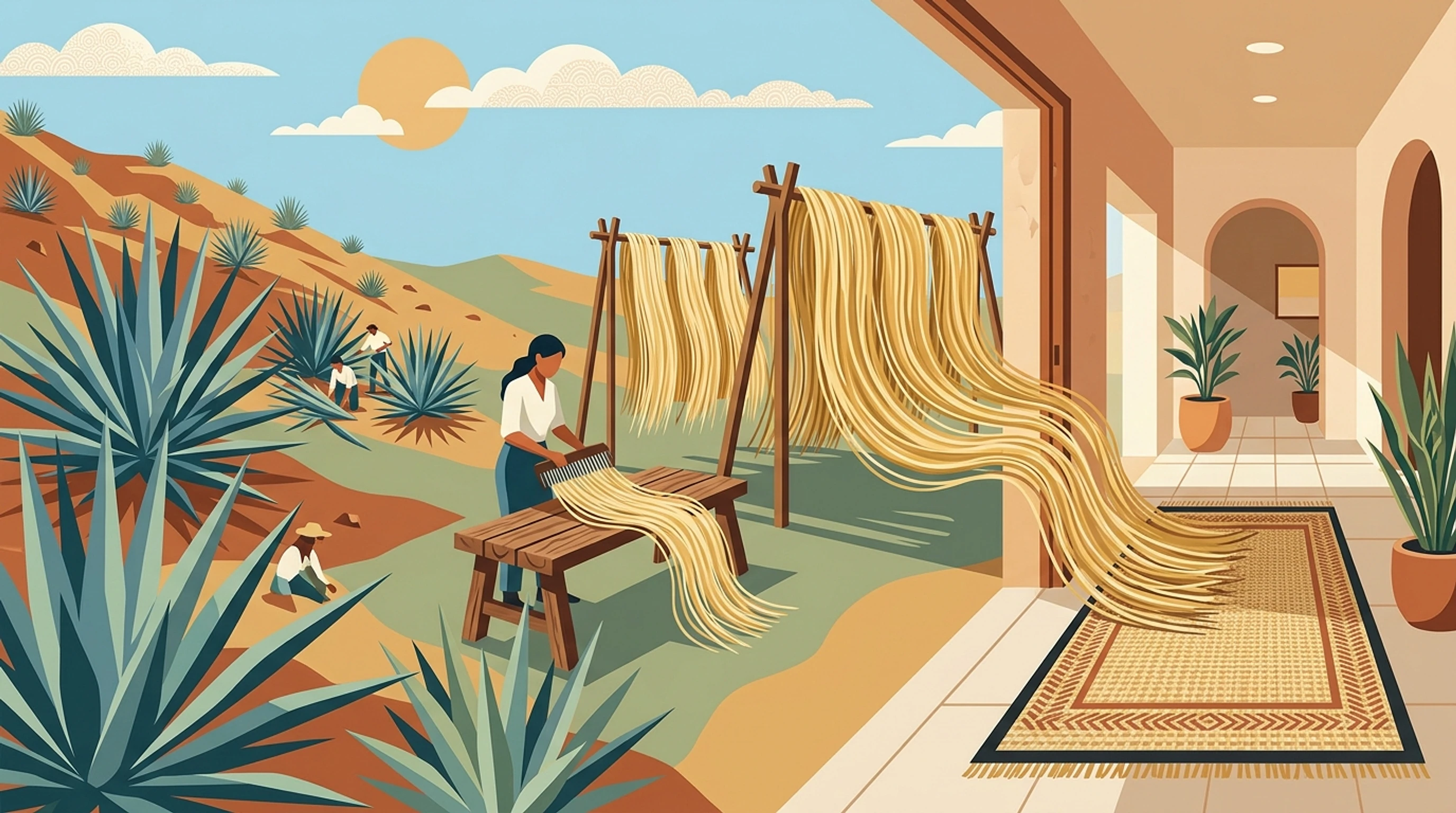
Sisal is made from agave leaves and is stiffer, harder and more durable than jute. It handles heavy traffic better but feels rougher underfoot. Choose jute for comfort in living areas and bedrooms. Choose sisal for hallways, stairs and entryways where durability matters more than softness.
Jute vs wool
Wool is softer, more resilient, naturally stain resistant and far longer lasting, but it costs more. Jute is a good choice when budget matters, when you want a natural look, or when the rug will see light to moderate use. For a high-traffic family room, many people layer a smaller wool rug over a large jute one.
Where to use a jute rug
Jute works well in living rooms, bedrooms, dining rooms (with care for spills), and home offices. It is a good base for layering a patterned rug on top.
Avoid jute in bathrooms, kitchens near the sink, covered porches that get damp, and anywhere pets or children are likely to have frequent accidents.
How to care for a jute rug
- Vacuum regularly. Use suction only, without a beater bar, and vacuum in the direction of the weave. Vacuum the floor under the rug too, since fine dust falls through.
- Blot spills fast. Use a clean, dry cloth and press down. Do not rub, and do not pour water onto jute.
- Spot clean sparingly. For stains, use a barely damp cloth, then dry the area quickly with a fan.
- Use a rug pad. A felt and rubber pad stops slipping and reduces wear on the fibers.
- Rotate it. Turn the rug every few months so sunlight and foot traffic wear it evenly.
- Let it breathe. If a jute rug gets damp, lift it and let air circulate underneath until it is completely dry.
Frequently asked questions
Can I use a jute rug in a bathroom? It is not recommended. Humidity and splashes can cause staining and mildew.
Do natural fiber rugs shed? Jute and other natural fibers shed some loose fibers, mostly in the first few weeks. Regular vacuuming usually clears it.
Can you vacuum a jute rug? Yes. Use suction only and avoid a beater bar, which can pull and fray the fibers.
How long does a jute rug last? With light to moderate use and good care, a jute rug often lasts several years. Wool will last longer in heavy-traffic rooms.
Related guides
The Kindred Weave editors. We write practical guides to handmade rugs and tapestries. Learn more about us.