Home / Blog / Buying Guide
Rug Size Guide: What Size Rug Do You Need? (8x10, 5x7, 9x12 and More)
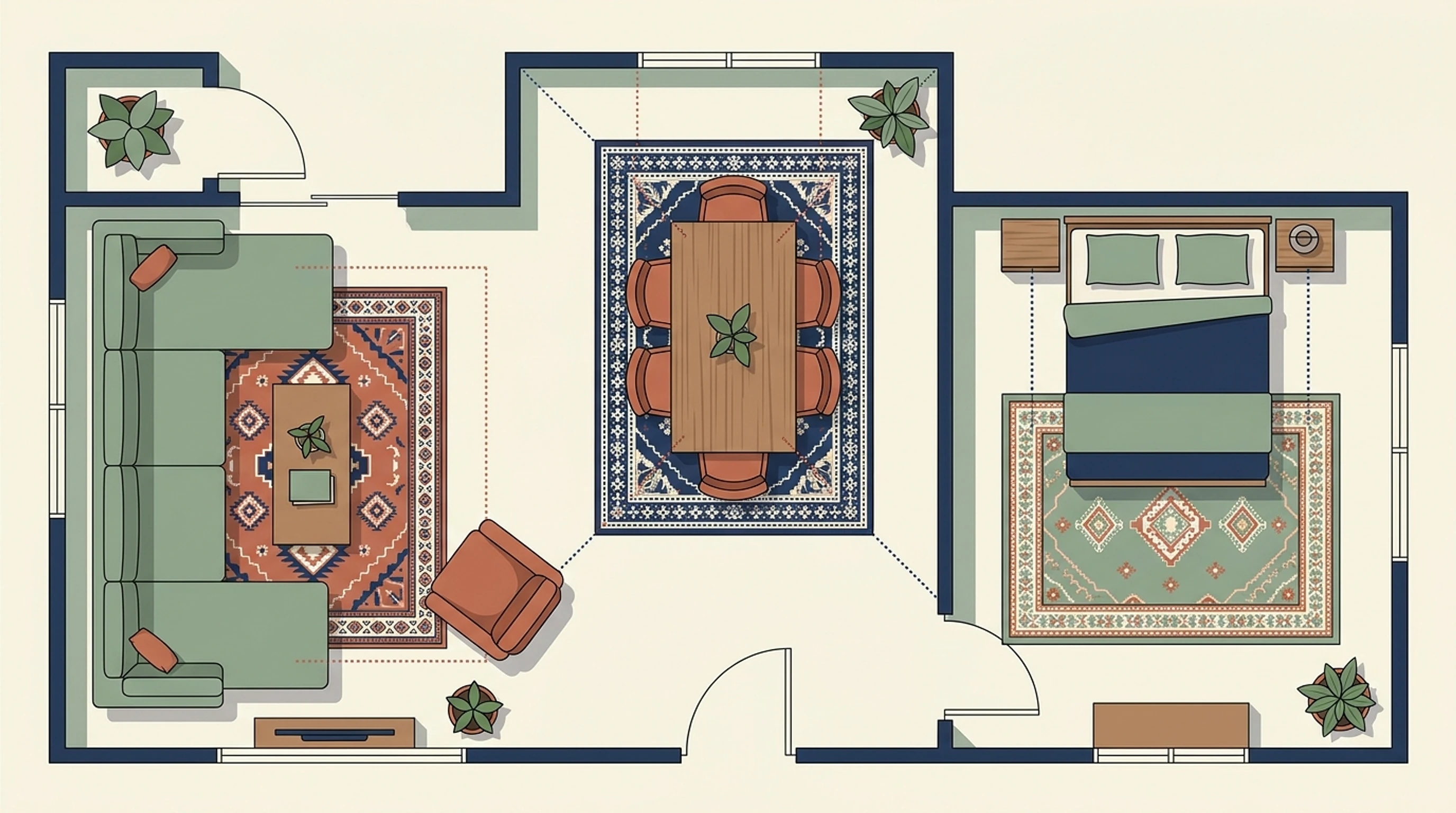
The most common rug mistake is buying one that is too small. A rug that is the right size anchors the furniture, makes the room feel larger and ties the whole space together. Here is how to choose.
Standard rug sizes
Most rugs are sold in a handful of standard sizes (in feet):
- 2x3 and 3x5: doormats, entry spots, and small accents
- 4x6: small accent rug or desk area
- 5x7 (often sold as 5x8): small living rooms, reading nooks, under a small dining table
- 6x9: small to medium living rooms and bedrooms
- 8x10: the most popular size, suitable for most living rooms, dining rooms and queen bedrooms
- 9x12: large living rooms, open-plan spaces and king bedrooms
- 10x14: very large rooms
- Runners (2.5x8, 2.5x10 and longer): hallways, stairs and narrow kitchens
Three rules that work for any room
- Go bigger than you think. If you are between two sizes, choose the larger one.
- Anchor the furniture. At minimum, the front legs of your main furniture should rest on the rug.
- Leave a border. Leave about 12 to 18 inches of bare floor between the rug edge and the walls in a large room.
Living room
Pick the layout first, then the size:
- All legs on the rug. The most polished look. Often needs an 8x10 or 9x12.
- Front legs on the rug. The most common choice, and it still connects the seating area. An 8x10 works in most rooms, a 5x8 or 6x9 in smaller ones.
- Rug in the middle only. Only for very small spaces. The rug floats and can make the room look smaller.
The coffee table should sit fully on the rug, with room to pull out chairs and ottomans.
Dining room
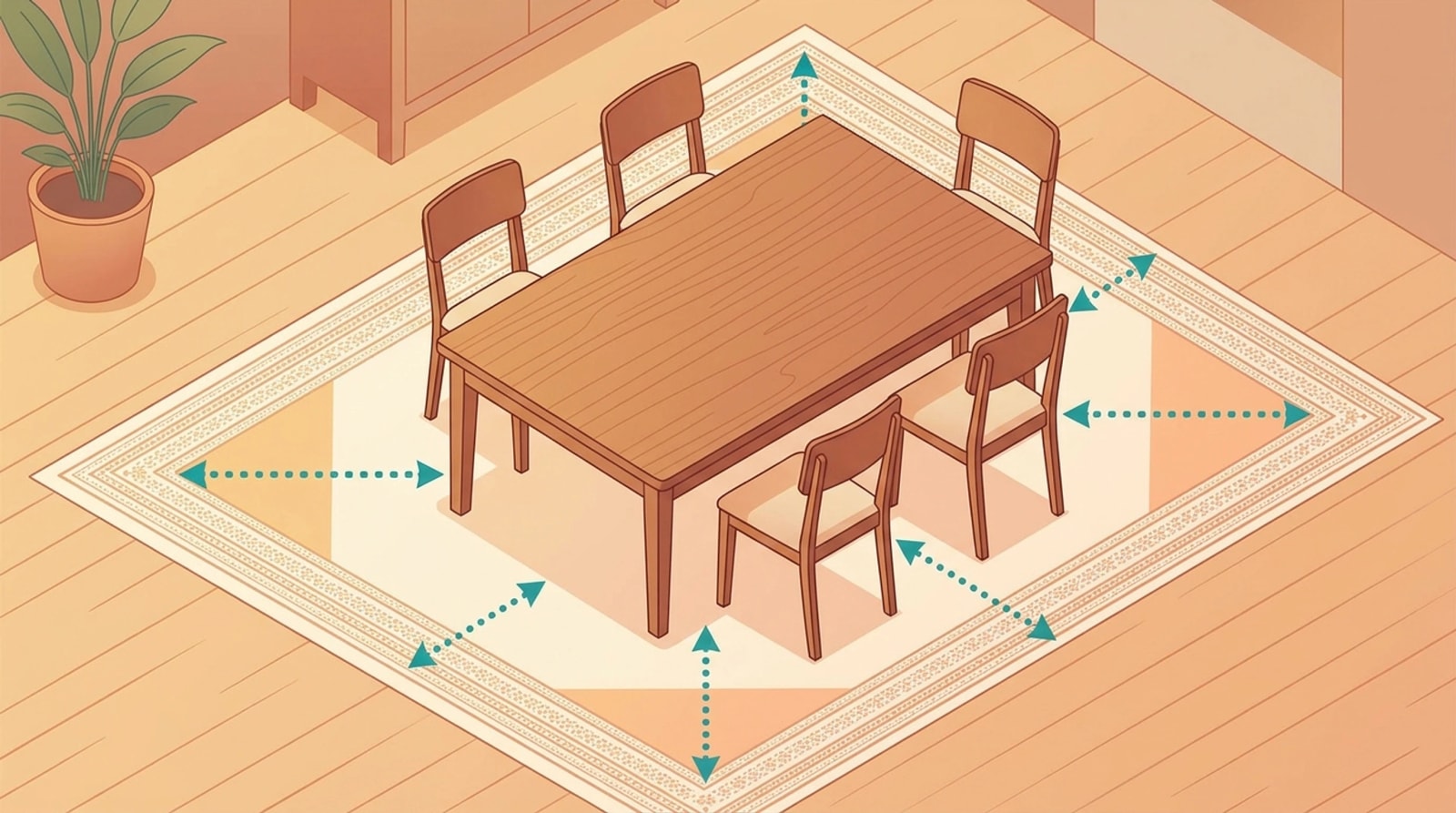
Measure your table, then add 24 to 30 inches on every side. This keeps all chair legs on the rug even when guests pull their chairs back. A table that is 40 by 72 inches needs a rug of about 88 by 120 inches, so an 8x10 or larger.
Bedroom
Place the rug so it sits under the lower two-thirds of the bed and extends at least 18 to 24 inches on the sides and foot. As a guide:
- Twin or full: 5x8 or 6x9
- Queen: 8x10
- King: 9x12
Another option is a pair of runners or smaller rugs, one on each side of the bed.
Entryway, hallway and stairs
- Entryway: a 3x5 or 4x6 rug, or one wide enough to match the door width.
- Hallway: a runner that leaves 4 to 6 inches of bare floor on each side.
- Stairs: a runner narrower than the stair by 3 to 4 inches on each side.
How to measure
Use painter's tape to mark the rug's outline on the floor, or lay down newspaper. Live with the outline for a day and check whether furniture sits where you want it. It is a free way to avoid an expensive mistake.
Frequently asked questions
How big should a rug be in a living room? In most rooms an 8x10 works. Choose a 9x12 for large rooms and a 5x8 or 6x9 for small ones.
What is the most popular rug size? The 8x10, followed by 5x7 or 5x8 and 9x12.
Should a rug go under the couch legs? At least the front legs should be on the rug. Putting all legs on is the most polished option.
What size rug goes under a dining table? The table size plus 24 to 30 inches on every side.
Does a rug pad change the size I need? Buy the pad about one inch smaller than the rug on each side so it stays hidden.
Related guides
- What Size Rug for a Dining Table? Chart for Round, Square and Rectangular Tables
- What Size Rug for a King or Queen Bed? A Simple Guide
- Bedroom Rugs: Size, Placement and the Best Materials
- Dining Room Rugs: Size, Shape and the Best Materials
- Rug vs Carpet: Differences, Costs and How to Choose
- How to Layer Rugs: Sizes, Combinations and Mistakes to Avoid
The Kindred Weave editors. We write practical guides to handmade rugs and tapestries. Learn more about us.