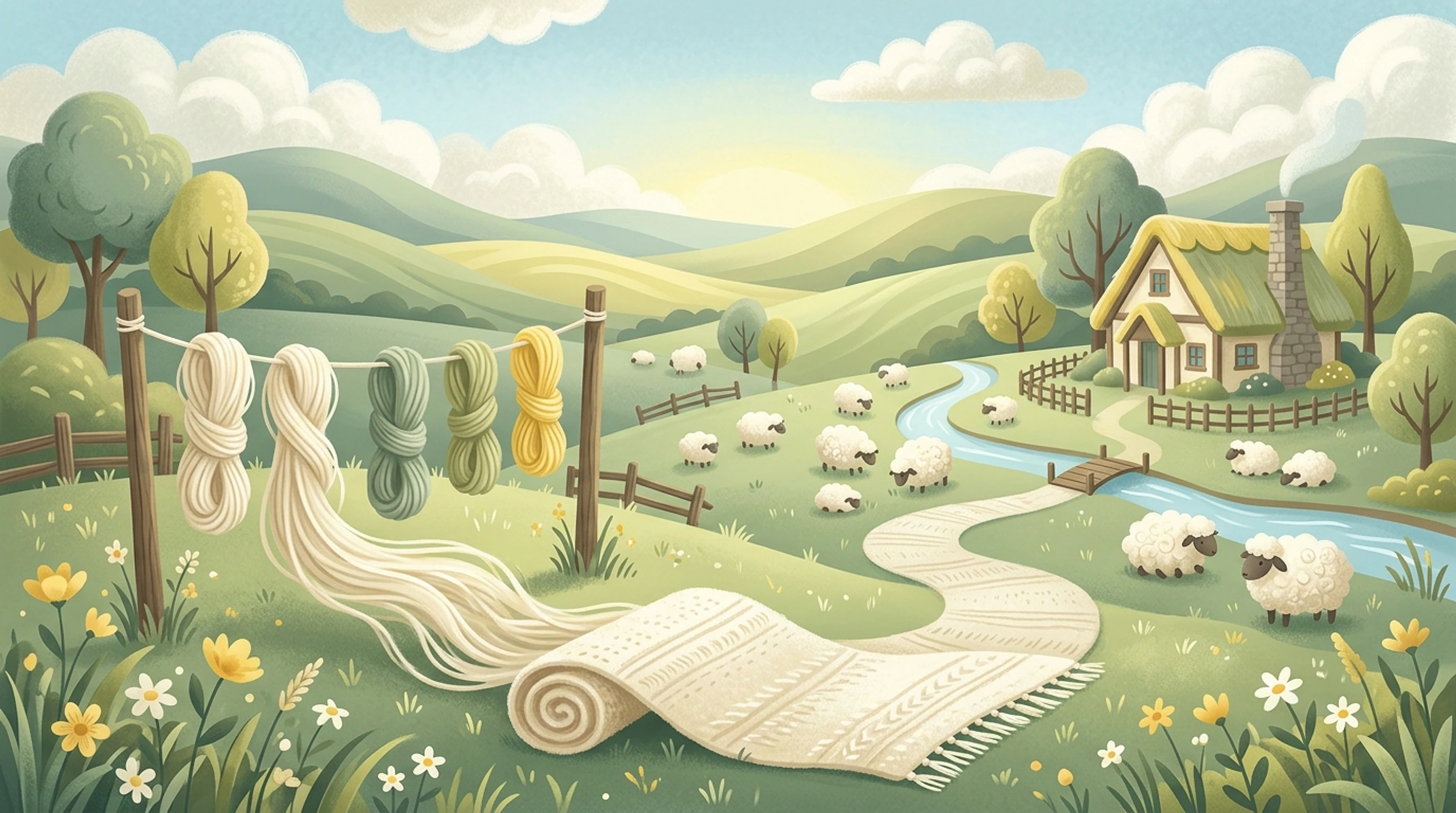
Wool has been used for rugs for thousands of years, and it is still the standard against which other rug materials are judged. It is warm, resilient and beautiful, but it is not perfect for every home. This guide explains what to expect and how to choose well.
Why wool is such a good rug fiber
- It bounces back. Wool fibers have a natural crimp, like tiny springs. Furniture marks and footprints lift out, and the pile keeps its shape for years.
- It resists stains. Each fiber is coated with a natural oil called lanolin and covered in a protective outer layer, so spills tend to bead on the surface for a short time before they soak in.
- It is soft and warm. Wool feels comfortable underfoot and insulates the floor, which suits living rooms and bedrooms.
- It is naturally flame resistant. Wool is difficult to ignite and tends to self-extinguish, which is a useful property in a home.
- It lasts. A well-made wool rug can last for decades, and a hand-knotted one can be repaired and passed down.
The downsides
- Cost. Wool rugs cost more than synthetic and jute rugs, particularly hand-knotted ones.
- Shedding. New wool rugs shed loose fibers, sometimes for months. This is normal and not a sign of poor quality.
- Sun fading. Direct sunlight can fade dyes over time.
- Water sensitivity. Wool can hold moisture, so spills must be blotted quickly and the rug dried thoroughly.
- Moths and carpet beetles. Natural fibers can attract pests if a rug is stored dirty. Clean it before storing and keep it in breathable wrap.
Why does a new wool rug shed?
During spinning and weaving, short fiber ends are left loose in the pile. They work free as you walk on and vacuum the rug. Shedding is heaviest in the first weeks and usually settles over the first few months.
- Vacuum regularly with suction only, and avoid a beater bar that pulls at the pile.
- If a single tuft sticks up, trim it with scissors. Never pull it, because that can loosen the knots around it.
Types of wool rugs
- Hand-knotted. Each knot is tied by hand. Dense, durable and long lasting, with the highest price. Read our guide to handmade vs machine-made rugs.
- Hand-tufted. Wool yarn is punched into a backing and then glued. Quicker and cheaper than knotting, but not as durable.
- Flatweave (kilim, dhurrie). Woven flat with no pile. Lightweight, reversible in many cases, and good for dining rooms and entryways.
- Machine-made. Produced on power looms. Affordable and consistent, but usually less dense.
- Chunky or looped wool. Thick, textured yarns for a cozy, modern look. Beautiful, but loops can snag, so keep pets' claws in mind.

Wool vs jute vs synthetic
Wool is more resilient and stain resistant than jute, and softer than most natural fibers. Jute costs less and has a relaxed, textured look, but it wears faster and does not like moisture. See our jute rug guide for a full comparison. Compared with synthetic rugs, wool is more durable, more repairable and fully renewable, though it costs more upfront.
Where wool rugs work best
Wool is a strong choice for living rooms, bedrooms, dining rooms, home offices and hallways. Its resilience makes it better than most natural fibers in high-traffic areas. It is less suited to damp spaces such as bathrooms or covered porches.
How to choose a good wool rug
- Check the label. Look for the percentage of wool. 100 percent wool is the most durable. Blends with cotton or synthetics are cheaper but vary in quality.
- Test the density. Bend a corner back. A tightly packed pile where you can barely see the backing means higher quality.
- Flip it over. In a hand-knotted rug, the pattern is clearly visible on the back and each knot is distinct. A glued backing usually signals a tufted rug.
- Feel the yarn. Good wool feels springy, not scratchy or brittle.
- Match pile height to use. A low pile is easier to clean and better for busy rooms. A high pile feels luxurious but needs more care.
- Add a pad. A felt and rubber pad reduces wear and prevents slipping. See our rug pad guide.
Caring for a wool rug
- Vacuum weekly with suction only.
- Rotate the rug every six months to even out wear and sun exposure.
- Blot spills immediately with a clean cloth and never rub.
- Have it professionally cleaned every one to three years, depending on traffic.
For more detail, read our guide on caring for a wool rug.
Frequently asked questions
Are wool rugs good for allergies? No rug is allergen-free. Wool can trap dust, so regular vacuuming matters. Some people are sensitive to wool itself, so test with a sample if you are unsure.
Do wool rugs shed forever? No. Shedding is heaviest in the first few weeks and usually settles within a few months.
Can you get a wool rug wet? A small spill is fine if you blot it and dry the area quickly. Soaking a wool rug can cause mildew and discoloration, so avoid heavy wetting.
Is a wool rug worth the money? For most living areas, yes. Wool lasts longer and looks better with age, which often makes it better value than a cheaper rug that needs replacing.
What is the most durable rug material? Wool is generally the most durable and resilient natural option for living spaces. Sisal is also very tough but rougher underfoot.
The Kindred Weave editors. We write practical guides to handmade rugs and tapestries. Learn more about us.