Home / Blog / Buying Guide
Rug Pad Guide: Types, Thickness and How to Choose the Right One
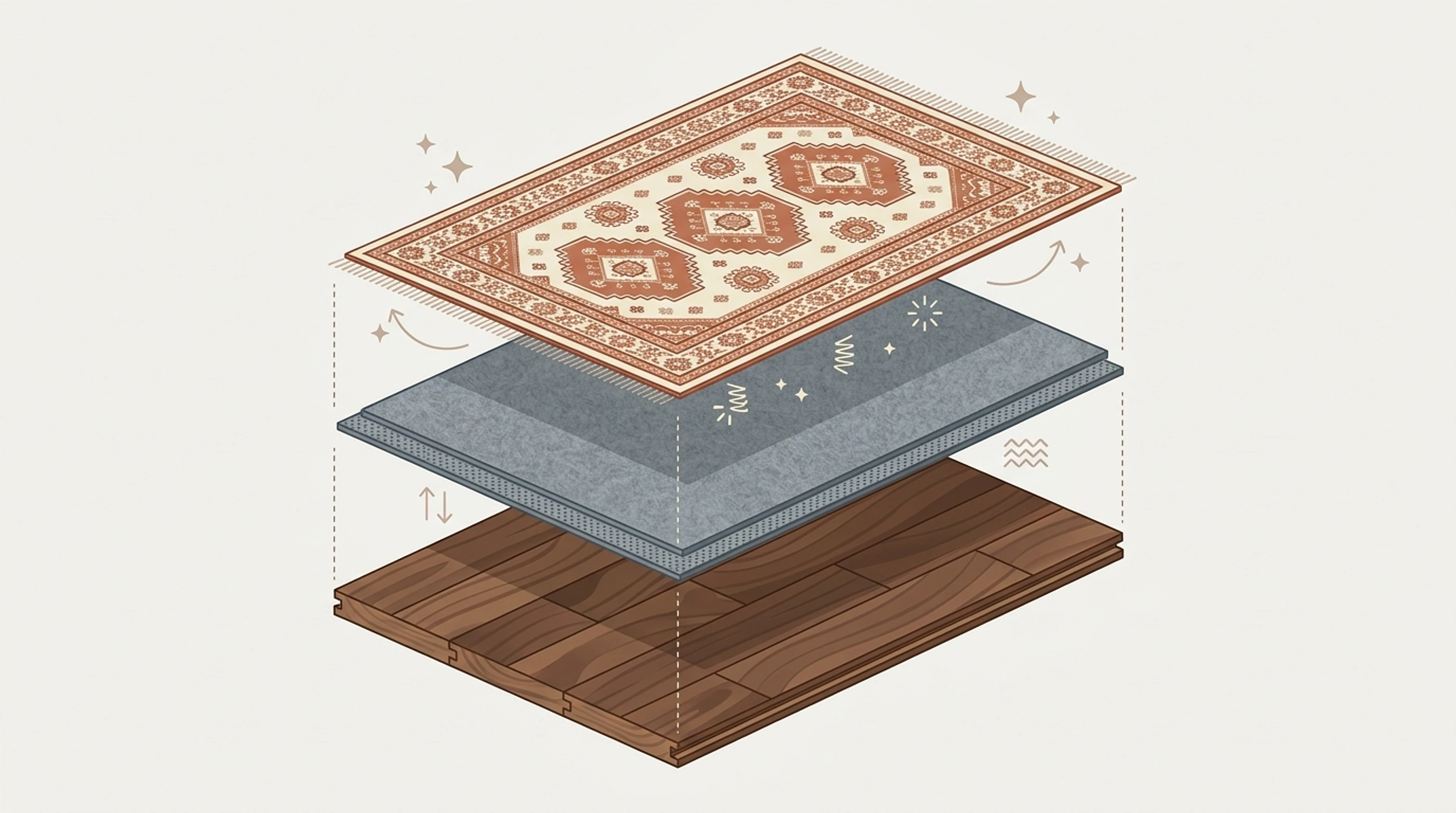
A rug pad is the least glamorous part of a rug, and one of the most useful. It keeps the rug in place, cushions every step, and protects both the rug and the floor beneath. Choosing the wrong pad can cause more problems than having none, so here is how to get it right.
Why use a rug pad?
- Prevents slipping. A rug that slides is annoying and a real tripping hazard.
- Adds cushioning. A pad makes a thin rug feel plush and reduces noise.
- Extends the life of the rug. The pad absorbs impact so fibers do not crush and wear as quickly.
- Protects floors. A pad stops rug backing and grit from scratching hardwood and prevents dye transfer.
- Helps with airflow and cleaning. A pad lets a rug lie flat and makes vacuuming easier.
Types of rug pads
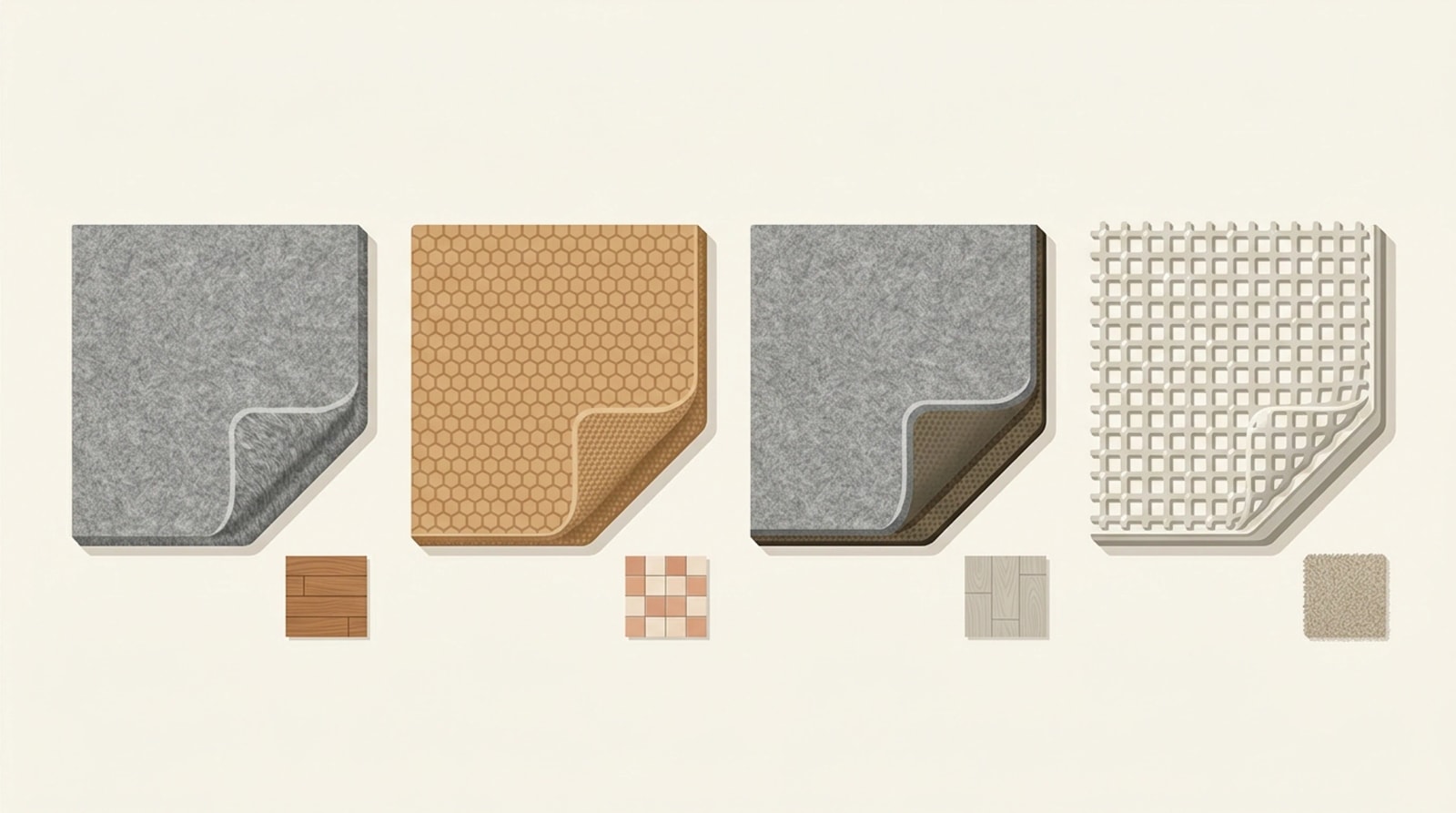
Felt. Made from compressed fibers, felt is soft and cushioning, and it protects the floor well. On its own it does not grip strongly, so it is best for rugs in low-traffic spaces or used in a combination pad.
Natural rubber. Rubber grips floors firmly and is usually thin. It is a good choice for hard floors, small rugs and entryways. Look for pads that state they are safe for finished floors.
Felt and rubber combination. The most popular option. A felt layer provides cushioning and a rubber layer provides grip. It suits most rugs on most floors.
Synthetic and PVC pads. Often the cheapest. Some low-quality pads can react with floor finishes and leave marks or discoloration. Check that any pad you buy is labeled safe for your type of floor.
Choosing the right thickness
- About 1/8 inch (3 mm): thin and firm. Best for entryways and places where a door must clear the rug. See our guide to entryway and hallway rugs.
- About 1/4 inch (6 mm): the all-round choice for living rooms, bedrooms and dining rooms.
- About 3/8 inch (9 mm) or more: plush and very cushioned. Good for thin flatweaves, but make sure it does not make the rug feel unstable or catch on doors.
Thicker is not always better. A very thick pad under a heavy rug can make furniture wobble and may cause edges to curl.
Pick the right pad for your floor
- Hardwood: a felt and rubber pad, or a pad labeled safe for finished wood.
- Tile and stone: a rubber or felt-and-rubber pad for grip and comfort.
- Laminate and vinyl: choose a pad labeled safe for these floors, since some materials react with plastic surfaces.
- Carpet: a dedicated pad that grips carpet fibers, often with a textured surface on both sides.
- Underfloor heating: check the manufacturer's rating for heated floors.
Pick the right pad for your rug
Natural fiber rugs such as jute benefit from a breathable felt-based pad, which protects the fibers and reduces wear. For wool rugs, a felt and rubber pad provides both cushion and grip while letting the rug breathe.
How to size a rug pad
Buy a pad slightly smaller than the rug so that it stays hidden.
- Measure the rug length and width.
- Subtract about 1 inch on each side. For very large rugs, up to 2 inches on each side is fine.
- Buy the nearest size, or buy a larger pad and trim it with sharp scissors.
If you are still deciding on the rug itself, start with our rug size guide.
How to install a rug pad
- Clean the floor so the pad does not trap grit.
- Lay the pad flat, with the gripping side facing the floor.
- Center the rug on the pad.
- Smooth out any wrinkles and make sure the pad does not extend beyond the rug edges.
When to replace a rug pad
Pads do not last forever. Replace yours if it has flattened, started to crumble, become sticky or lost its grip. Many pads last several years, but heavy traffic and age shorten their life.
Rug pad vs rug tape
A rug pad covers the whole rug. Rug tape secures only the edges and corners. Tape suits small rugs, runners and rugs that already sit flat, while a pad is better when you want cushioning and full-surface grip. Never use tape on a delicate floor finish without checking the label.
Frequently asked questions
Do I really need a rug pad? In most cases, yes. A pad stops slipping, protects the floor and helps the rug last longer.
What is the best rug pad? For most rooms, a felt and rubber combination about 1/4 inch thick.
How thick should a rug pad be? Around 1/4 inch for most rooms, and about 1/8 inch where doors need clearance.
Can a rug pad damage my floor? A low-quality pad with PVC or synthetic rubber can mark some floor finishes. Choose pads labeled safe for your floor.
Should a rug pad be the same size as the rug? No. It should be about 1 inch smaller on each side so it does not show.
Related guides
The Kindred Weave editors. We write practical guides to handmade rugs and tapestries. Learn more about us.