Home / Blog / Buying Guide
How to Choose a Living Room Rug: Size, Material, Shape and Placement
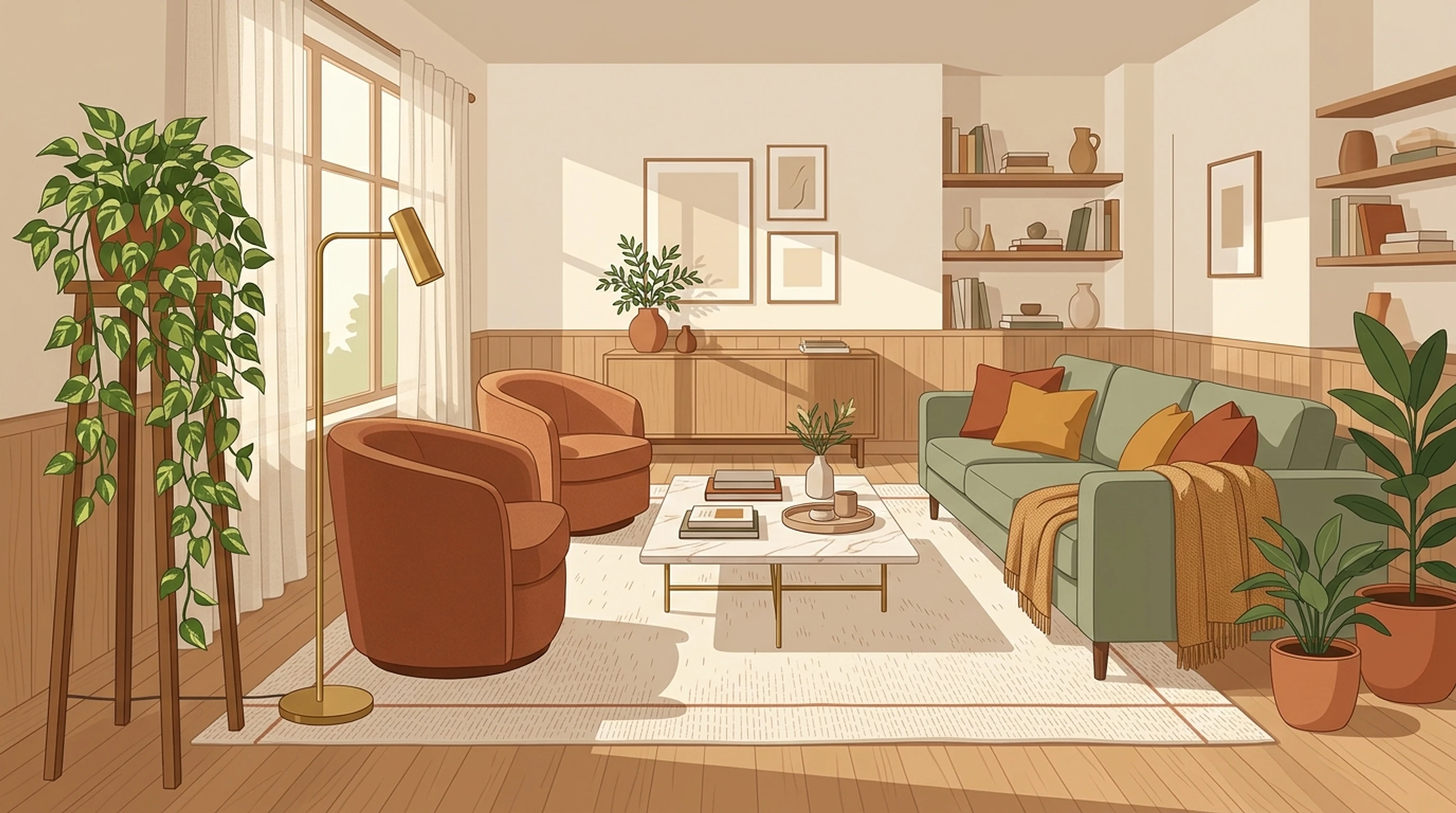
The living room rug does more work than any other piece of decor. It defines the seating area, softens the floor, and ties furniture and colors together. Follow these steps to choose one with confidence.
Step 1: Decide on the layout
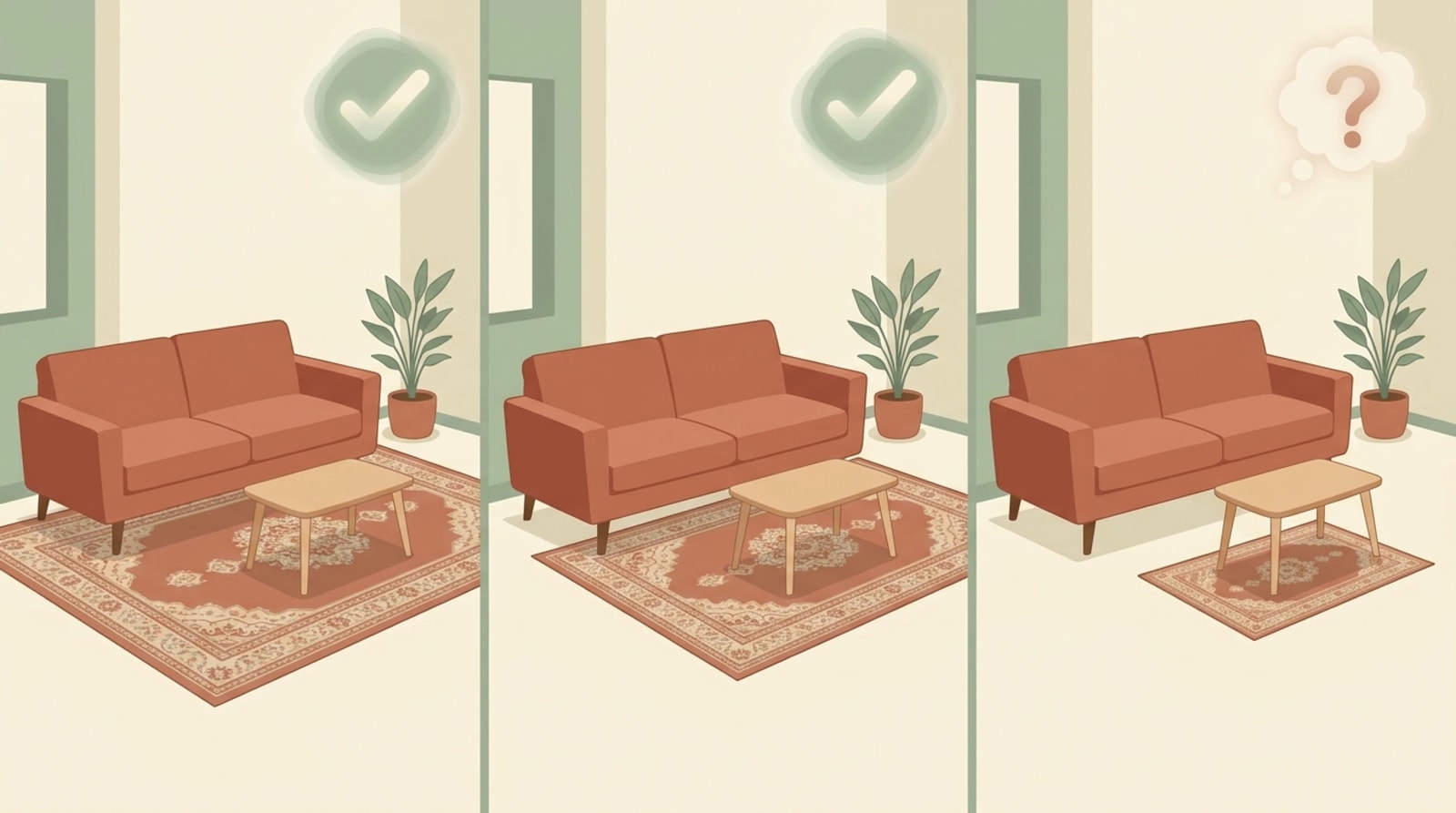
Before you look at colors, decide how much of your furniture will sit on the rug:
- All legs on: the most polished look, best for larger rooms.
- Front legs on: the most popular option and flexible for most rooms.
- Only the coffee table on: works in very small rooms but makes the rug feel like it floats.
Step 2: Choose the size
For a typical living room an 8x10 works best. Use a 9x12 in large or open-plan rooms, and a 5x8 or 6x9 in small rooms or apartments. Leave about 12 to 18 inches of bare floor around the rug in a large room. See our full rug size guide for more detail.
Step 3: Pick the material
- Wool. Soft, durable and naturally stain resistant. The best choice for busy living rooms.
- Jute. A natural, textured and affordable option for light to moderate traffic. See our jute rug guide.
- Cotton. Casual and easy to move, often flat-woven and lightweight.
- Silk blends. Beautiful sheen, but better in low-traffic rooms.
Step 4: Think about color and pattern
Pick one or two colors from your sofa, curtains or art, and let the rug echo them rather than match them exactly.
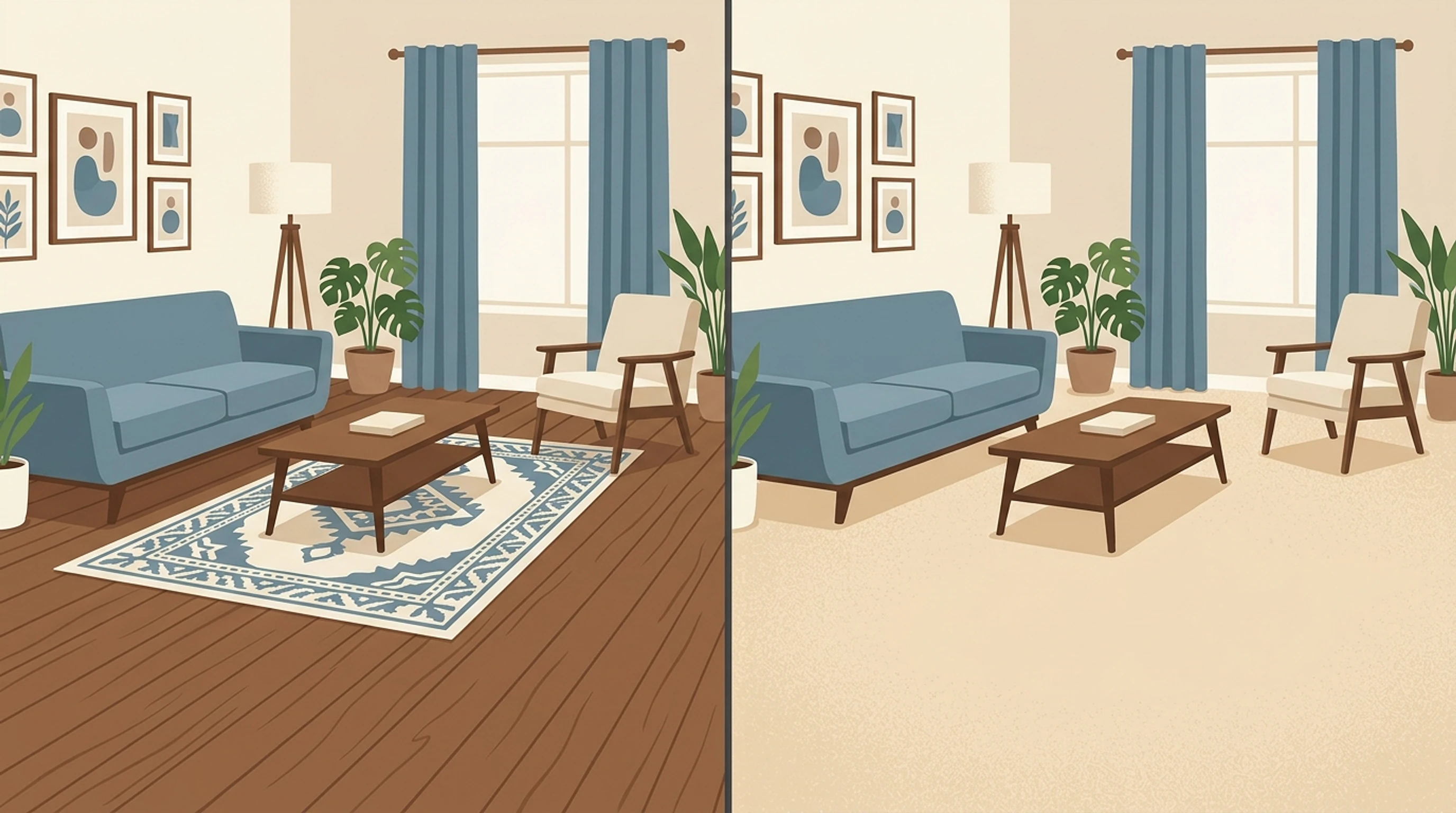
- Solid or neutral rug: best when your furniture or walls are already busy.
- Patterned rug: best when the rest of the room is calm. A pattern also hides dirt in busy rooms.
- Mixed patterns: vary the scale, so a large-scale rug works with small-print cushions.
Step 5: Consider the shape
Rectangular rugs suit most layouts. A round rug works well with a round coffee table or in a reading corner, and an oval rug softens a room with many straight lines.
Step 6: Add a rug pad
A rug pad keeps the rug from sliding, adds cushioning, and protects both the rug and the floor. Choose one about one inch smaller than the rug on each side.
Placement checklist
- Center the rug in the seating area, not necessarily in the center of the room.
- Leave the same amount of floor visible on opposite sides.
- Keep the coffee table fully on the rug.
- Allow room for chairs to be pulled out without catching the rug edge.
Frequently asked questions
What size rug do I need for my living room? An 8x10 for most rooms, a 9x12 for large ones, and a 5x8 or 6x9 for small ones.
Should the sofa legs be on the rug? At least the front legs should be on it. All legs on is the most polished look.
What is the best rug material for a living room? Wool for durability. Jute is a good natural option for lighter use.
Should I choose a patterned or solid rug? A patterned rug hides wear and adds interest. Choose a solid rug if the room already has plenty of pattern.
Related guides
The Kindred Weave editors. We write practical guides to handmade rugs and tapestries. Learn more about us.