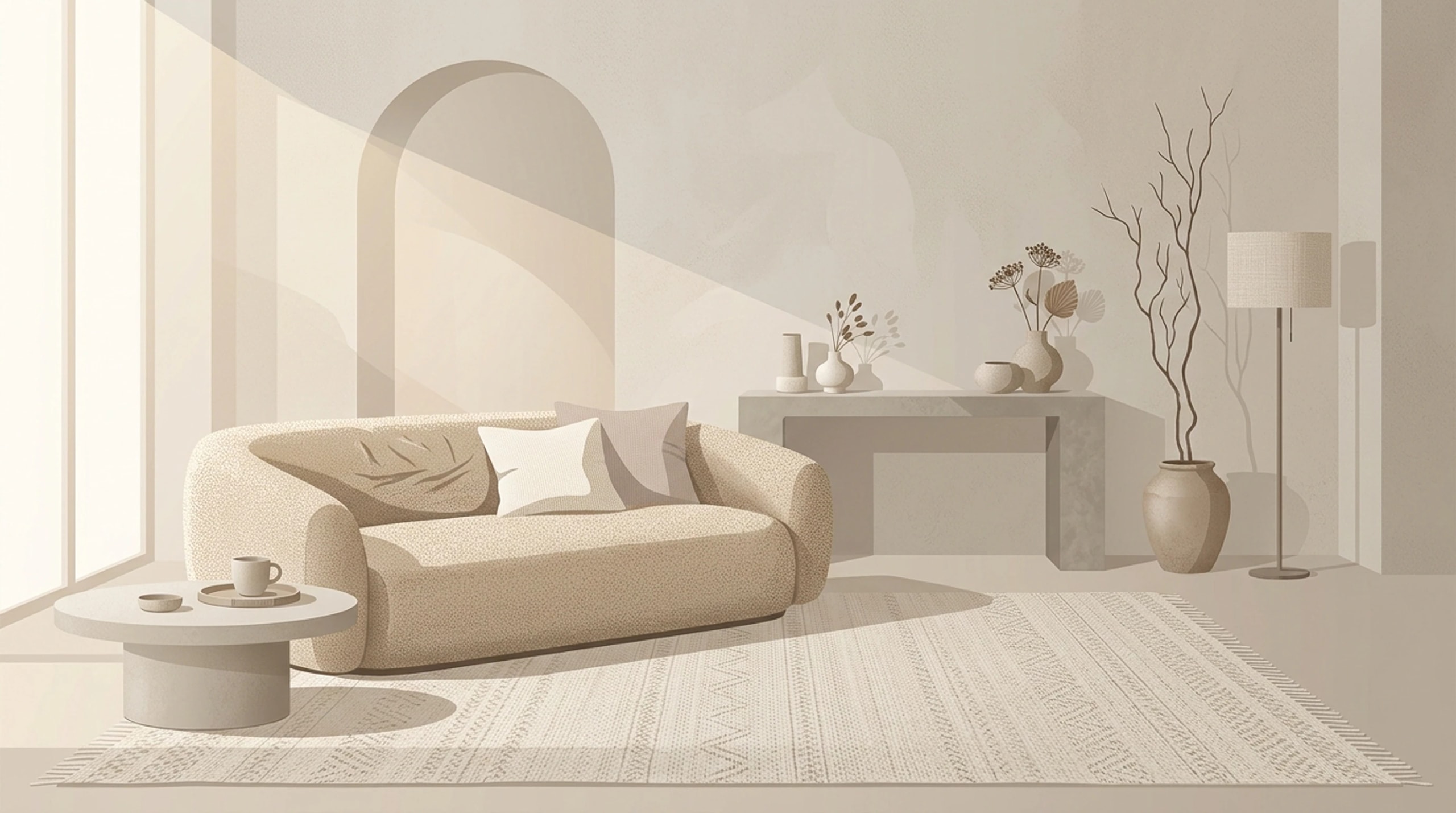
A neutral rug works with almost everything. It lets your furniture, art and plants take the lead, and it stays beautiful when you change the rest of the room. The risk is that "neutral" can slide into "flat". The answer is not to add loud pattern, but to choose the right shade and let texture do the work. This guide shows how.
What counts as a neutral rug?
Neutral rugs come in colors that sit quietly in the background:
- Whites and creams: ivory, ecru, cream and off-white
- Beiges and tans: sand, oatmeal, camel and natural jute
- Grays and greiges: light gray, stone, taupe and greige (a gray-beige blend)
- Darks: charcoal, slate and black
Natural fibers such as jute, sisal and undyed wool also come in neutral tones, which is one reason they are so popular.
Step 1: Understand undertones
The most common mistake is picking a neutral that clashes with the room. Every neutral has an undertone, which is a subtle tint of warm or cool.
- Warm neutrals lean yellow, red or golden: cream, sand, camel and warm beige.
- Cool neutrals lean blue, green or pink: light gray, stone and cool taupe.
To find the right match:
- Look at your wall color, flooring and largest furniture.
- Hold a rug sample next to a white sheet of paper. The undertone shows more clearly against pure white.
- View the sample in daytime light and in the evening, since color shifts through the day.
Warm woods and cream walls pair with warm neutrals. Cool gray floors and blue-gray sofas pair with cool ones. If the room mixes both, a greige or oatmeal rug is a safe bridge.
Step 2: Let texture do the talking
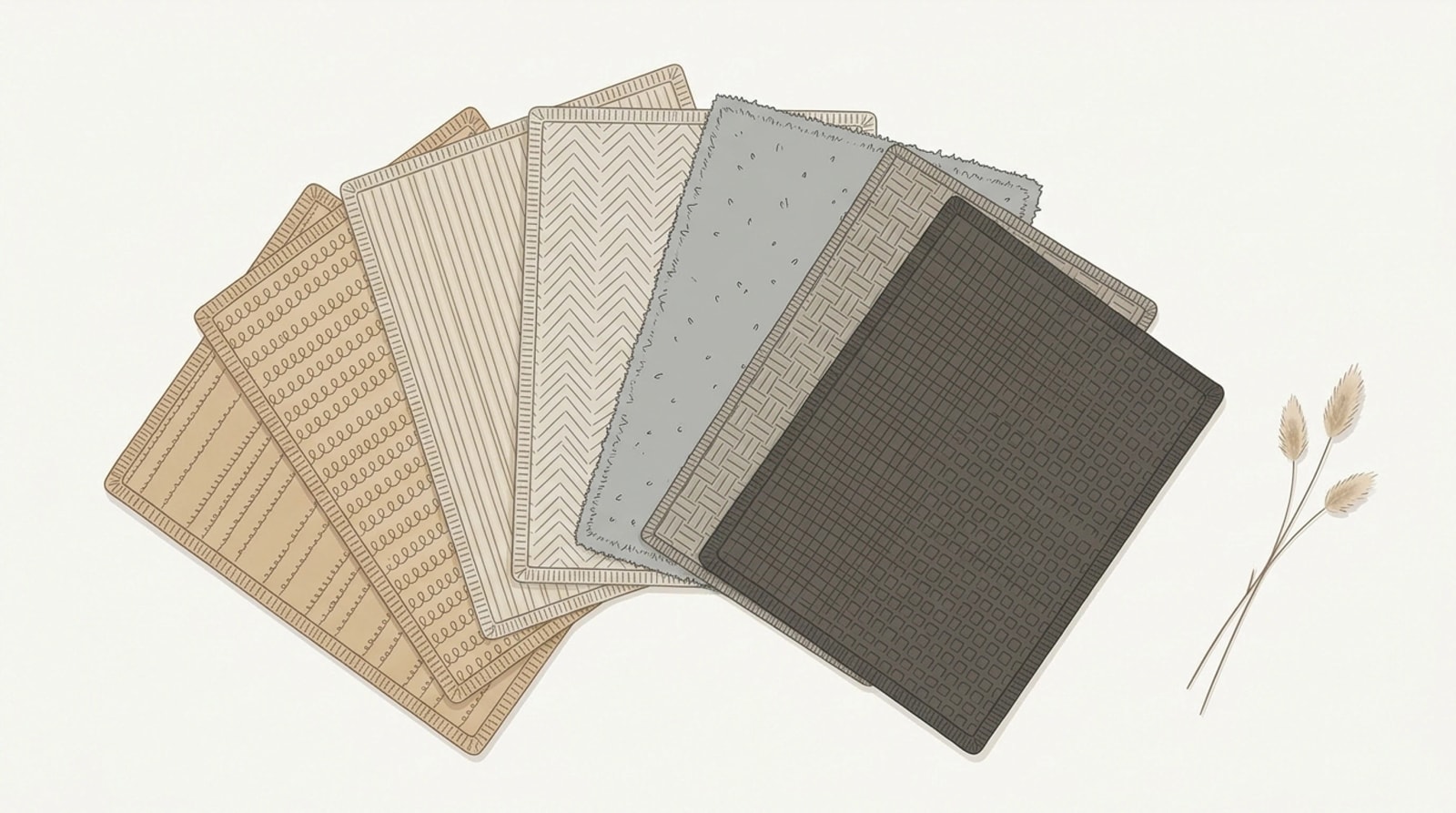
A neutral rug stays interesting when it has depth. Look for:
- Loops and bouclé: a looped pile that catches the light.
- Ribs and ridges: subtle lines that add rhythm.
- Herringbone and basketweave: a woven pattern that reads as texture from a distance.
- Shag and chunky wool: soft and cozy, ideal for bedrooms.
- Flatweaves: thin, tailored and graphic.
- Natural fibers: the weave of jute or sisal brings in organic character.
Our guide to adding texture to a room explains how rugs, throws and furniture build layers together.
Step 3: Add interest without color
If you want a bit more than a plain surface:
- A tonal border or stripe in a slightly darker shade.
- A subtle geometric pattern, such as a faded diamond or a low-contrast trellis. See our guide to geometric, abstract and striped rugs.
- A cream Moroccan rug with simple dark lines. Read about Moroccan rugs.
- Layering a smaller neutral over a larger one in a different texture. Our guide to layering rugs shows how.
Best materials for neutral rugs
- Wool: soft, resilient and naturally stain resistant, so it holds up well in light colors. Read our wool rug guide.
- Jute: warm and affordable, but better in drier, lower-traffic rooms.
- Sisal: tough and tidy, a strong choice for hallways.
- Cotton: light and casual, often flat-woven.
Light neutrals show marks more easily than dark or patterned rugs. If your home is busy, choose a mid-tone such as oatmeal or greige, or a textured weave that hides crumbs. Our guide to cleaning a wool rug and cleaning a jute rug explains how to deal with spills.
What colors go with a neutral or natural fiber rug?
A neutral rug is a blank canvas, so almost anything works. These combinations are especially easy:
- Sage, olive and forest green for a calm, earthy look
- Terracotta, rust and clay for warmth
- Navy, indigo and denim for contrast and a classic feel
- Black accents such as frames, lamps and metal for definition
- White and cream for a soft, tonal room
- Wood tones from honey oak to dark walnut
Pick one or two accent colors and repeat them in cushions, art and ceramics.
Where neutral rugs work best
- Living room: a large neutral rug unifies the seating area. See our guide to choosing a living room rug.
- Bedroom: a soft, thick neutral rug feels calm underfoot.
- Dining room: choose a low-pile or flat-woven option that is easy to clean.
- Home office: a neutral base keeps the space focused.
Size and placement
Because a neutral rug blends in, the right size is what makes it look intentional. Use our rug size guide to choose dimensions that anchor your furniture, and add a felt and rubber rug pad to keep it flat and comfortable.
Common mistakes
- Choosing the wrong undertone, so the rug looks dingy next to the walls.
- Going for the lightest shade in a busy household.
- Skipping texture, which makes the room feel flat.
- Making everything the same shade, with no contrast in furniture, rug or walls.
- Buying too small, which makes a neutral rug look lost.
Frequently asked questions
What color rug is the most neutral? Cream, beige, oatmeal, greige and light gray are the most versatile neutrals, along with natural jute.
How do I stop a neutral rug looking boring? Choose a textured weave, add a tonal border or subtle pattern and layer it with other textiles.
What colors go with a natural fiber rug? Greens, terracotta, navy, black accents, white and wood tones all work well.
Are light neutral rugs hard to keep clean? They show marks more easily, but wool and textured weaves hide and resist stains well. Act quickly on spills.
Should a rug be lighter or darker than the sofa? Either works. A rug that is slightly lighter or darker than the sofa gives the room depth.
Related guides
The Kindred Weave editors. We write practical guides to handmade rugs and tapestries. Learn more about us.