Home / Blog / Buying Guide
Dining Room Rugs: Size, Shape and the Best Materials
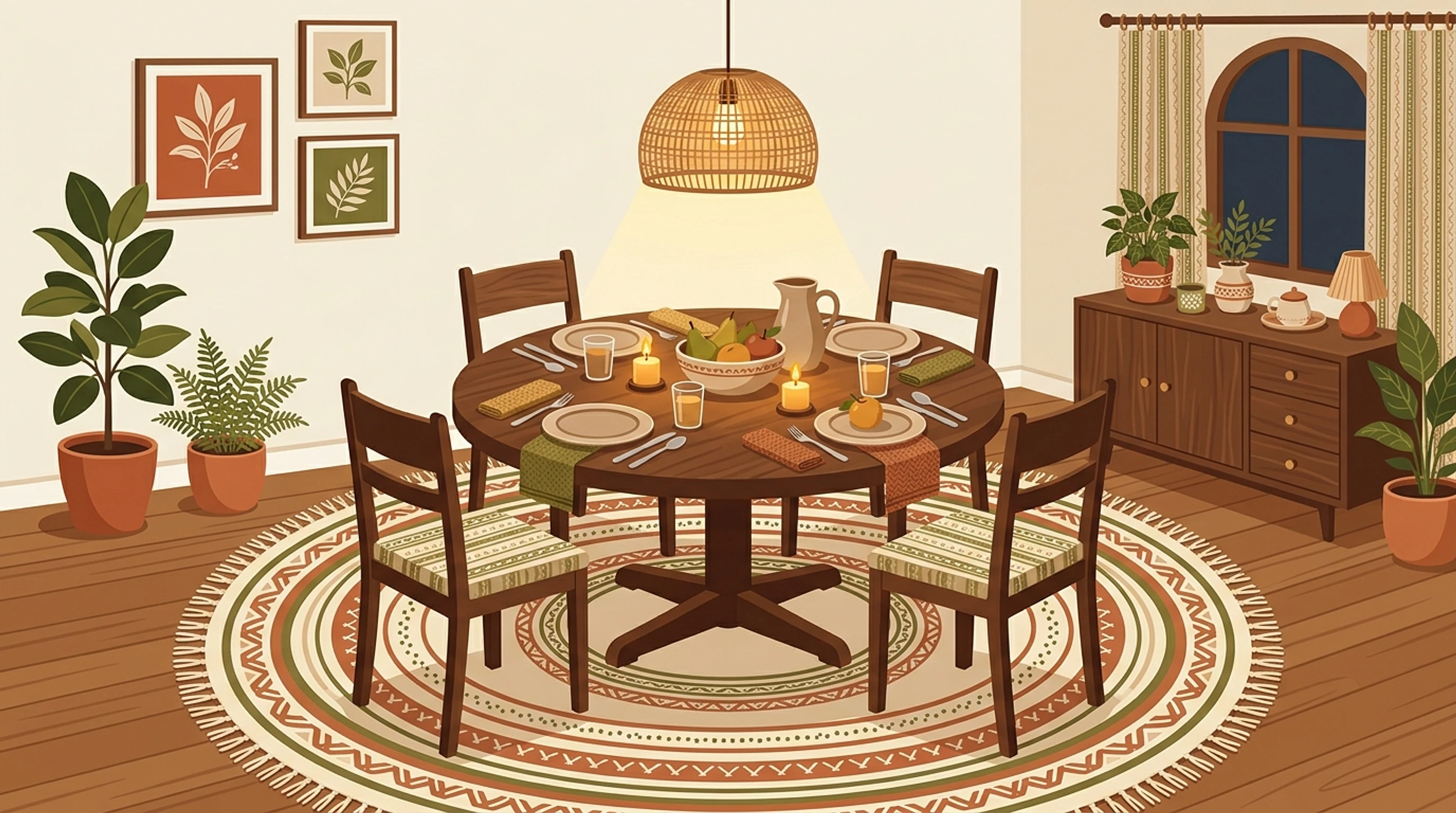
The dining room is one of the hardest places to put a rug. Chairs scrape across it, food lands on it and everyone walks over it. A good dining room rug is chosen for practicality as much as looks. This guide covers shape, material, pile, pattern and care, and points you to the right size chart.
Size: the short version
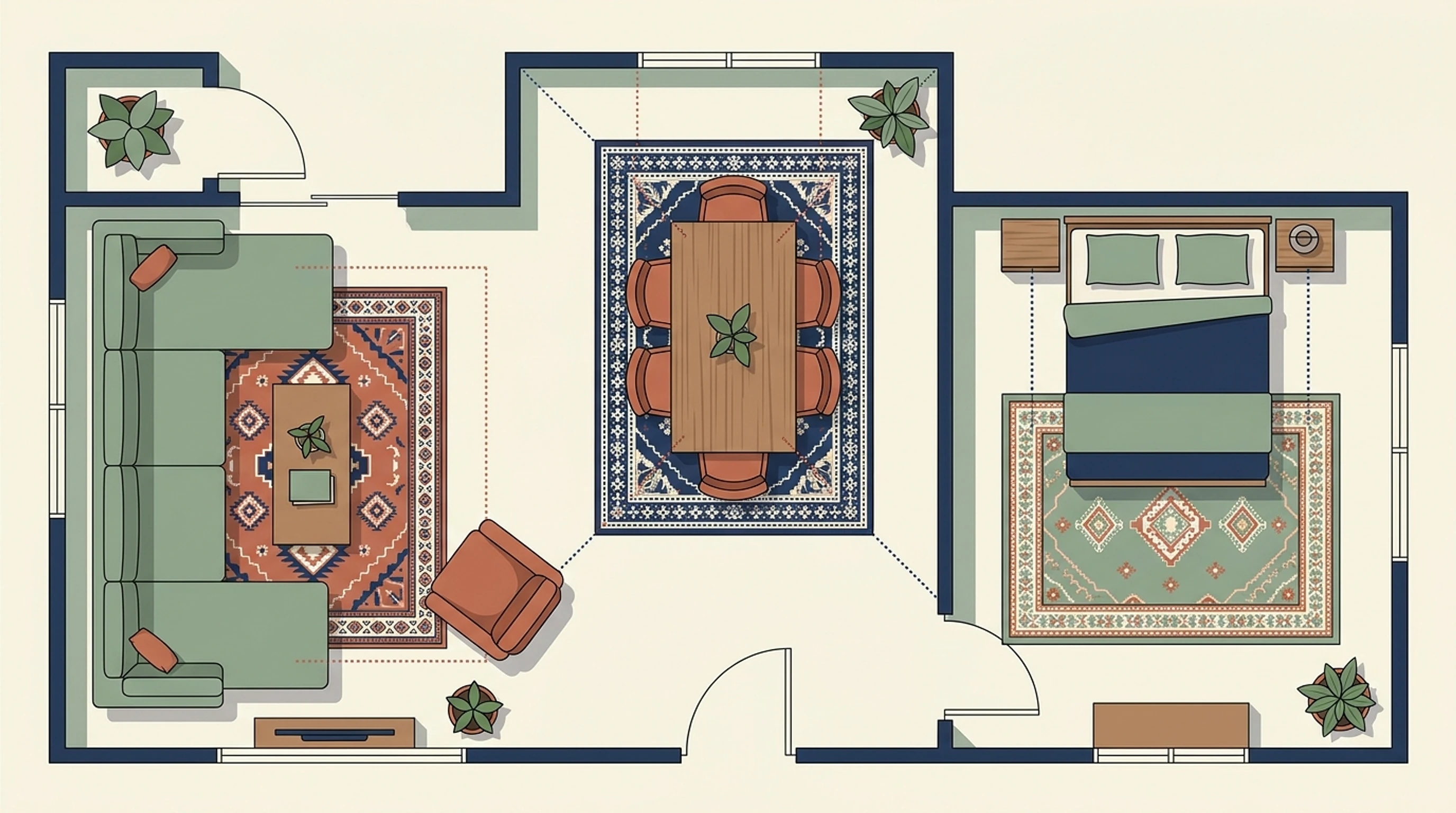
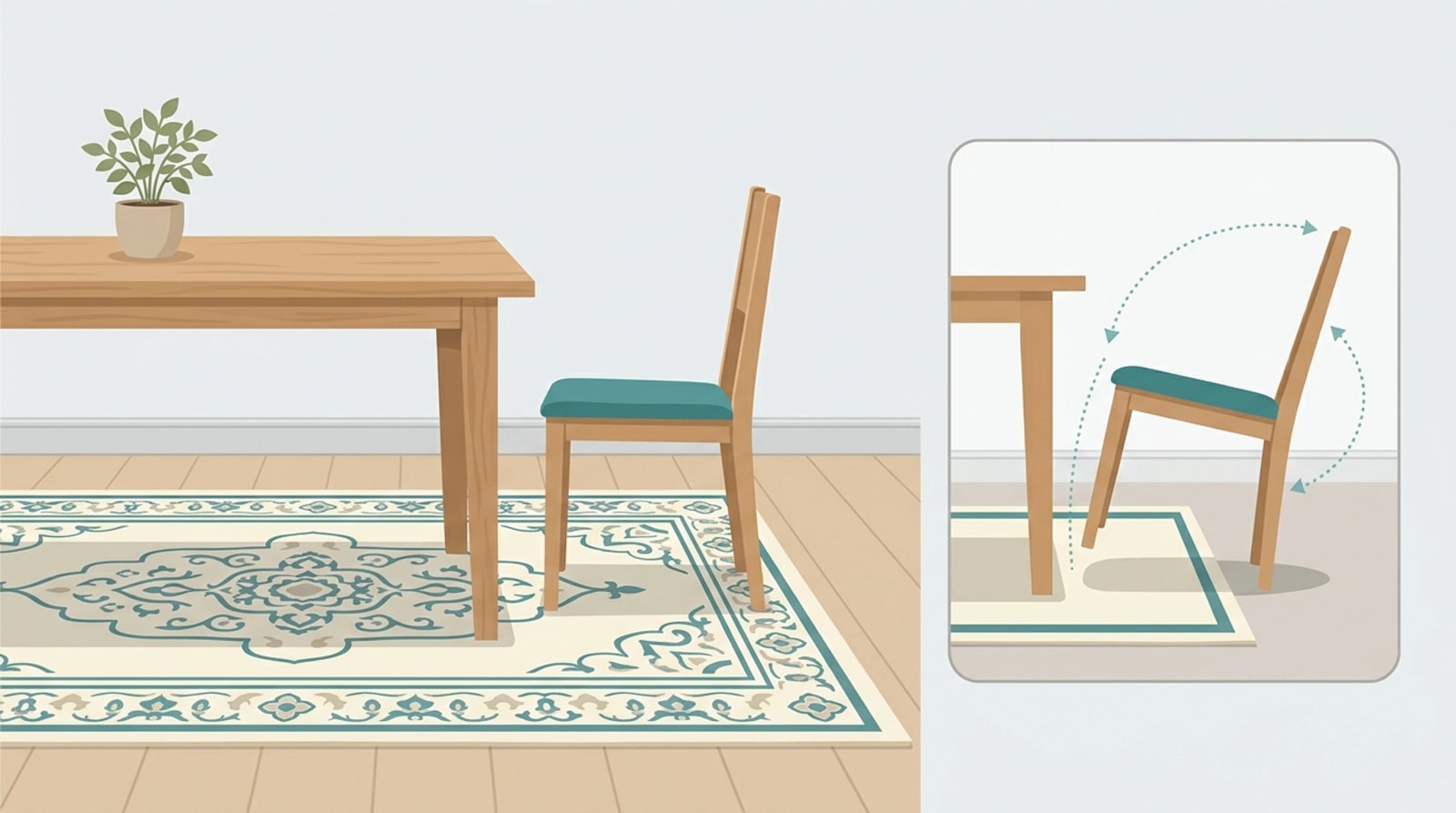
The most important rule is that all four chair legs should stay on the rug, even when a chair is pulled out. To do that, the rug needs to extend about 24 to 30 inches past the table on every side. For exact measurements for round, square and rectangular tables, use our dining table rug size chart. For general sizing help, read our rug size guide.
Choose the right shape
Match the rug to the table and the room.
- Rectangular rug with a rectangular table: the most common and tidy match.
- Round rug with a round table: the shapes echo each other and look intentional. Make sure the room has space for the circle.
- Round rug with a square table: works well and softens straight lines.
- Oval rug with an oval table: follows the table's shape.
- Runner or smaller rug: best kept out of the dining area, since chairs will catch on the edge.
The rug does not have to be exactly the same shape as the table, but the border should look even on all sides.
The best materials for a dining room rug
Flat-woven wool and cotton
Thin, durable and easy to vacuum, flatweaves let chairs slide smoothly. They suit many styles and are easy to move for cleaning. Read about kilim and Persian-style rugs for flat-woven options.
Low-pile wool
Wool is naturally stain resistant and resilient, so it holds up to chairs and foot traffic. Choose a low, tight pile in a mid-tone or pattern. See our wool rug guide and our guide to cleaning a wool rug.
Jute and sisal
Natural fibers look beautiful and are durable, but they absorb liquid and can stain, so use them with care in a dining room. Sisal is tougher than jute. Read our jute rug guide and sisal rug guide before deciding.
Indoor and outdoor synthetic rugs
Rugs made from synthetic fibers designed for outdoor use are easy to wipe or hose clean, which is helpful in homes with young children. They tend to feel less luxurious than wool, but they are practical.
What to avoid
- High-pile and shag rugs, which trap crumbs and make chairs hard to move.
- Very light rugs with no pattern, which show every mark.
- Thick, plush rugs, under which chair legs wobble.
Pile height and thickness
Aim for a low pile of about half an inch or less. A thin rug lets chairs slide in and out, makes cleaning easier and prevents wobbling. If you want cushioning, add a thin felt and rubber rug pad rather than choosing a thick rug.
Pattern and color
Pattern is your best friend under a dining table.
- Busy or mid-tone patterns hide crumbs and small stains.
- Geometric and traditional designs work well. See our guide to geometric, abstract and striped rugs.
- Dark and medium colors hide marks better than pale shades.
- Texture can do the job too. A woven neutral with some depth hides everyday dirt. Our neutral rug guide explains how to choose.
Pick colors that echo your chairs, curtains or tableware, as covered in our guide to choosing rug colors and patterns.
Style ideas
- Traditional: a rug with a border and medallion under a wooden table.
- Modern: a large geometric or abstract rug beneath a sleek table.
- Scandinavian, coastal or farmhouse: see our guide to Scandinavian, coastal and farmhouse rugs.
- Bohemian: a vintage kilim layered over jute. See bohemian rugs and boho decor.
How to keep a dining room rug clean
- Vacuum often, with suction only, since crumbs gather under the table.
- Blot spills straight away with a clean cloth. Do not rub.
- Use a pad so you can lift and shake the rug more easily.
- Rotate the rug every few months so wear is even.
- Place a washable mat under a high chair if you have small children.
- Call a professional for deep stains or yearly cleaning of wool rugs.
Common mistakes
- A rug that is too small, so chairs tip off the edge. The chair legs should stay on the rug.
- Thick or shaggy pile, which makes chairs hard to move.
- Choosing fragile materials, such as silk, for a space that sees spills.
- Skipping the pad, which lets the rug slide when chairs move.
- Ignoring the room, so the rug looks out of proportion.
Frequently asked questions
What is the best rug for under a dining table? A low-pile or flat-woven wool rug in a mid-tone pattern is the most practical choice.
How much bigger should a rug be than a dining table? About 24 to 30 inches on every side so chairs stay on the rug when pulled out.
Should a dining room rug be round or rectangular? Match the table: round with round, rectangular with rectangular. A round rug under a square table also works.
Can you put a jute rug under a dining table? Yes, but it absorbs spills and can stain, so it suits households that are careful with food and drink.
Do you need a rug pad under a dining room rug? Yes, a thin felt and rubber pad stops slipping and protects the rug and the floor.
The Kindred Weave editors. We write practical guides to handmade rugs and tapestries. Learn more about us.