Wool is one of the easiest rug fibers to look after. Its natural oils repel dirt for a while and the fibers bounce back from footsteps, so most rugs need only regular vacuuming and quick action on spills. When a rug does need cleaning, a gentle approach works best. Too much water, heat or scrubbing is what damages wool, not the dirt itself.
What you need
- A vacuum with adjustable suction (and a way to turn off the beater bar)
- Clean white cloths or paper towels for blotting
- A mild, wool-safe detergent or a cleaner labeled safe for wool
- Cool water
- A soft brush or sponge
- A fan for drying
Avoid bleach, strongly alkaline cleaners and anything labeled for synthetic carpet only. These can strip color and roughen the fibers.
Step 1: Vacuum regularly
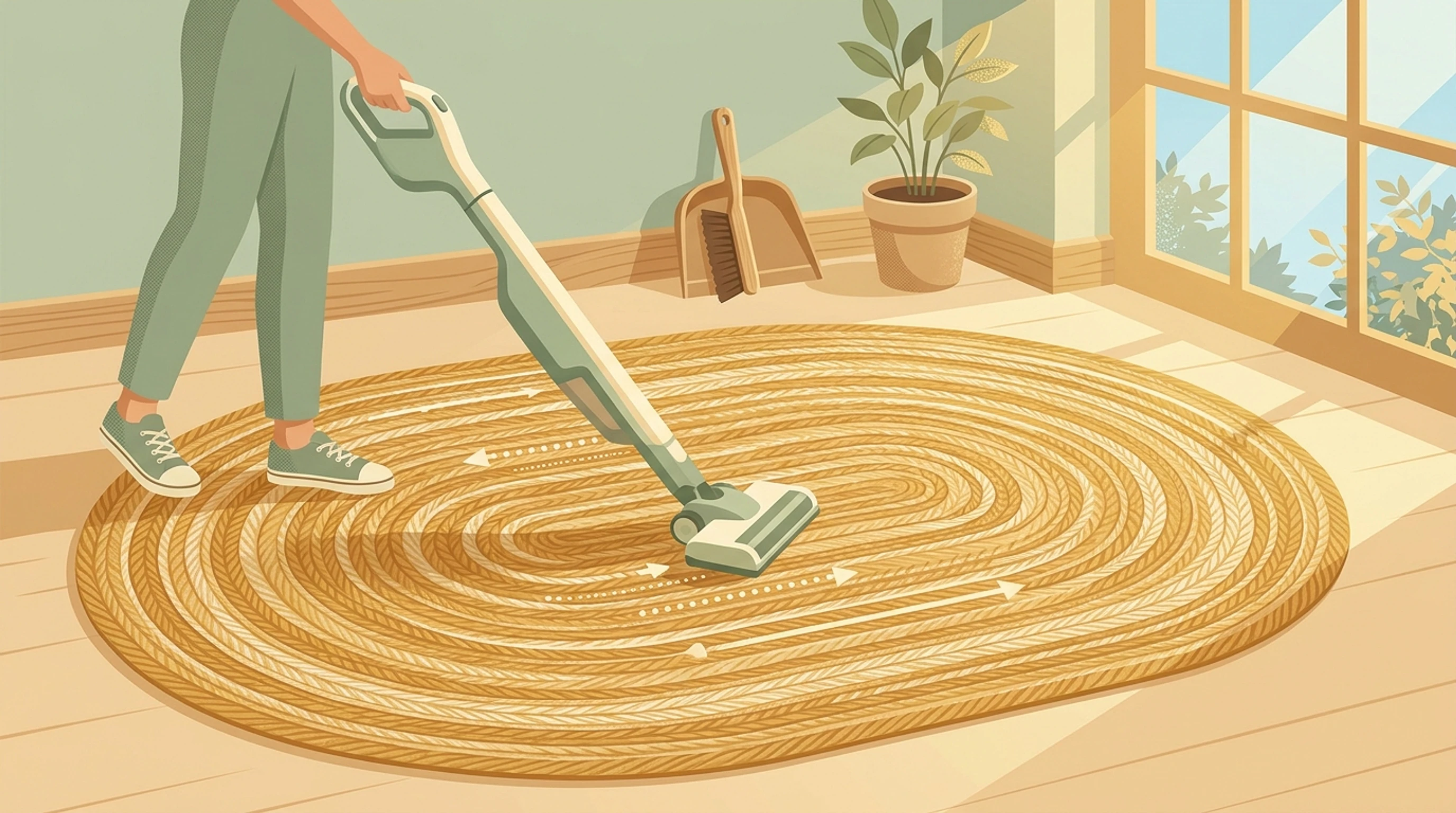
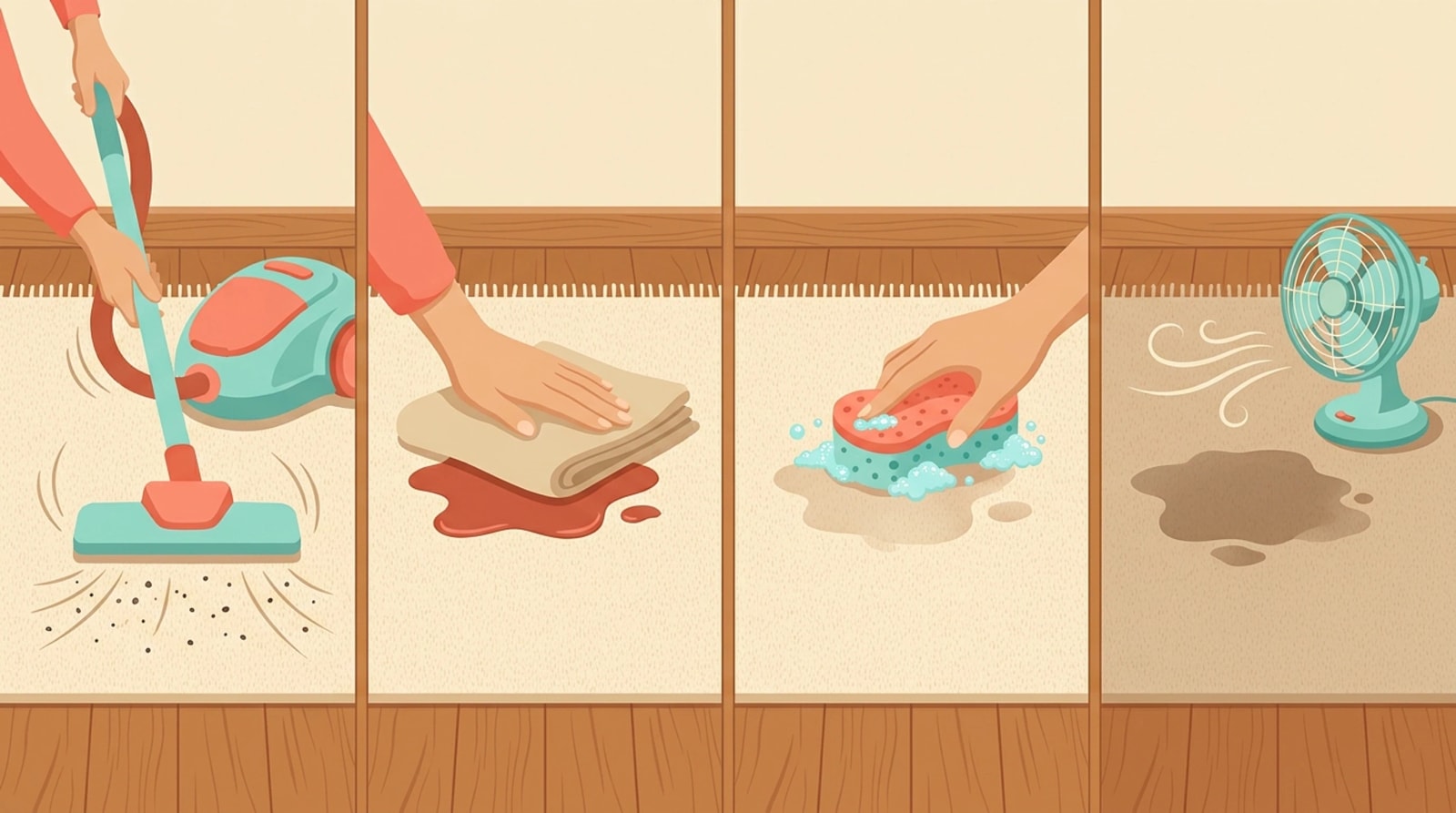
Regular vacuuming removes the grit that wears fibers down from within. Vacuum weekly with suction only, or with the beater bar switched off. For heavily used rugs, a second pass in the direction of the pile lifts more dirt. Lift the rug now and then to vacuum the floor underneath too. If you are new to wool, our wool rug guide explains why new rugs shed for the first few months, which is normal.
Step 2: Act on spills straight away
The first few minutes decide whether a spill becomes a stain.
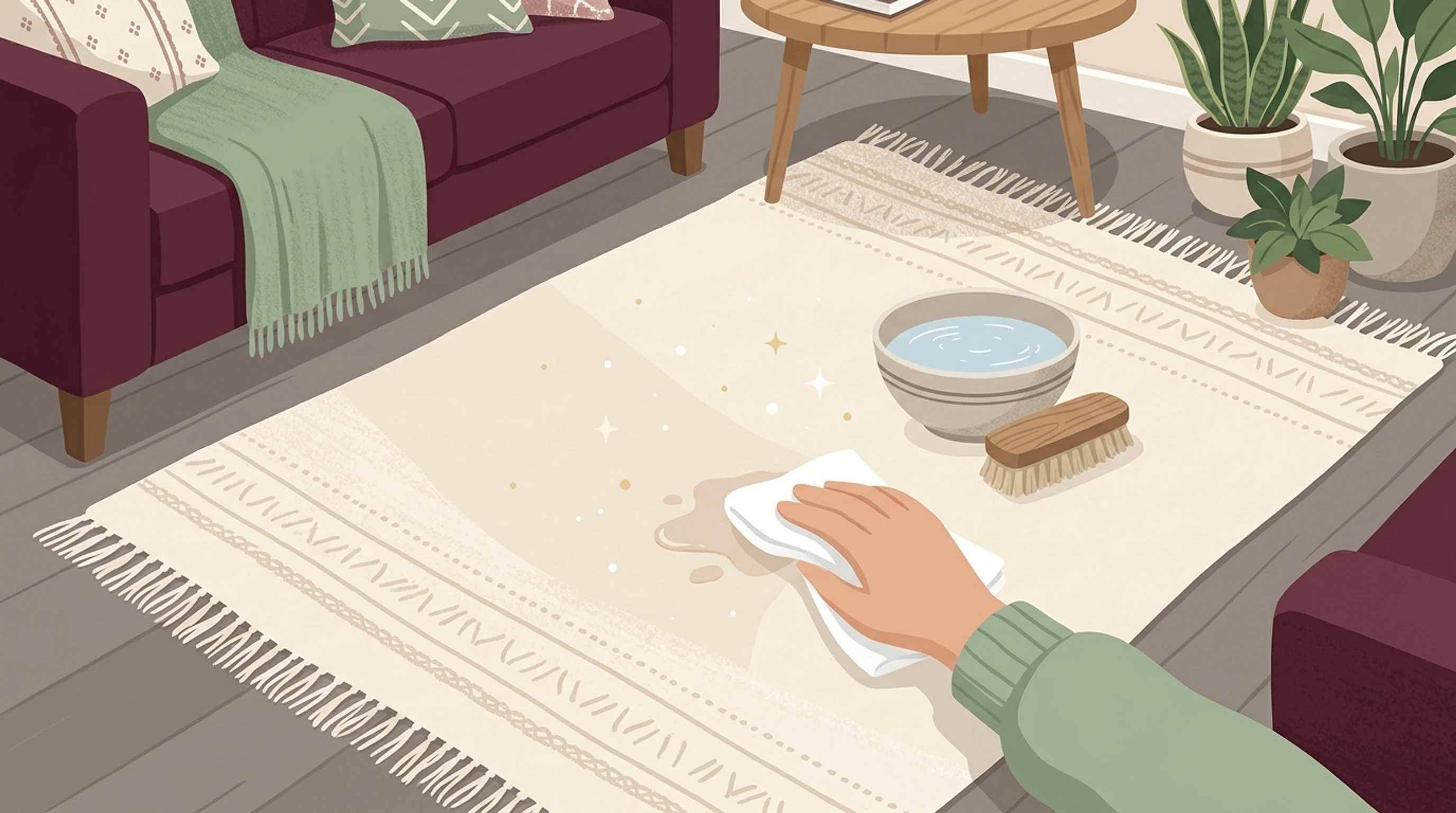
- Blot, never rub. Press a clean cloth onto the spill to lift as much liquid as you can. Rubbing pushes it deeper and can fray the fibers.
- Work from the outside in. This stops the stain from spreading.
- Dab with cool water. Lightly dampen a fresh cloth and blot again.
- Use mild detergent if needed. Mix a small amount of wool-safe detergent with cool water, dab the area and then blot with plain water to rinse.
- Dry the spot. Press a dry towel on the area and set a fan nearby.
Always test any cleaner on a hidden corner first, and use cool or lukewarm water. Hot water can shrink wool or cause the fibers to felt.
Stain-by-stain guide
- Wine, coffee or tea: blot first, dab with cool water, then with a little wool-safe detergent solution. Blot until the cloth comes up clean.
- Food and grease: scrape off any solids with a spoon, sprinkle cornstarch or baking soda to absorb oil for 15 minutes, vacuum it up and then treat any mark with detergent solution.
- Mud: let it dry completely, vacuum or brush away the crumbs and then blot any remaining mark.
- Pet accidents: blot up as much as possible, rinse with cool water and use an enzyme cleaner that is labeled safe for wool. Dry thoroughly to prevent odor.
- Candle wax: harden the wax with a bag of ice, gently break and lift it away and ask a professional about any remaining residue.
- Ink and dye stains: blot only and call a professional. Home treatments often set them.
Step 3: Refresh the whole rug
When a rug looks dull or smells stale but has no major stains:
- Vacuum thoroughly on both sides if the rug allows.
- Sprinkle baking soda lightly over the surface, leave it for several hours or overnight and vacuum it up.
- Brush the pile gently with a soft brush to lift the fibers.
- Air it outdoors in a shaded, dry spot for a few hours. Direct sun can fade dyes.
Step 4: Dry it properly
Moisture trapped in a rug can cause odor and mildew, so drying matters as much as cleaning.
- Blot out as much water as possible with towels.
- Place a fan so it blows over the damp area, and keep the room well ventilated.
- Lift damp areas off the floor if you can so air circulates underneath.
- Keep the rug off a wet floor and away from direct heat sources. Do not use a hot hairdryer.
- Do not walk on the area or put furniture back until it is completely dry.
When to call a professional
Professional cleaning every one to three years, depending on traffic, keeps wool looking its best. Call a specialist for:
- Large or old stains, or ink and dye marks
- Heavy soiling or strong odors
- Antique, silk-blend or hand-knotted rugs
- Rugs that have been soaked, for example by a leak
Avoid home steam cleaners and rental carpet machines on wool rugs. They use too much water and heat, and the rug often stays damp underneath.
Keeping a wool rug clean longer
- Use a felt and rubber rug pad to cushion the rug and reduce wear.
- Rotate the rug every six months so wear and sun are shared evenly.
- Place doormats at entrances and keep shoes off the rug where possible.
- Follow our guide to caring for a wool rug for storage tips.
Frequently asked questions
How do I clean a wool rug at home? Vacuum weekly with suction only, blot spills at once with cool water and mild wool-safe detergent, and dry the rug fully with a fan.
Can you get a wool rug wet? A little moisture is fine if you blot and dry the area quickly. Soaking a wool rug can cause mildew, shrinking and color problems.
Can you use a carpet cleaner on a wool rug? It is best to avoid it. Home machines use too much water and heat. Choose a professional who specializes in wool rugs.
How do you remove a wine stain from a wool rug? Blot immediately, dab with cool water, then use a mild wool-safe detergent solution and blot until the mark lifts.
How often should a wool rug be professionally cleaned? Roughly every one to three years, or sooner for busy rooms and homes with pets.
Related guides
The Kindred Weave editors. We write practical guides to handmade rugs and tapestries. Learn more about us.