A rug that creeps across the floor, bunches up under a chair or curls at the corners is more than an annoyance. It is a tripping hazard, and constant movement wears out both the rug and the floor beneath it. The good news is that almost every sliding rug can be fixed in a few minutes with the right product.
Why rugs slide in the first place
- Smooth floors. Hardwood, tile, laminate and vinyl give a rug very little to grip.
- No pad, or a worn-out one. Pads lose grip as they age, flatten and collect dust.
- Light or thin rugs. Flatweaves and small rugs have little weight to hold them down.
- Foot traffic and furniture. Walking, chairs and vacuuming gradually push a rug out of position.
- Dust under the rug. Fine grit acts like tiny ball bearings between the rug and the floor.
Fix 1: Add a rug pad (the best option)
A pad covers the whole underside of the rug, so it grips evenly and prevents both sliding and rippling. For most rooms a felt and rubber pad is the right choice, since the rubber grips the floor and the felt cushions the rug. Our rug pad guide explains how to choose the type, thickness and size. As a rule, buy a pad about an inch smaller than the rug on each side so it stays hidden.
Fix 2: Use rug tape
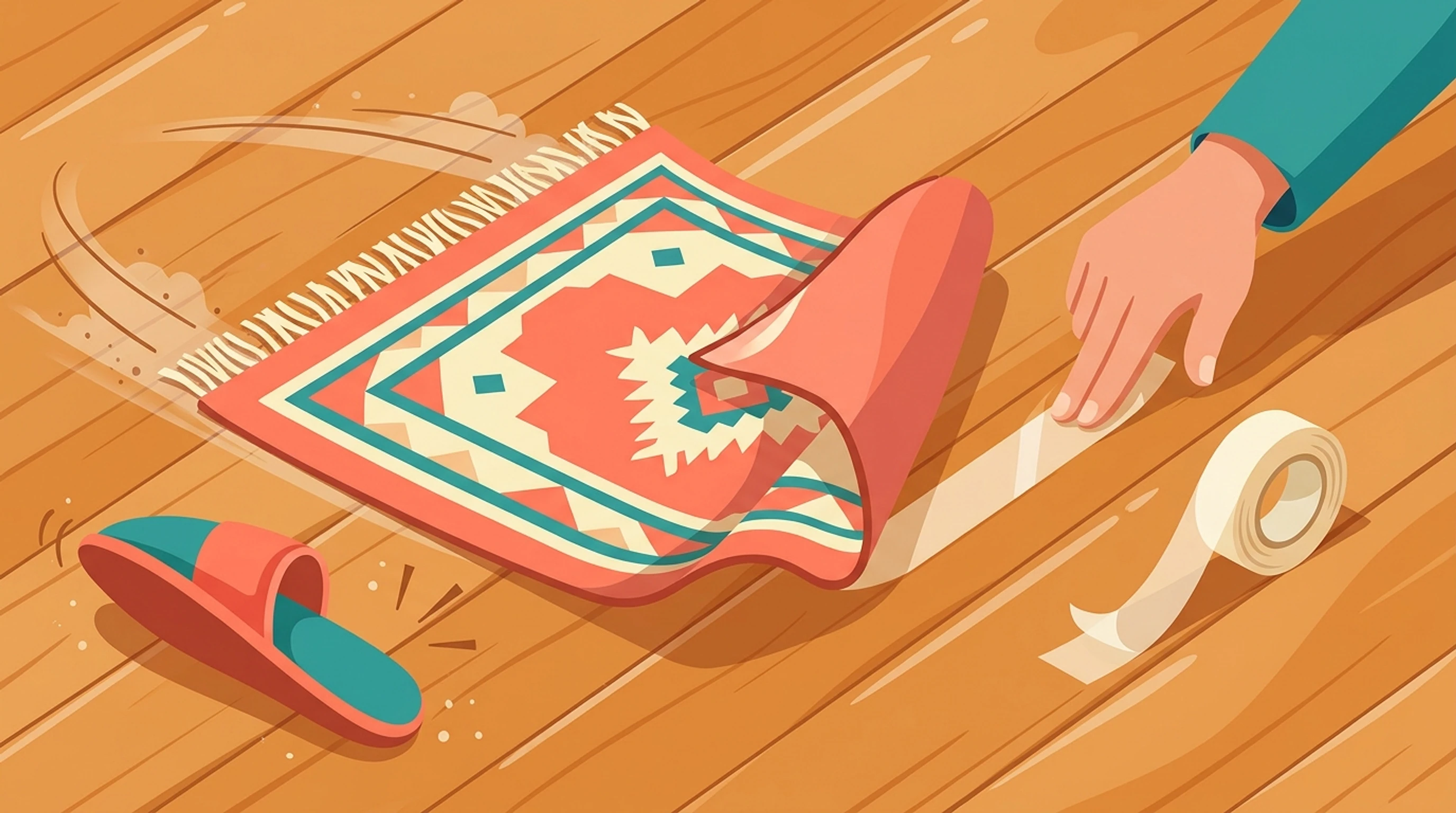
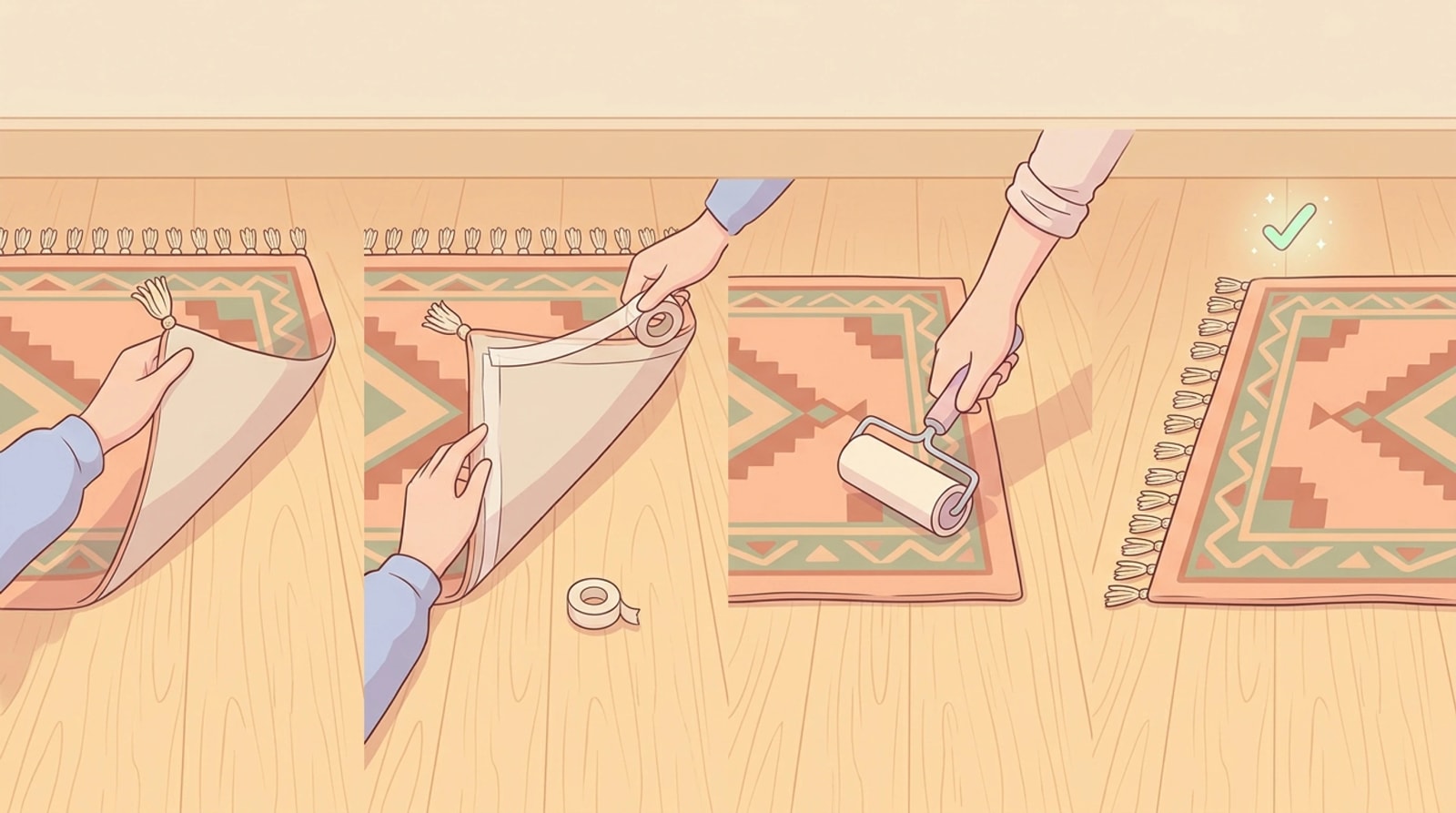
Rug tape is double-sided tape that secures the edges and corners of a rug to the floor. It works well for small rugs, runners and flatweaves that already lie flat.
- Clean the floor and the back of the rug. Dust stops tape from sticking.
- Cut strips long enough to run along each edge, or short strips for each corner.
- Stick the tape about an inch in from the edge on the underside of the rug, with the other side still covered.
- Peel off the backing and press the rug down firmly onto the floor, working from the center outward.
Check the label before you buy. Choose a tape marked as safe for your floor type, and test it in a hidden spot first, since strong adhesives can leave residue or mark delicate finishes. Remove tape slowly, pulling it back along the floor rather than straight up. A little gentle heat from a hairdryer softens stubborn adhesive.
Fix 3: Corner grippers
Grippers are small triangular pieces with a non-slip underside that you slide beneath each corner. They are quick to install and easy to remove, which makes them a good choice for rental homes or rugs you move often. They do not hold the middle of a rug in place, so they suit smaller, lighter pieces.
Fix 4: Use the right product on carpet
A rug placed on top of carpet needs a different approach. Smooth rug pads designed for hard floors will not grip carpet fibers properly. Look for a pad or gripper made specifically for rugs on carpet, which has a textured surface that holds both layers. Our rug size guide helps you choose a rug that is large enough to stay put once it is secured.
Fix 5: Secure runners on stairs
Never rely on tape alone on stairs. Use stair rods, carpet grippers or tacks suited to the stair material, so every step holds the runner firmly. Our guide to entryway and hallway rugs covers stair runner width and installation in more detail.
How to stop corners from curling
Curling usually comes from the way a rug was rolled for shipping or storage.
- Reverse-roll it. Roll the rug the opposite way, with the pile facing outward, and leave it for a day or two.
- Weigh it down. Place heavy books or furniture on the curled corners for a few days.
- Add corner grippers or tape to hold the corners flat afterward.
- Check the pad. A pad that is too large pushes the rug edge upward. Trim it so it sits just inside the rug.
Rug binding and edge repair
The edge of a rug takes a lot of wear, and it is where problems often start. Rug binding is the strip of tape, yarn or stitched band that finishes a rug's edge and stops it from fraying or unraveling. If the binding on your rug comes loose, stitch it back with strong thread and a curved needle, or have a rug repair service re-bind it. Fixing a small gap early is much cheaper than repairing a long run of damaged edge. Rugs with loose binding are also more likely to catch and curl, so repair the edge before you tape or pad the rug.
Fringe repair
Fringe is made from the ends of the rug's warp threads, so it is part of its structure rather than decoration. Handle it gently.
- Do not cut it off if it looks messy, because shortening the fringe can loosen the weave.
- Comb it gently with a wide-toothed comb to untangle strands.
- Keep the vacuum away from the fringe, since suction and brushes pull on the ends.
- Secure loose ends by tying small groups together with simple overhand knots close to the edge of the rug.
- For heavily damaged fringe, a professional can re-fringe the rug.
Frequently asked questions
What is the best way to keep a rug from slipping? A felt and rubber rug pad. It supports the whole rug, protects the floor and lasts for years.
Is rug tape safe for hardwood floors? Only if it is labeled safe for finished wood. Strong adhesive can leave residue or damage the finish, so test it in a hidden corner.
How do I keep a rug from sliding on carpet? Use a pad or gripper designed for rugs on carpet, or secure the corners with carpet-safe tape.
Why does my rug keep curling at the edges? Usually it was rolled or folded in storage. Reverse-roll it, weigh down the corners and add grippers.
Can I trim the fringe on a rug? It is better not to. Fringe is part of the weave, so trimming it can loosen the structure. Comb and secure it instead.
Related guides
The Kindred Weave editors. We write practical guides to handmade rugs and tapestries. Learn more about us.