Home / Blog / Buying Guide
Entryway and Hallway Rugs: Sizes, Materials and Runner Placement
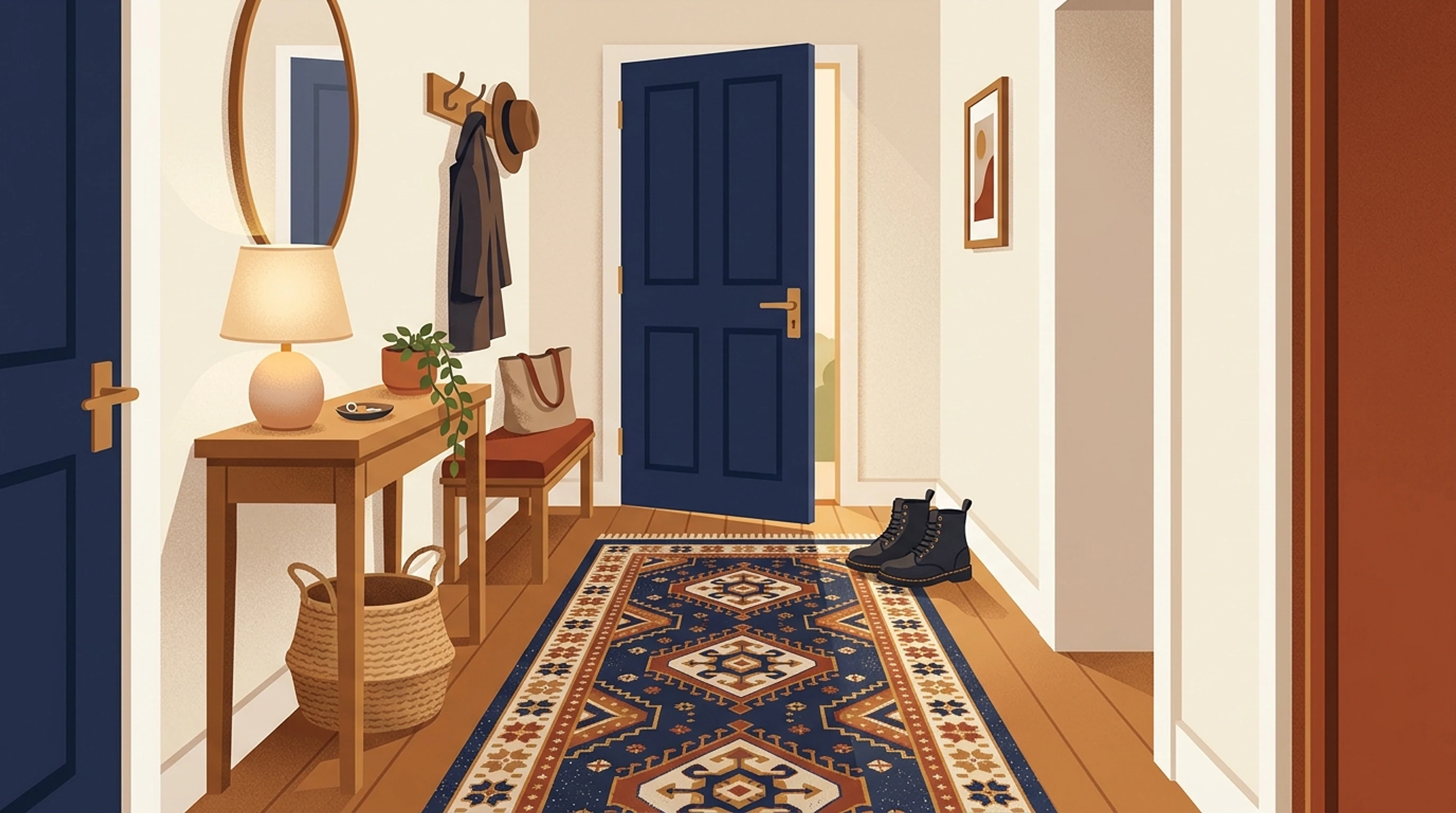
The entryway is the first thing guests see and the first place dirt arrives. Hallways take constant foot traffic. A good rug in either space protects the floor, adds warmth and makes the transition between rooms feel intentional. The right choice comes down to size, material and a few practical details.
Entryway rug size
An entryway rug should be large enough that both feet land on it as you step inside.
- Small entries: a 3x5 rug is a good minimum.
- Medium entries: a 4x6 gives a more generous welcome.
- Large foyers: a 5x8 or 6x9 can anchor the whole space, especially under a console table or bench.
Leave a few inches of bare floor between the rug and the walls or door frame so it looks deliberate rather than squeezed in. See our rug size guide for how this connects to the rest of your home.
Check the door clearance first
Before you buy, open the door and measure the gap between the bottom of the door and the floor. The rug, and any rug pad underneath, must be thin enough for the door to swing over it. A flat-woven or low-pile rug of about half an inch or less is usually safe. Thick shag rugs and heavy pads can make doors catch.
Hallway runner size
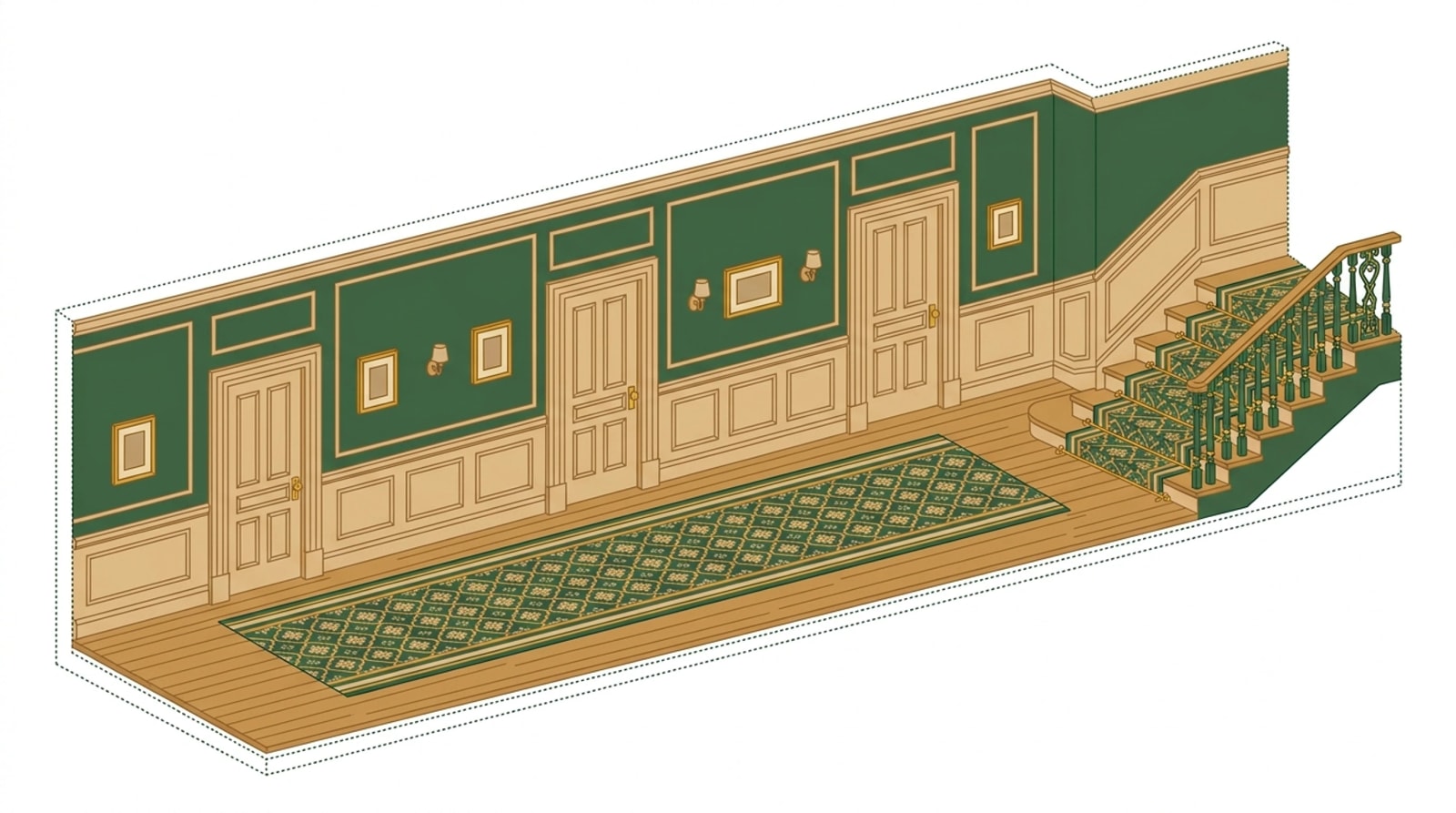
A runner is a long, narrow rug made for hallways, galleys and stairs. Standard widths are about 2 to 2.5 feet, and common lengths run from 6 to 14 feet.
- Width: leave roughly 4 to 6 inches of bare floor on each side. In a hallway that is 36 to 42 inches wide, a 2.5-foot runner usually fits well.
- Length: leave about 6 to 12 inches of floor at each end, so the runner does not touch doors or crowd the walls.
- Longer hallways: you can use two runners end to end with a small gap, or a single custom length.
Measure the hallway, subtract the borders, and choose the nearest standard length that fits.
Stair runners
A stair runner should be narrower than the step by about 3 to 4 inches on each side, so the edges of the stairs stay visible. Secure the runner with stair rods or carpet grippers so it cannot slip. Loose runners on stairs are a safety risk, so this is not a place for rug tape alone.
Best materials for high-traffic spaces
Entryways and hallways need fibers that stand up to shoes, grit and moisture.
- Wool. Resilient, naturally stain resistant and long lasting. The best all-round choice. See our guide to wool rugs.
- Sisal. Very tough and hardwearing, with a crisp, flat texture. A strong choice for busy hallways, though it feels rougher underfoot.
- Jute. Soft and affordable, but it absorbs moisture and wears faster, so it suits dry, lower-traffic hallways better than a wet-weather entry. Read the jute rug guide for details.
- Cotton and flat weaves. Light and easy to shake out, often a good fit for entry spots you want to move or wash.
If your entry sees rain or snow often, add a separate doormat outside and use a wool or flat-woven rug inside rather than jute.
Color and pattern
Entryway rugs collect dirt, so choose colors and patterns that hide it. Medium tones, tonal stripes, geometric designs and traditional patterns disguise grit better than a plain pale rug. If you love a light color, pair it with a sturdy outdoor doormat and a regular cleaning routine.
Use a rug pad, but keep it thin
A low-profile rug pad stops slipping, which matters on smooth floors where people walk quickly. Choose a thin pad of about an eighth of an inch so it does not interfere with the door. Our rug pad guide explains the different types.
Keeping it clean
- Shake out or vacuum the rug at least weekly. Grit works its way into the fibers and wears them down.
- Rotate it every few months so wear is spread evenly.
- Treat spills straight away by blotting, never rubbing.
- Take shoes off at the door where you can, or keep a tray for wet boots.
Frequently asked questions
What size rug should go in an entryway? A 3x5 or 4x6 for most entries. Make sure both feet land on it and the door can open freely.
How wide should a hallway runner be? About 2 to 2.5 feet wide, leaving 4 to 6 inches of bare floor on each side.
How long should a hallway runner be? Leave about 6 to 12 inches of floor at each end.
What is the best rug for a high-traffic hallway? Wool or sisal are the most durable. Choose a pattern or mid-tone color to hide dirt.
Can I use a jute rug in an entryway? Yes if the entry stays dry, but not where wet shoes or umbrellas are common, since jute absorbs moisture.
Related guides
The Kindred Weave editors. We write practical guides to handmade rugs and tapestries. Learn more about us.