Home / Blog / Buying Guide
How to Measure a Room for a Rug: A Step-by-Step Guide
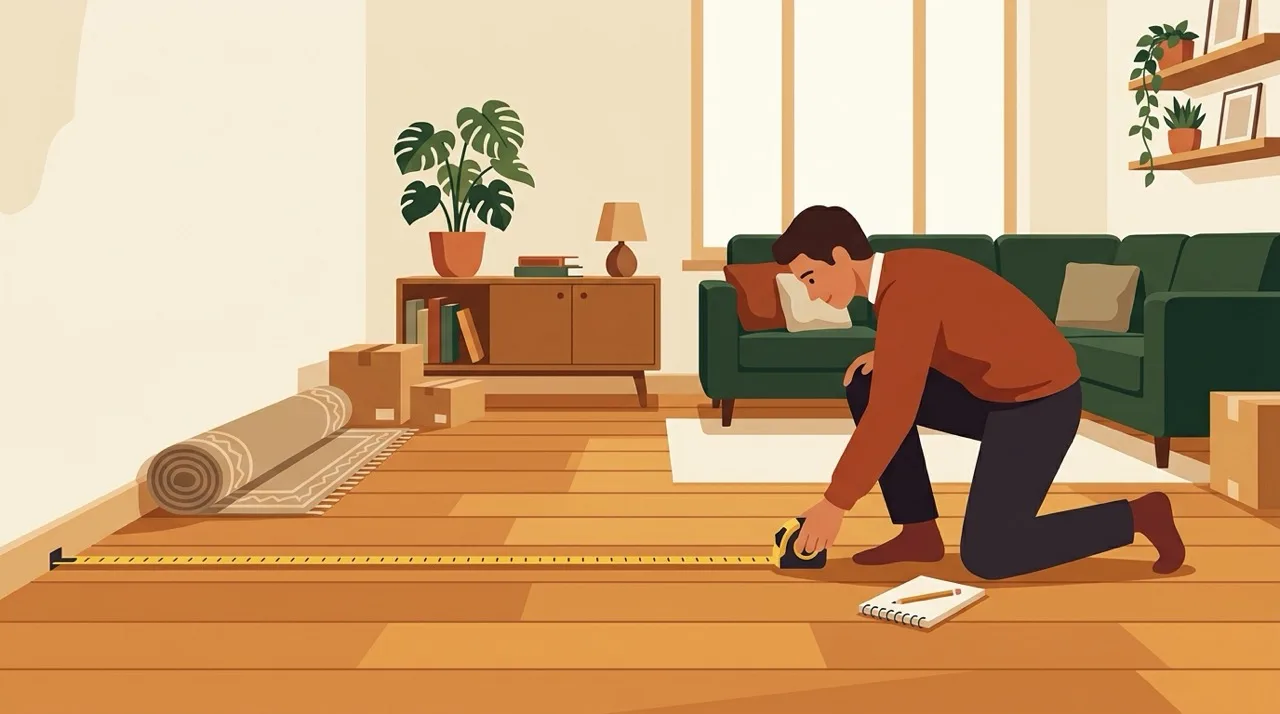
Most rug mistakes start with a measurement that was never taken. A rug that is too small looks lost, and one that is too large overwhelms the room. Ten minutes with a tape measure will give you the numbers you need to choose well.
What you need
- A metal tape measure, ideally 25 feet or longer
- A pencil and paper, or a notes app
- A helper, which makes measuring large rooms much easier
- A floor plan of the room, if you have one
Step 1: Measure the room
Measure the length and width of the floor from wall to wall. Measure at three points along each wall, because walls are rarely perfectly straight. Write down the smallest figure for each direction.
Note any alcoves, fireplaces, built-in shelves and doorways. These affect where the rug can sit and how much floor is usable.
Step 2: Mark the furniture
Measure the main furniture: the sofa, the coffee table, the armchairs, the bed or dining table. Note how far each piece sits from the walls. Furniture placement decides where the rug needs to reach.
Step 3: Plan the borders
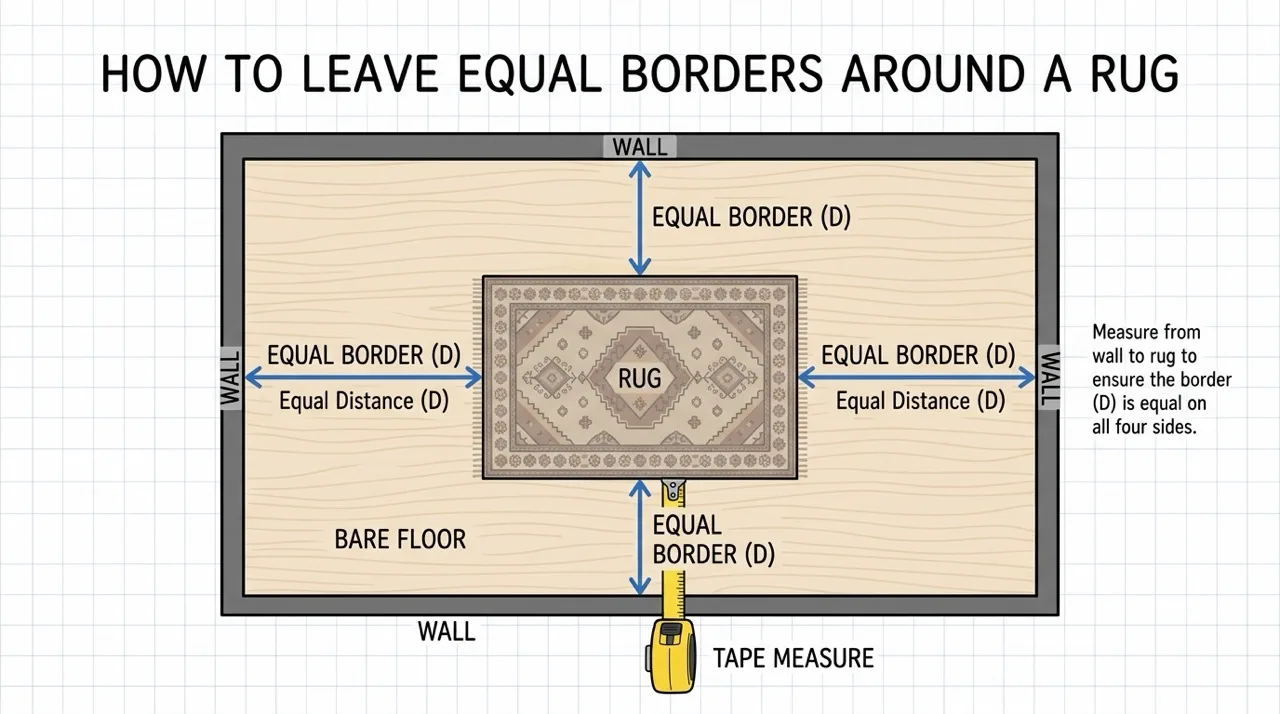
For most living rooms, leave 12 to 18 inches of bare floor between the rug edge and the walls. In a small room, leave less. In a large room, leave more. Subtract the borders from the room dimensions to find the largest rug that fits.
For example, a room that is 12 feet by 15 feet with an 18-inch border on each side leaves roughly 9 by 12 feet of usable floor. A 9x12 rug fits that space, but an 8x10 leaves a more relaxed border.
Step 4: Decide the layout
Choose how much of the furniture should sit on the rug:
- All front legs on the rug. The most common layout. It connects the seating area and suits most rooms.
- All legs on the rug. The most polished look. It needs a larger rug.
- Rug only in the middle. Suits very small rooms, but the rug can look like it is floating.
Our rug size guide matches each layout with the standard sizes.
Step 5: Check doors and walkways
Make sure the rug does not block a door as it opens. Leave a clear path to the main doorway. A rug that catches on a door frame is a trip hazard and wears out quickly.
Step 6: Mark it on the floor
Before you buy, mark the rug size on the floor with painter's tape. Walk around the outline and sit on the sofa. This is the best way to see whether the size works.
Common measuring mistakes
- Measuring only one point along a wall, which misses walls that are out of square
- Forgetting that a rug needs room for the door to swing
- Choosing a size based only on the sofa, without checking the coffee table
- Measuring the room but not the furniture's real footprint
Once you have the numbers, read our guides on dining table rug size or bedroom rug size if your room is a dining space or bedroom.
The Kindred Weave editors. We write practical guides to handmade rugs and tapestries. Learn more about us.