Home / Blog / Buying Guide
Bedroom Rugs: Size, Placement and the Best Materials
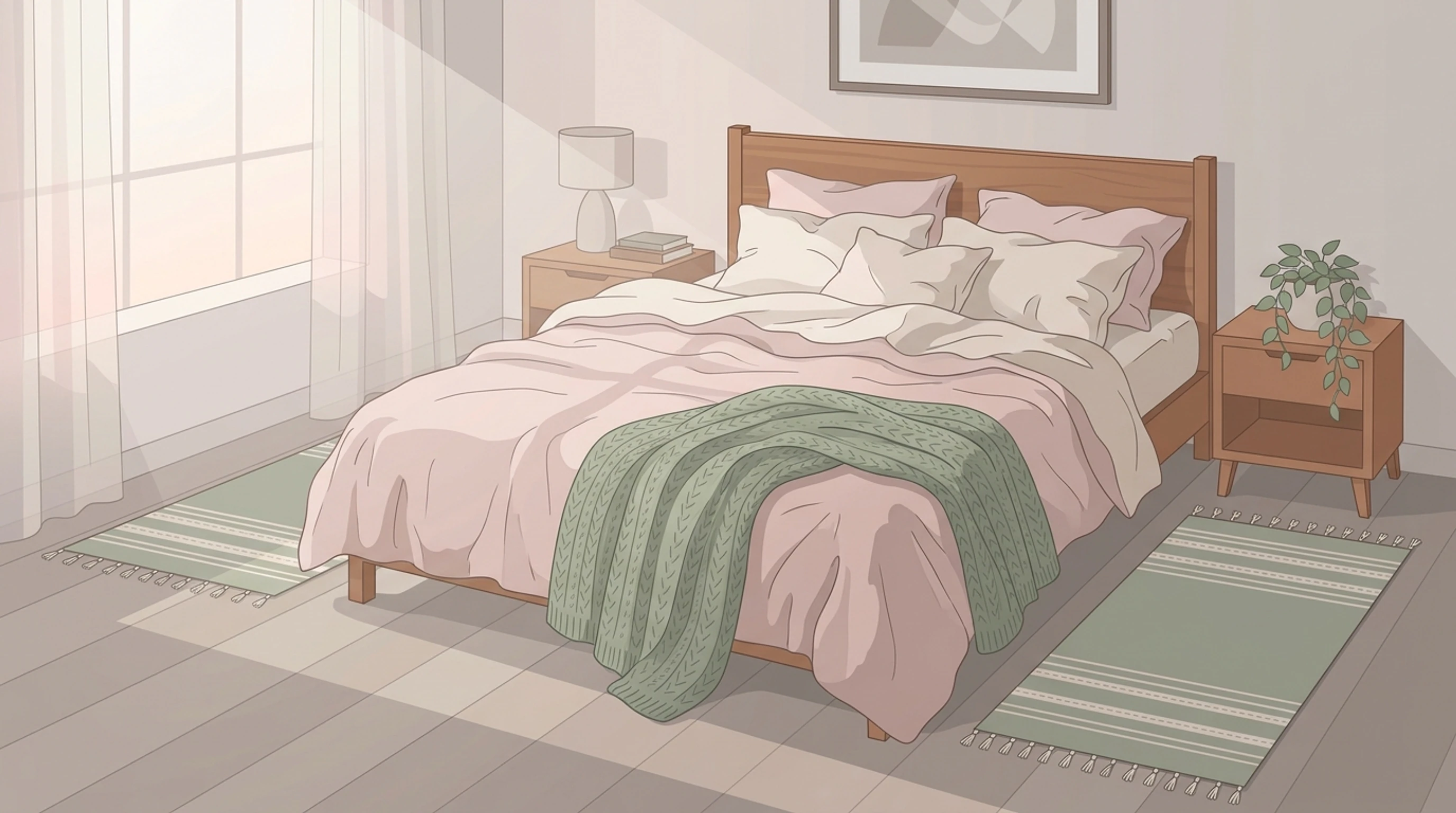
A bedroom rug does two jobs. It gives you something warm and soft to step onto first thing in the morning, and it frames the bed so the whole room feels finished. Most of the work is getting the size and placement right, so start there.
Three bedroom rug layouts that work
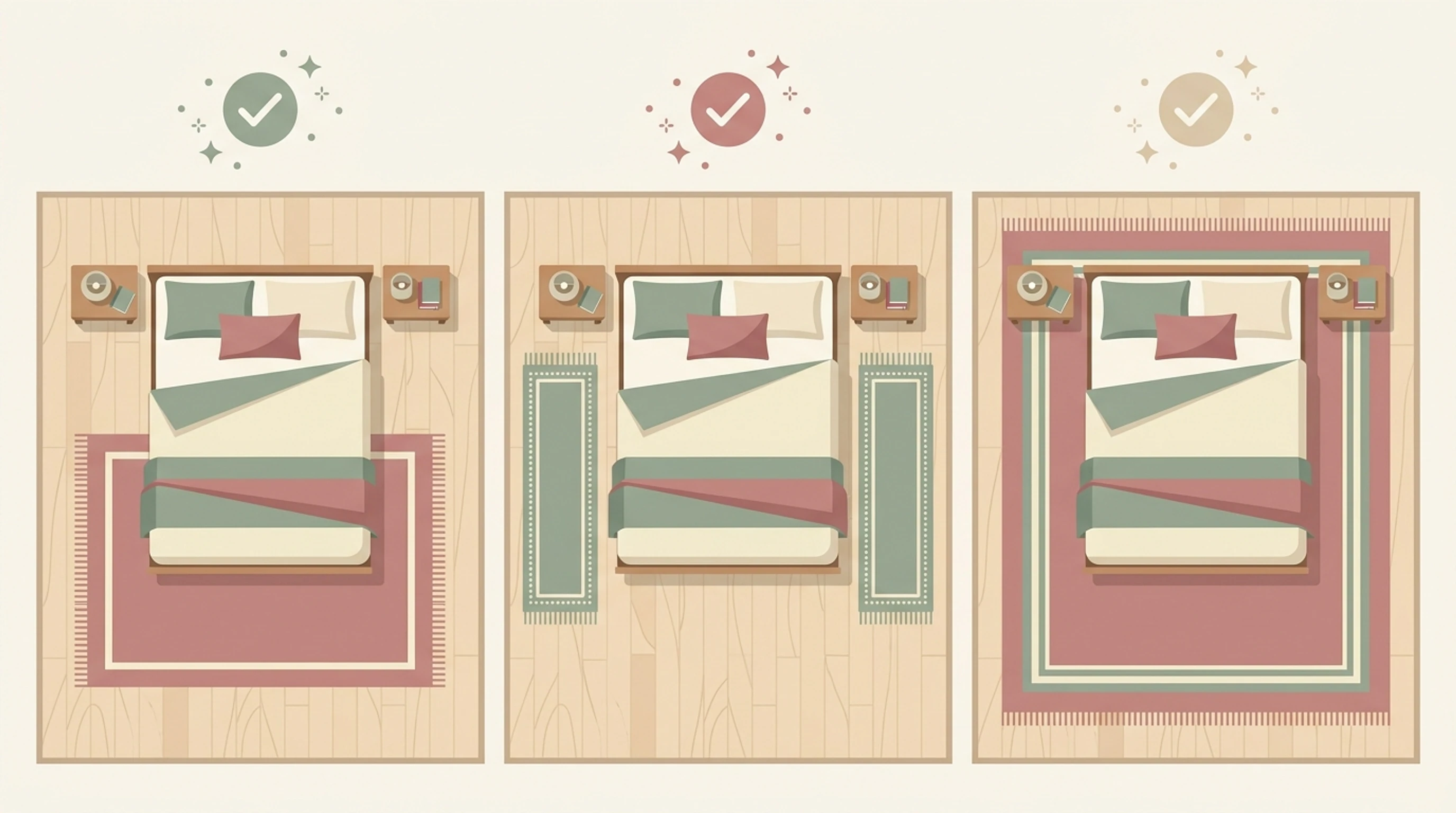
You do not need a single giant rug. Pick the layout that suits your room and budget.
- Under the lower two-thirds of the bed. The rug sits beneath the foot and extends out on both sides and at the bottom. This is the most popular layout. It keeps the rug visible from the doorway and costs less than a full-size rug.
- Two runners, one on each side. A pair of narrow rugs gives you a soft landing on both sides of the bed. It is a good choice for a small room or when you want to show off the floor.
- A large rug under the whole bed. The rug extends beyond the bed and nightstands on every side. It looks the most generous and works well in a larger room.
What size rug for your bed?
For the standard layout, the rug should extend 18 to 24 inches beyond the sides and the foot of the bed, so your feet land on it when you stand up.
| Bed size | Rug under the lower two-thirds | Full-surround rug | | --- | --- | --- | | Twin | 5x8 | 6x9 | | Full | 5x8 or 6x9 | 8x10 | | Queen | 8x10 or 6x9 | 9x12 | | King | 9x12 or 8x10 | 10x14 |
If you choose runners, a pair of 2.5x8 runners (about 30 by 96 inches) fits most bedrooms. Leave a few inches of floor between the rug and any door that swings into the room. For a deeper walkthrough, see our rug size guide and our guide to rug sizes for king and queen beds.
Best materials for a bedroom rug
A bedroom has less foot traffic than a living room, so you can choose for softness first.
- Wool: soft, warm and naturally resilient. It is the best all-round choice. Read the complete wool rug guide.
- Cotton: light, easy to move and good for a casual look, though it flattens faster than wool.
- Jute and sisal: beautiful texture but coarse underfoot. Use them as a base layer under a softer rug. See how to layer rugs.
- Shag and high-pile: very soft, but harder to clean and more likely to trap dust.
If you are weighing the two most popular natural fibers, our wool vs jute guide compares them side by side.
Choose a color that calms the room
Bedrooms feel best with quiet colors. Soft neutrals, sage, warm sand and muted blues help the room feel restful, while a subtle stripe or pattern hides small marks. Our guide to neutral rugs shows how to keep a quiet palette from looking flat, and our advice on choosing rug colors and patterns covers pairing with bedding.
Add a rug pad
A pad keeps the rug from sliding when you step out of bed, and it adds cushioning. Choose a pad about an inch smaller than the rug on each side. See our rug pad guide for types and thickness.
Placement tips
- Center the rug on the bed, not on the room, so the bed looks anchored.
- Keep the nightstands either fully on or fully off the rug. Legs half on, half off make the table wobble.
- Make sure a door can open without catching the rug.
- Check that the rug is flat. A rolled edge is a trip hazard, and a rug pad or rug tape fixes it.
Care in the bedroom
Vacuum weekly without a beater bar, rotate the rug every six months and blot spills right away. For wool, follow our guide to cleaning a wool rug. For jute, see how to clean a jute rug.
The Kindred Weave editors. We write practical guides to handmade rugs and tapestries. Learn more about us.