A room can have a perfect color scheme and still feel flat. What it is usually missing is texture. Texture is the way surfaces look and feel: rough, soft, smooth, nubby. It adds depth and warmth, especially in neutral rooms. Here are nine ways to add it.
1. Start with the rug
The floor is the biggest surface in the room, so the rug has the biggest effect. A chunky jute, a thick wool or a woven flat weave brings instant texture. See our wool vs jute guide to compare the options, and pick the right size with our rug size guide.
2. Layer rugs
Layering a smaller patterned or soft rug over a larger natural fiber base mixes textures in one move. It also adds color without a big commitment. We cover the how-to in how to layer rugs.
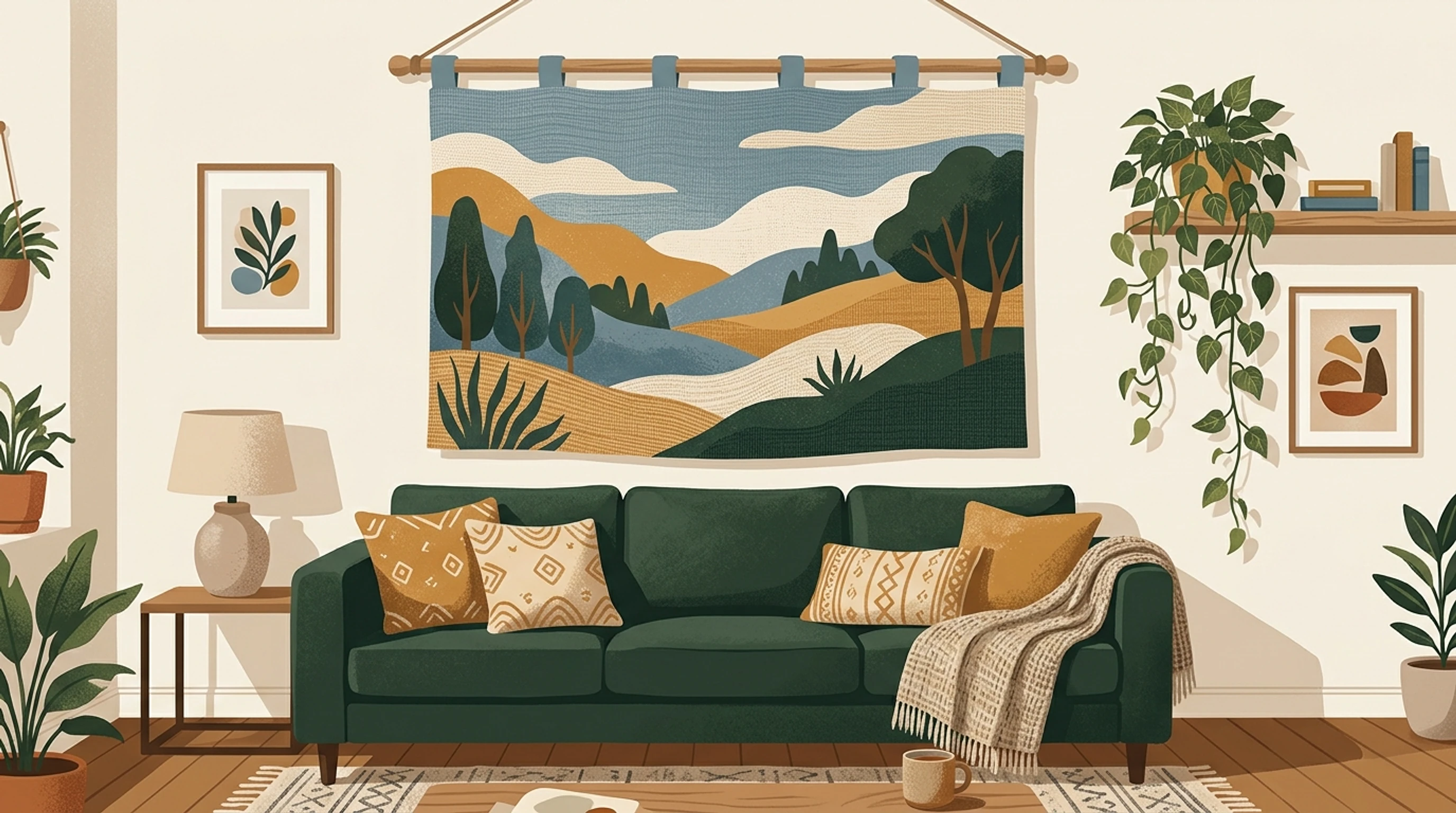
3. Hang a woven tapestry
A woven wall hanging brings texture to the wall and softens a bare room. Learn how in how to hang a tapestry, and see the craft's history in a short history of tapestry weaving.
4. Mix natural fibers
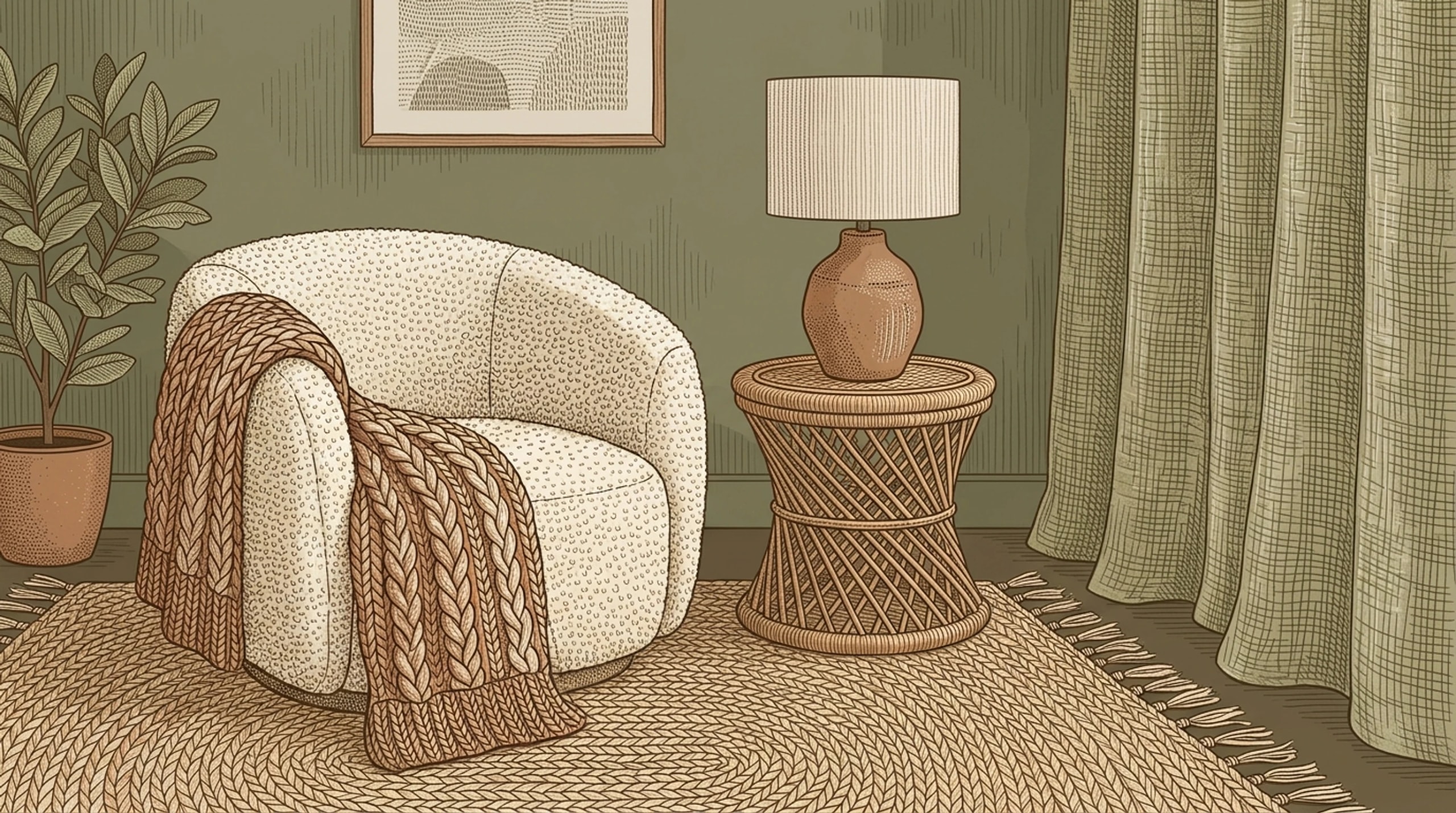
Combine jute, wool, linen, cotton, rattan and wood. Natural materials share an earthy quality, so they mix without clashing. A jute rug, a wool throw, a linen curtain and a wooden table make a layered, calm room.
5. Use throws and cushions
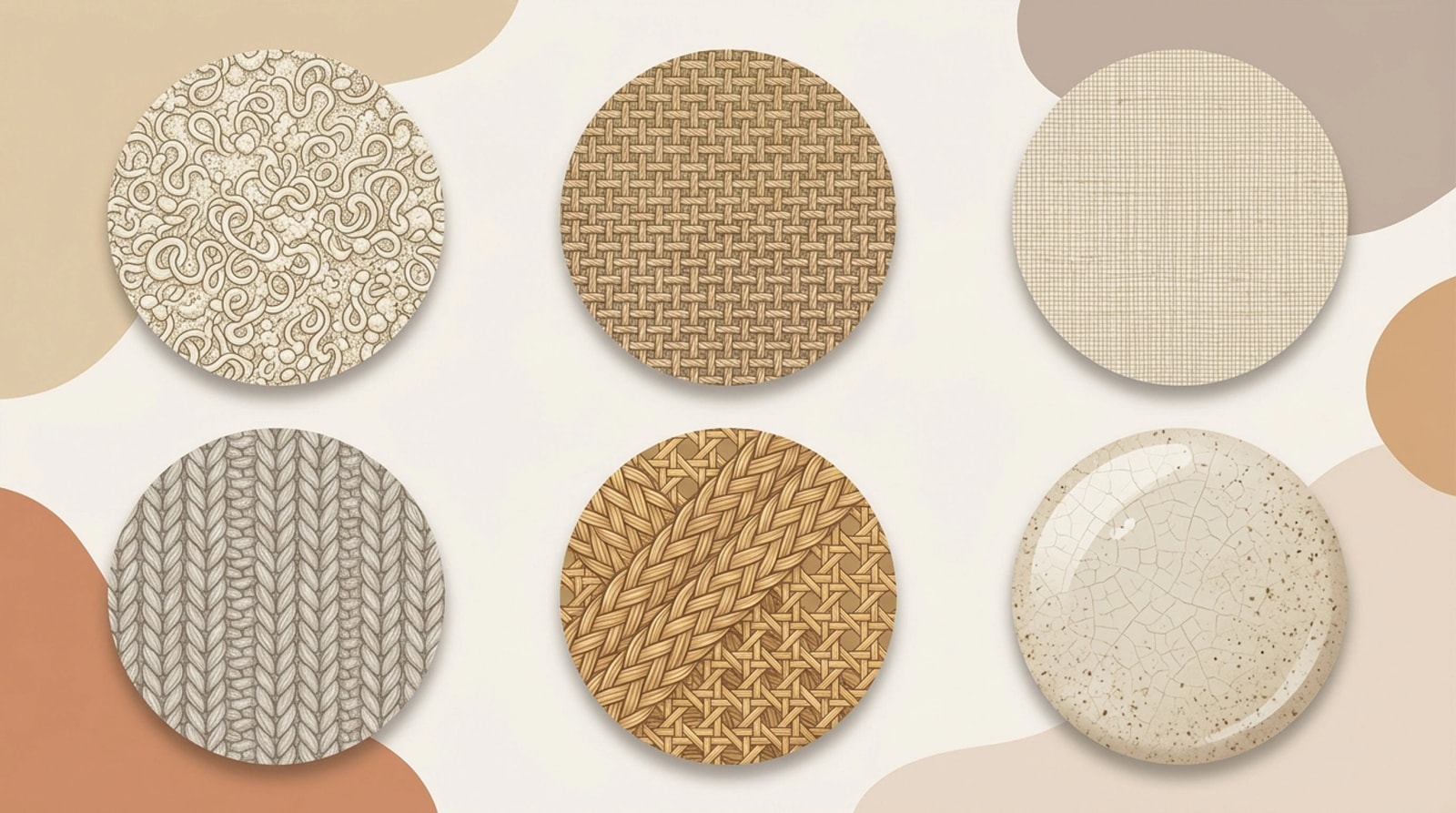
Throws and cushions are the easiest places to experiment. Mix knitted, woven and smooth fabrics, and vary the scale of the weave. Keep the palette close so the textures, not the colors, stand out.
6. Add organic shapes and materials
Baskets, ceramics, dried stems, wooden bowls and woven lampshades bring in texture at a small scale. Odd numbers and varied heights look natural.
7. Balance rough and smooth
Too much of one texture feels heavy or flat. Pair a rough jute rug with a smooth leather chair, or a nubby wool throw with a glossy ceramic lamp. Contrast makes each texture stand out.
8. Keep color simple
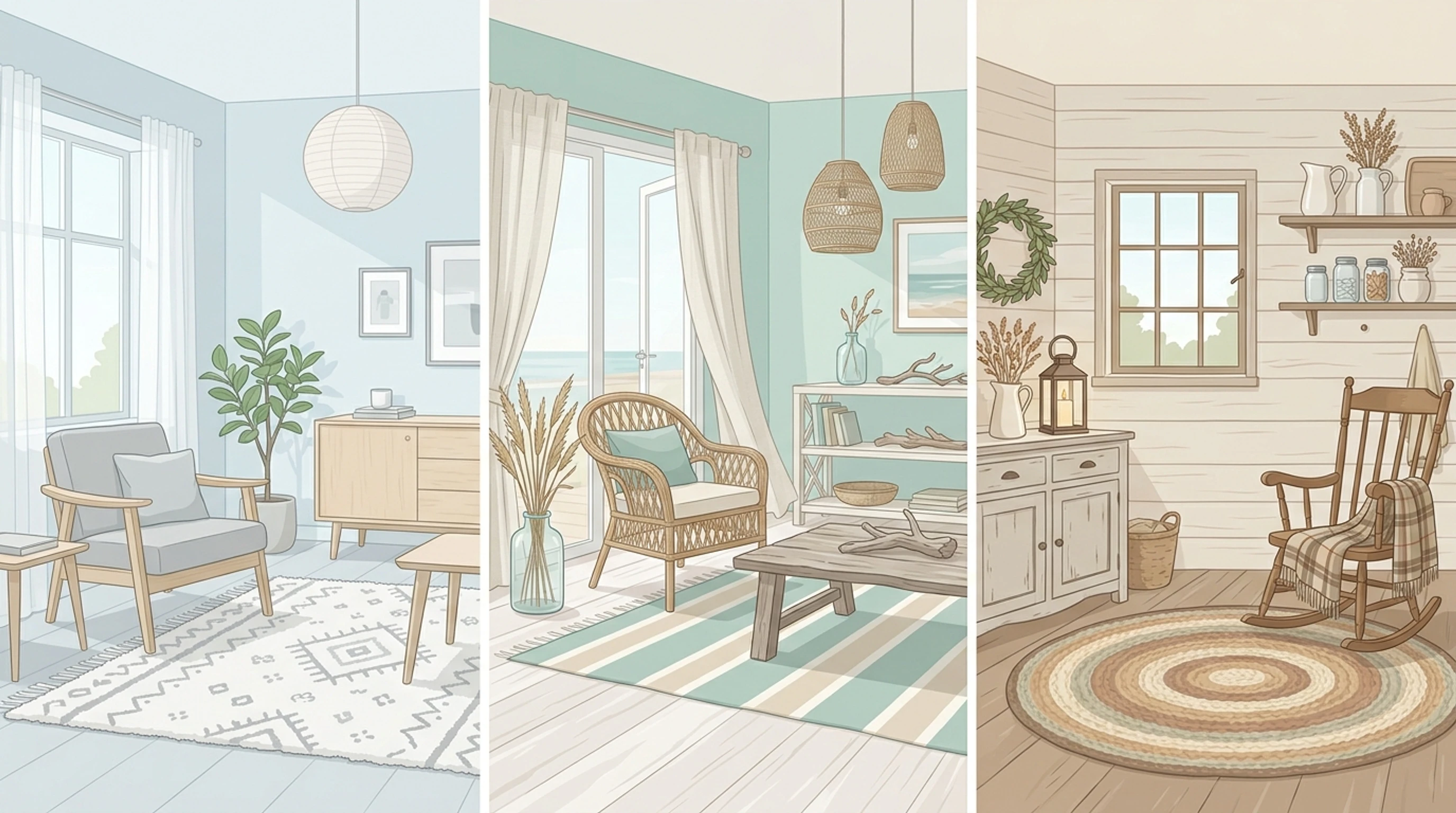
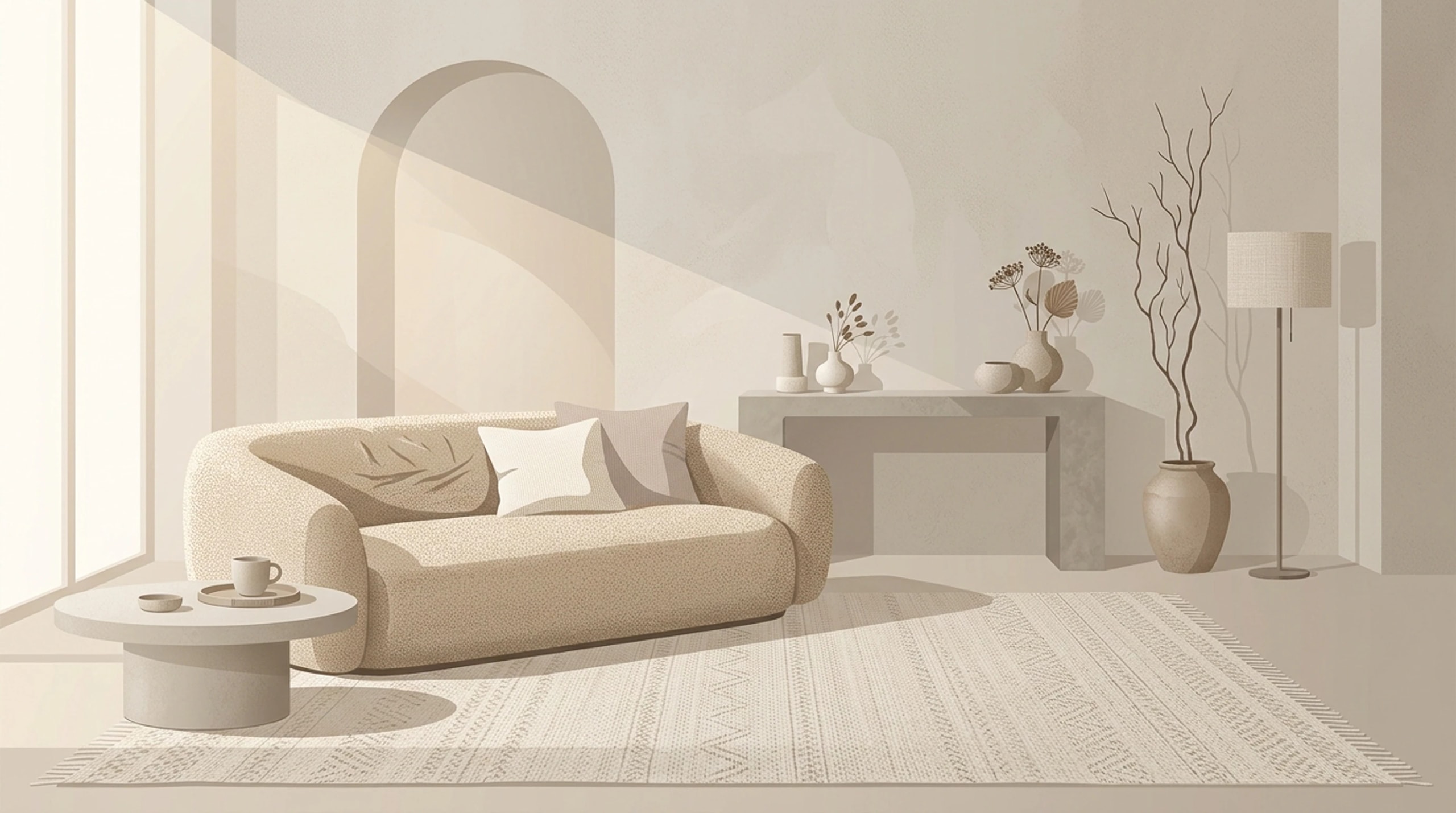
When you add texture, you can use fewer colors. A neutral, earthy palette lets texture do the work. This is the idea behind organic modern, wabi sabi and Japandi interiors. If you want more color and pattern, see how to choose rug colors and patterns.
9. Stop before it is too much
Aim for three to five main textures in a room, and keep one calm surface. If the room feels busy, remove one layer.
A quick texture checklist
- One large textured piece (the rug)
- One wall piece (tapestry or art)
- Two or three soft textiles (throws, cushions, curtains)
- A few organic objects (baskets, ceramics, wood)
Texture lasts when the pieces are well made, so look after them. See how to care for a wool rug and how to clean a jute rug.
Related guides
The Kindred Weave editors. We write practical guides to handmade rugs and tapestries. Learn more about us.