A tapestry is one of the oldest forms of wall decor, and it still does something that paint and prints cannot: it adds warmth, texture and softness to a wall. A large woven piece can anchor a room, absorb a little sound and make a space feel finished. This guide explains the main types of tapestry and wall hangings, how to choose the right size and where to hang it.
What is a tapestry?
A tapestry is a woven textile in which the pattern or picture is built directly into the cloth. Colored weft threads are passed back and forth across the warp, covering it completely, so the design is part of the fabric rather than printed on it. Traditional tapestries show scenes, landscapes and decorative borders. Our short history of tapestry weaving traces how the craft developed.
Tapestry vs woven wall hanging vs macrame vs fiber art
These terms overlap, so here is a simple way to tell them apart.
- Tapestry: a densely woven textile with a picture or pattern, usually flat and rectangular.
- Woven wall hanging: a looser, more textural piece woven on a small loom or frame, often with fringe, mixed yarns and contemporary shapes.
- Macrame wall hanging: made from knotted cord rather than woven. See our macrame wall hanging guide.
- Fiber art: a broad term for sculptural or experimental textile work that treats fiber as an art medium, often combining weaving, knotting and embroidery.
Types of tapestry wall hangings
Traditional pictorial tapestries
Scenes, florals and landscapes in deep colors, often with a border. They suit traditional and eclectic rooms and look dignified in a hallway or above a sideboard.
Kilim and flatwoven wall hangings
Bold geometric patterns woven flat. They are lightweight and colorful, which makes them easy to hang. Read about kilim rugs, many of which are used on walls.
Contemporary woven wall hangings
Abstract compositions in natural yarns with texture, fringe and organic shapes. They suit modern, Scandinavian and bohemian rooms.
Large statement tapestries
Oversized pieces, often several feet wide, that cover a whole wall and act as the main artwork of a room.
Small and gallery-wall pieces
Small woven panels that you can group with frames and mirrors to build a wall of mixed art.
Materials
- Wool: durable and richly colored, the classic tapestry fiber.
- Cotton and linen: lighter and cooler, often used in modern pieces.
- Jute and natural fibers: add a rustic, earthy texture.
- Silk and blends: a subtle sheen, usually in finer, more delicate work.
- Recycled yarns: colorful and sustainable.
How to choose the right size
Size matters more than almost anything else.
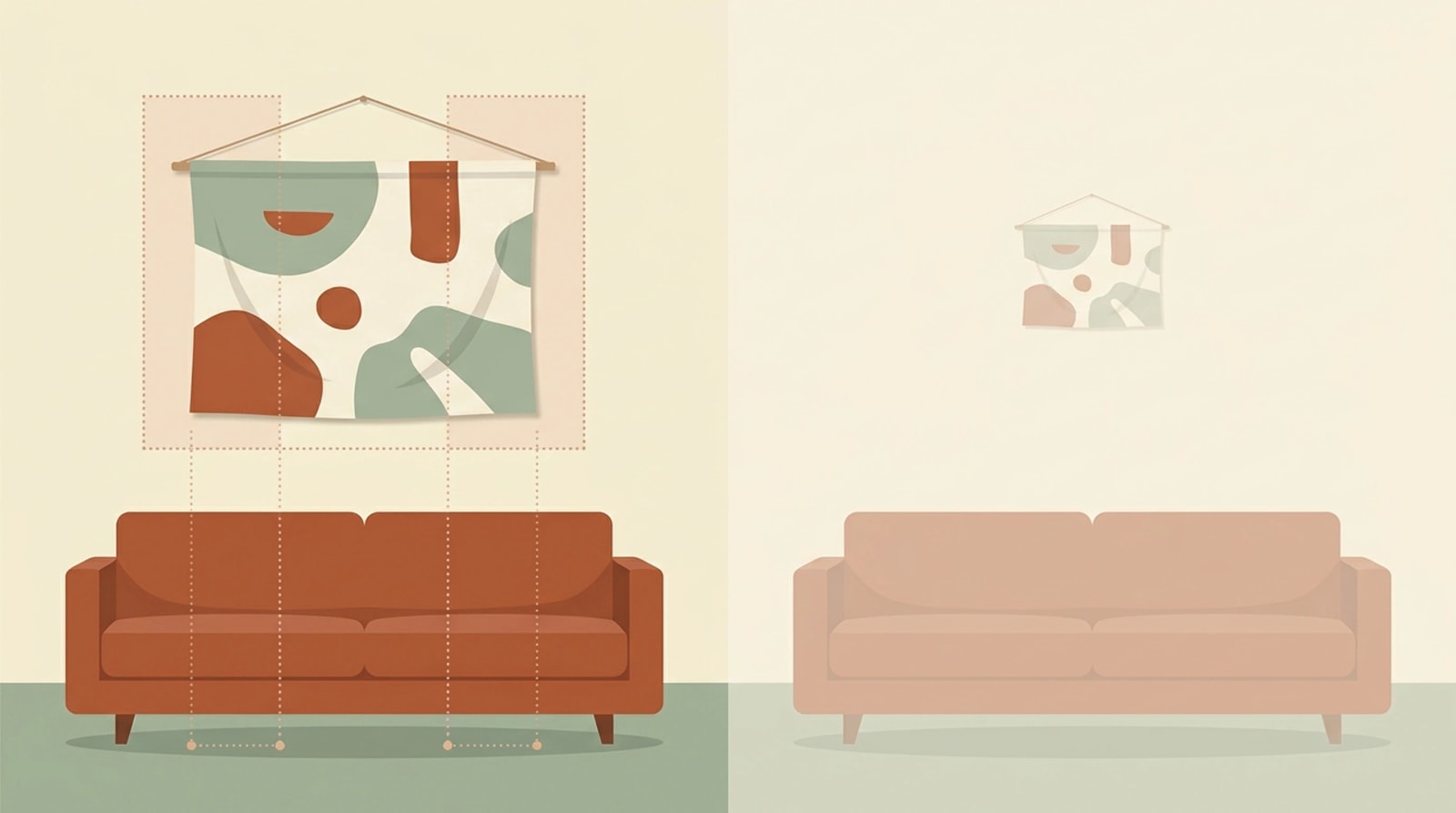
- Above furniture: aim for roughly two-thirds the width of the sofa, bed or console below. Anything much smaller looks lost.
- On an empty wall: a large piece of 4 to 6 feet wide makes a statement and suits big living rooms and high ceilings.
- Narrow walls: a tall, vertical hanging draws the eye up and adds height.
- Gallery groupings: keep a consistent gap of two to three inches between pieces.
Hang the center of the piece at about eye level, or around 6 to 10 inches above the top of the furniture beneath it, so the wall and furniture feel connected.
Where to hang a tapestry
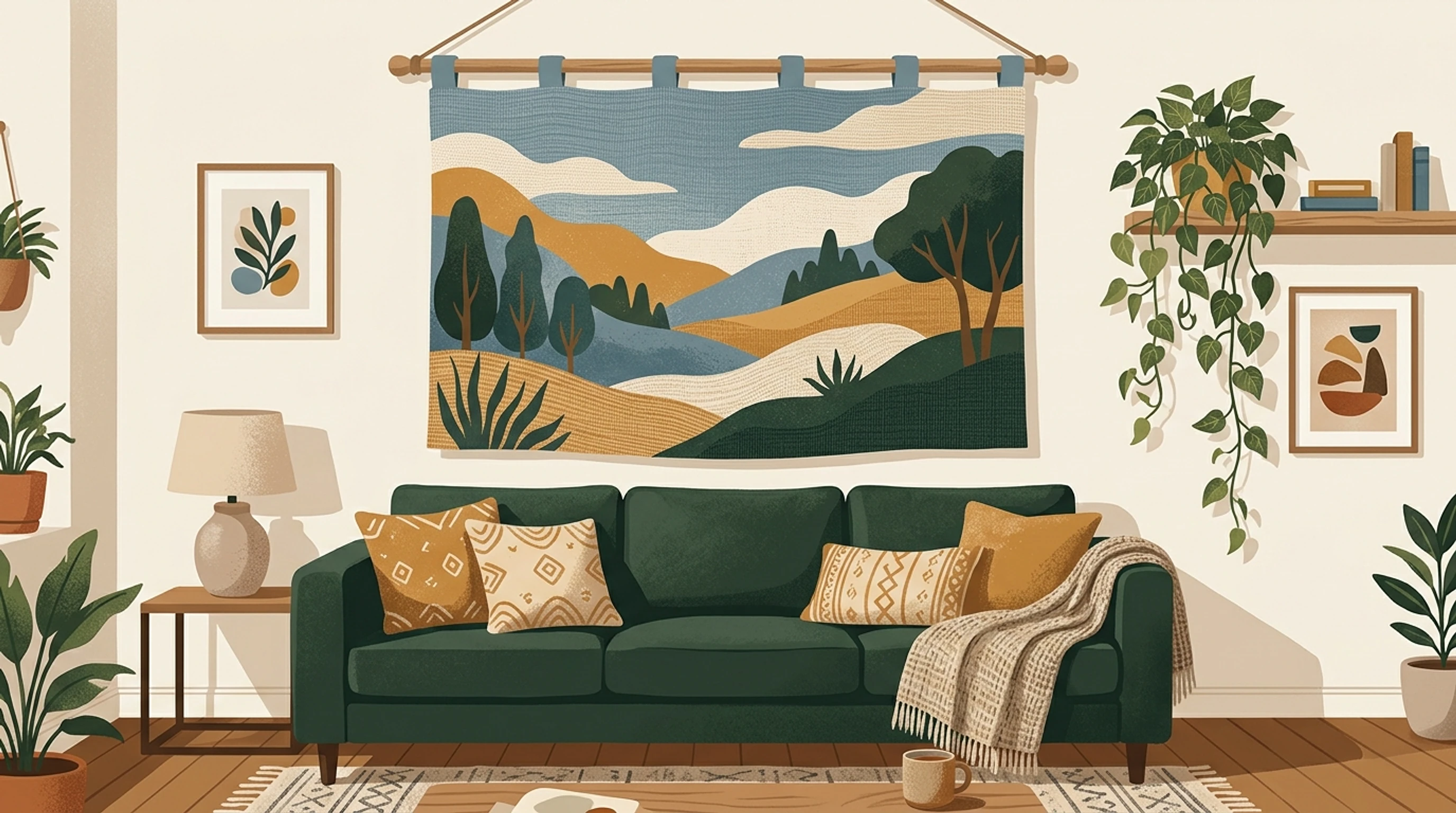
- Over the sofa: the classic position for a large piece.
- Above the bed: use a piece narrower than the headboard for a calm, hotel-like effect.
- In the entryway: a tall hanging makes a good first impression.
- Dining room: above a sideboard or at the end of the room.
- Home office: behind the desk, where it also softens echo.
- Stairwell: a long piece on a tall wall.
Keep tapestries out of direct sunlight and away from kitchens and bathrooms, where moisture and grease cause damage.
Styling ideas
- Pair it with a rug. Pull a color from the tapestry into the rug, as explained in our guide to choosing rug colors and patterns.
- Layer textures. Combine the tapestry with a jute rug, linen and wood. See our guide to adding texture to a room.
- Let it be the only pattern on the wall if the rest of the room is already busy.
- Mix with frames. A small tapestry beside framed prints adds depth to a gallery wall.
- Use a bold rod. Hanging from a driftwood branch or brass rod makes the piece feel intentional.
How to hang a tapestry safely
The right method depends on weight and size. A rod and sleeve suits heavy pieces, hook-and-loop tape spreads weight along the whole top edge and clips suit lighter work. Never put nails or pins through the fabric. Our guide to how to hang a tapestry explains each method step by step.
Caring for a tapestry
- Dust gently every few months with a soft brush or a vacuum on low suction through a mesh screen.
- Keep it out of sun, which fades dyes.
- Let air circulate behind the piece so it does not trap moisture.
- Rotate or rehang occasionally to relieve strain.
- Use a professional cleaner for antique pieces.
What to look for when you buy
- Even weave with no loose or gaping areas.
- Straight edges and square corners.
- Colors that look even, without streaks.
- A sturdy hanging system, such as a sleeve or loops.
- A size that suits your wall, so measure before you order.
- Clear information about materials and origin.
Frequently asked questions
What is a tapestry wall hanging? A woven textile whose design is built into the fabric, designed to be hung on a wall as decoration.
How big should a tapestry be? About two-thirds the width of the furniture beneath it, or 4 to 6 feet wide for a large statement piece on a blank wall.
What is the difference between a tapestry and a wall hanging? A tapestry is a densely woven textile with a picture or pattern. Wall hanging is a broader term that includes woven, macrame and fiber art pieces.
Can you hang a tapestry in a bedroom? Yes. Above the bed is a popular position, and a piece narrower than the headboard looks best.
How do you keep a tapestry from fading? Keep it away from direct sunlight and strong artificial light.
Related guides
The Kindred Weave editors. We write practical guides to handmade rugs and tapestries. Learn more about us.