Scandinavian, coastal and farmhouse interiors all lean on natural materials and a relaxed, welcoming feel, which is why their rugs are often confused. Yet each style asks for something different underfoot. Knowing what sets them apart makes it much easier to pick a rug that suits your room, and to avoid one that fights it.
The quick comparison
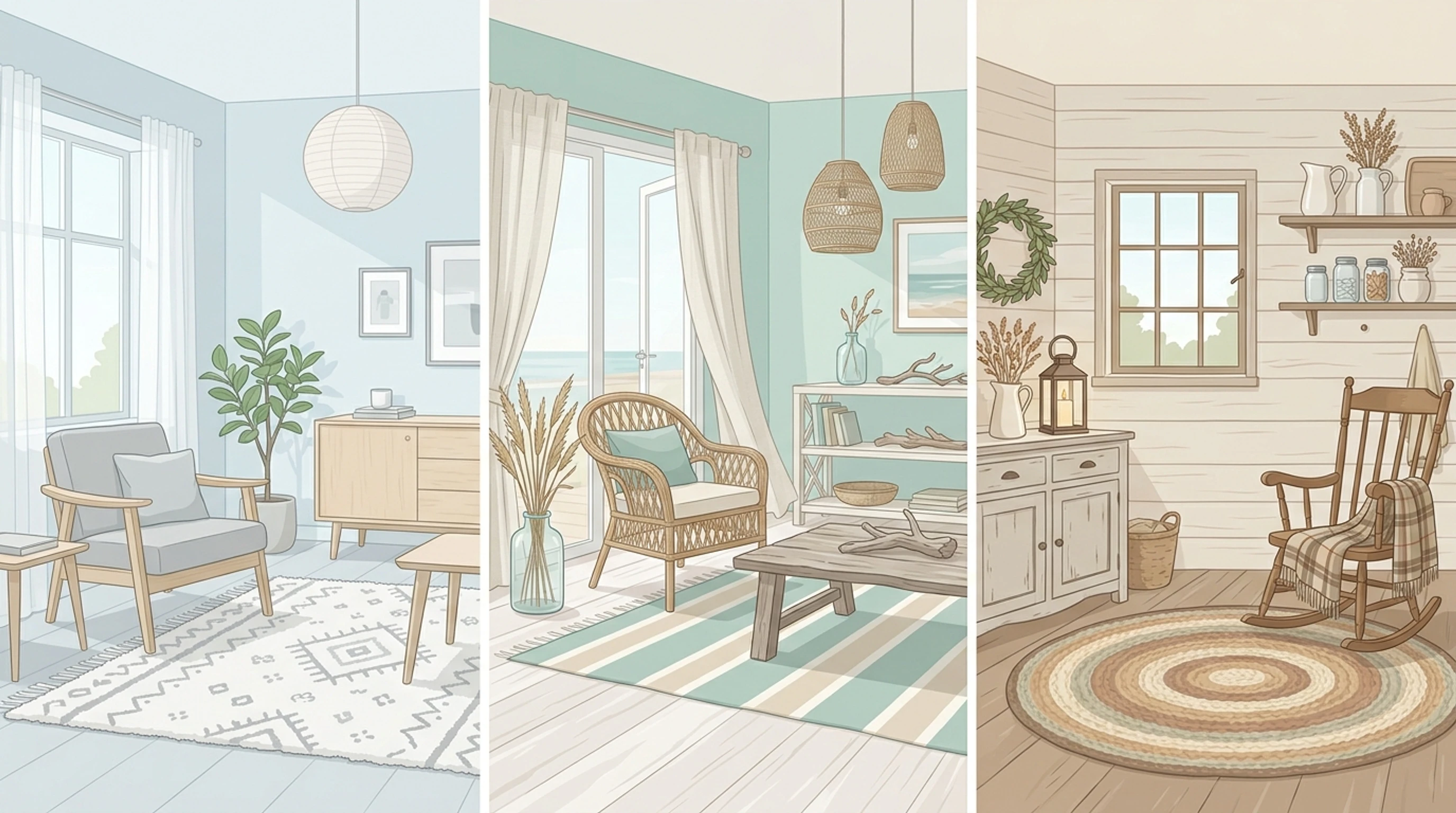
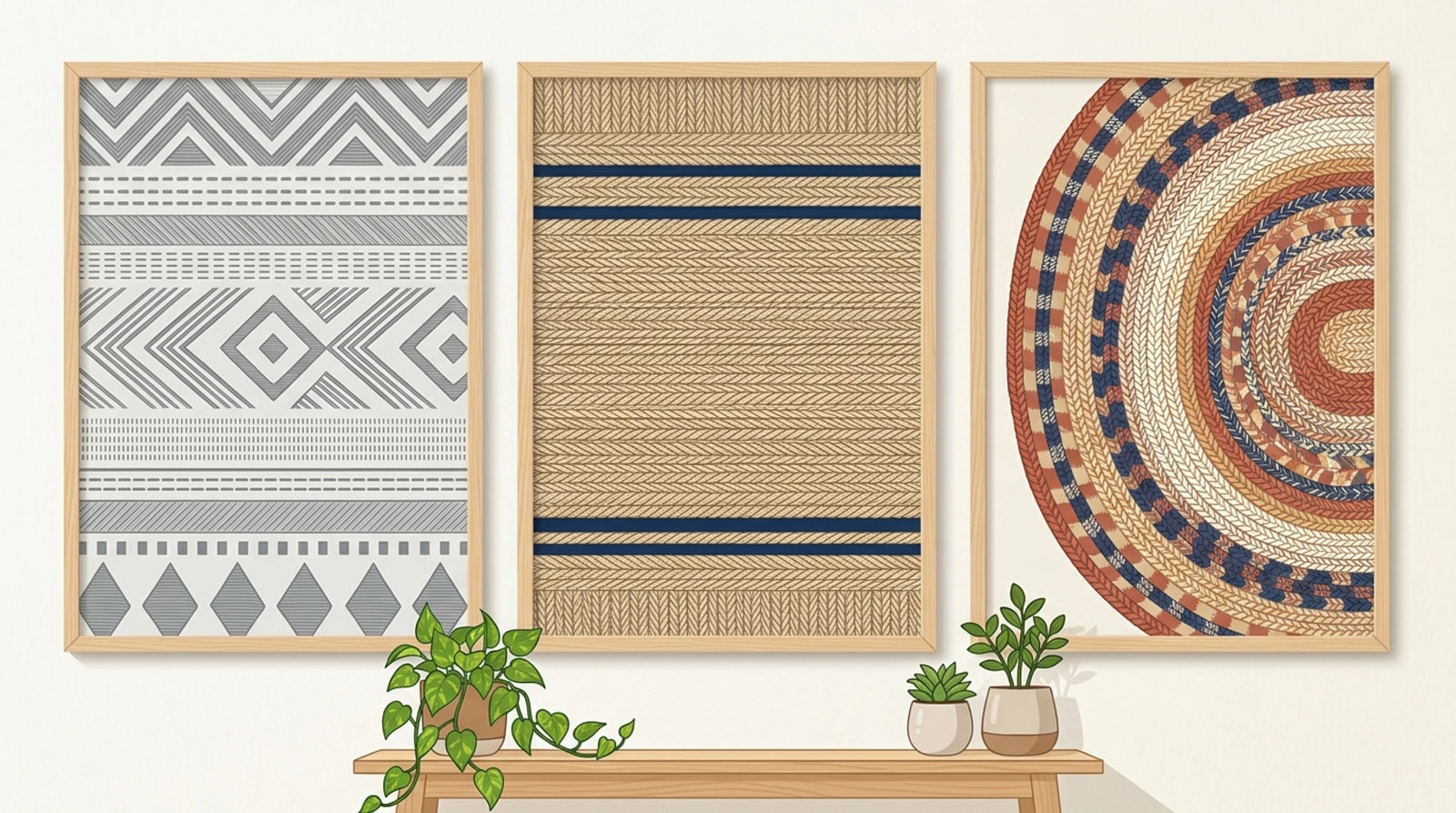
- Scandinavian: light, minimal and cozy. Pale woods, white walls, soft gray and black accents. Rugs are simple, graphic and soft.
- Coastal: airy, bright and relaxed. Blues, whites and sand tones. Rugs are textured, striped and made of natural fibers.
- Farmhouse: warm, rustic and lived-in. Wood, cream and black accents. Rugs are braided, faded, plaid or traditional in feel.
Scandinavian rugs
Scandinavian design is built on simplicity, function and comfort, often summed up by the Danish idea of hygge, a cozy sense of contentment. The rug is there to add warmth and softness to a pale, uncluttered room.
What to look for
- Colors: white, cream, light gray, charcoal and black, with the occasional muted accent such as dusty blue or soft pink.
- Patterns: simple geometrics, fine stripes, minimal lines or none at all. Black and white designs are a signature.
- Textures: soft wool, high-pile shag, sheepskin and Scandinavian rya rugs with a long, tactile pile.
- Materials: wool is the classic choice. See our wool rug guide.
Best for: living rooms, bedrooms and reading corners where you want calm and warmth.
Coastal rugs
Coastal style takes its cues from the seaside: light, fresh and uncluttered. It is about the feeling of a beach house more than literal seashells.
What to look for
- Colors: white, navy, sky blue, seafoam, sand and driftwood gray.
- Patterns: stripes (a nautical classic), subtle waves, simple geometrics and faded, sun-washed prints.
- Textures and materials: natural fibers are central, especially jute, sisal, seagrass and rope-style weaves, plus cotton flatweaves.
- Feel: relaxed and easy to live with, with nothing too precious.
Best for: sunrooms, living rooms, bedrooms and entryways. In humid seaside homes, choose rugs with care. Natural fibers dislike damp, so keep them away from bathrooms and wet entrances and make sure the room has good airflow.
Farmhouse rugs
Farmhouse style is warm and rustic, with a sense of history. It mixes simple furniture with vintage finds and cozy textiles.
What to look for
- Colors: cream, warm white, tan and gray, with black or deep green accents and the occasional soft red or blue.
- Patterns: plaid, ticking stripes, faded floral and traditional medallion patterns that look gently worn.
- Textures and materials: braided rugs, jute, chunky wool and flatweaves. Washed-out or distressed finishes suit the look.
- Shapes: oval and round braided rugs are classics, and runners suit kitchens and hallways.
Best for: kitchens, dining rooms, entryways and family living rooms, where durable, forgiving rugs are an advantage.
Which one is right for you?
Ask yourself three questions:
- What is the mood of the room? Calm and minimal points to Scandinavian, fresh and airy to coastal and warm and rustic to farmhouse.
- What is the color base? White and gray suit Scandinavian, blue and sand suit coastal and cream with wood and black suits farmhouse.
- How is the room used? A busy kitchen or entryway suits a forgiving farmhouse braid or a flatweave, while a bedroom suits a soft Scandinavian wool rug.
What the three styles share
- A love of natural materials, such as wool, jute, cotton and wood
- Neutral backgrounds with restrained color
- Texture instead of busy pattern
- Handmade or simple, honest finishes
This overlap means one rug can often work across more than one style. A cream jute rug, for example, suits all three. Our neutral rug guide explains how to choose the right shade.
Practical tips
- Choose the right size. Use our rug size guide so the rug anchors the furniture.
- Add a rug pad. A felt and rubber rug pad keeps flatweaves flat and adds comfort.
- Layer for depth. A smaller patterned rug over a plain natural base adds personality. See our guide to layering rugs.
- Mind the care. Vacuum with suction only, blot spills and follow our guides to cleaning a wool rug and cleaning a jute rug.
- Mix with texture. Add throws, baskets and wood to complete the look. Our guide to adding texture to a room has ideas.
Frequently asked questions
What is a Scandinavian rug? A simple, soft rug in white, gray or black tones, often wool or shag, with minimal geometric patterns, designed to add warmth to a light, uncluttered room.
What is a coastal rug? A rug in blues, whites and sand tones, often striped and made of natural fibers such as jute, sisal or cotton, that gives a room a bright, airy beach-house feel.
What is a farmhouse rug? A warm, rustic rug such as a braided, plaid or faded vintage-style piece that suits a cozy, lived-in home.
Can you mix Scandinavian and farmhouse styles? Yes. They share neutral colors and natural materials, so a cream wool rug works in both.
What rug works for all three styles? A cream or natural jute or wool rug with a simple weave is the most versatile choice.
The Kindred Weave editors. We write practical guides to handmade rugs and tapestries. Learn more about us.