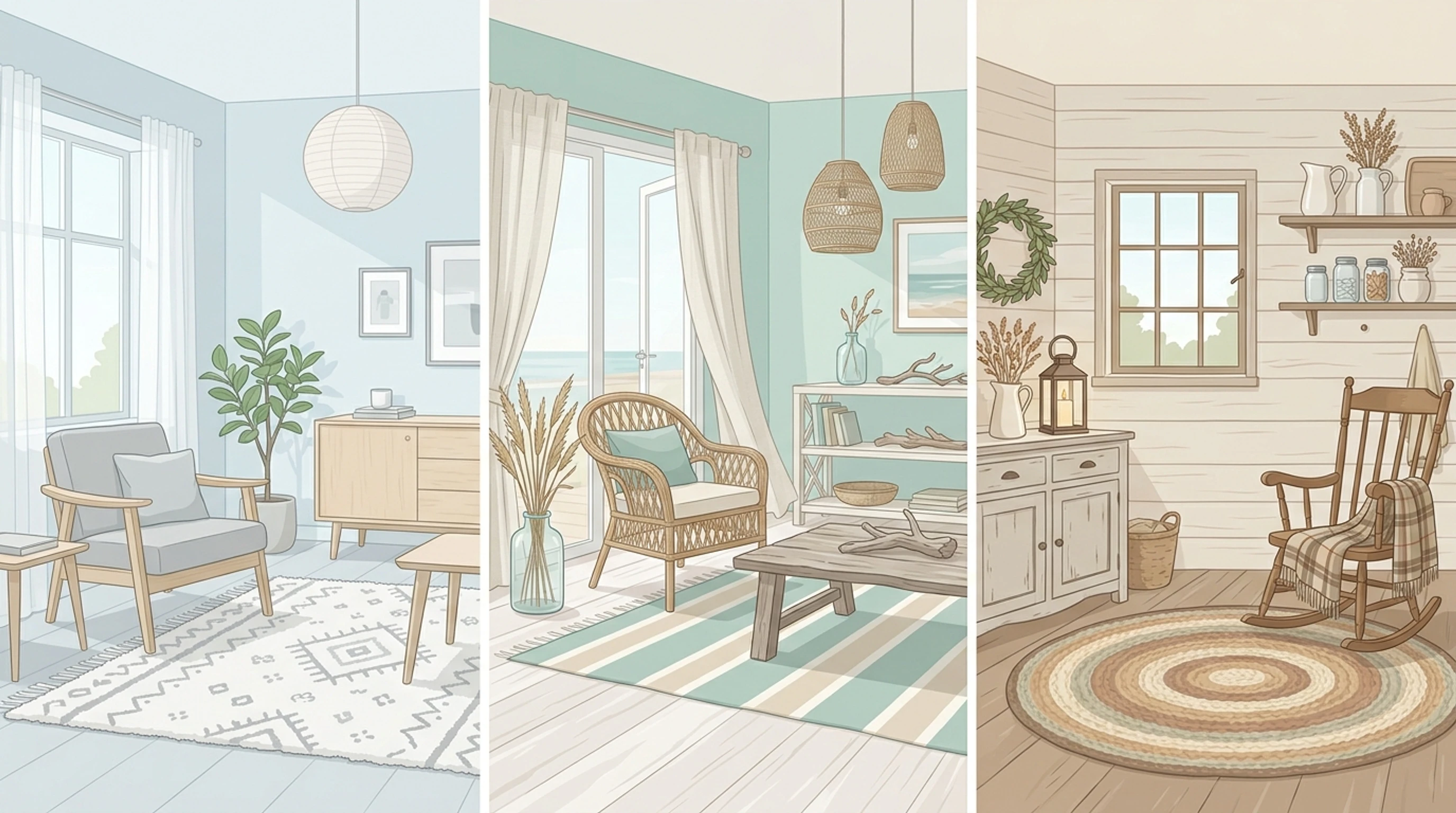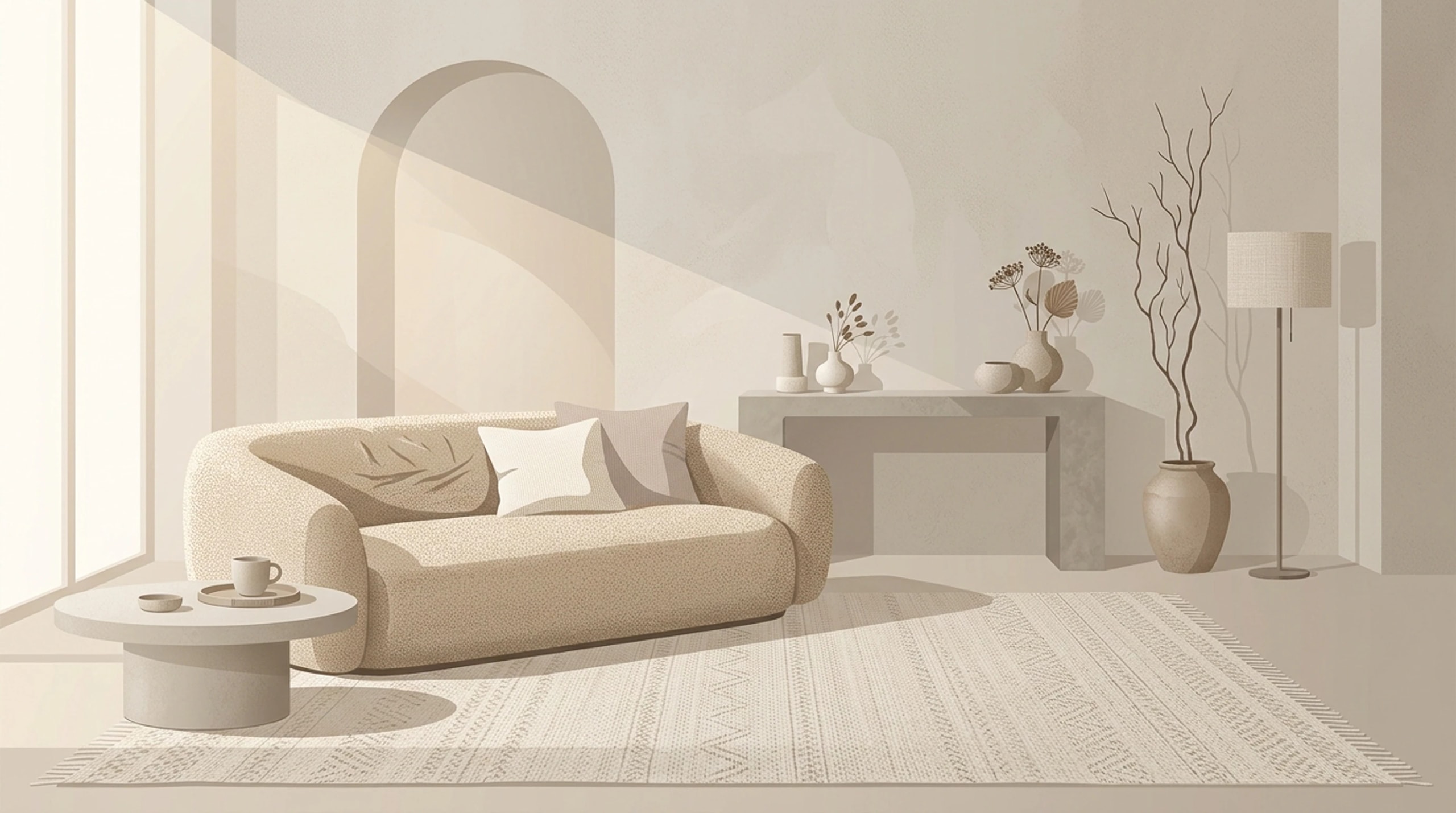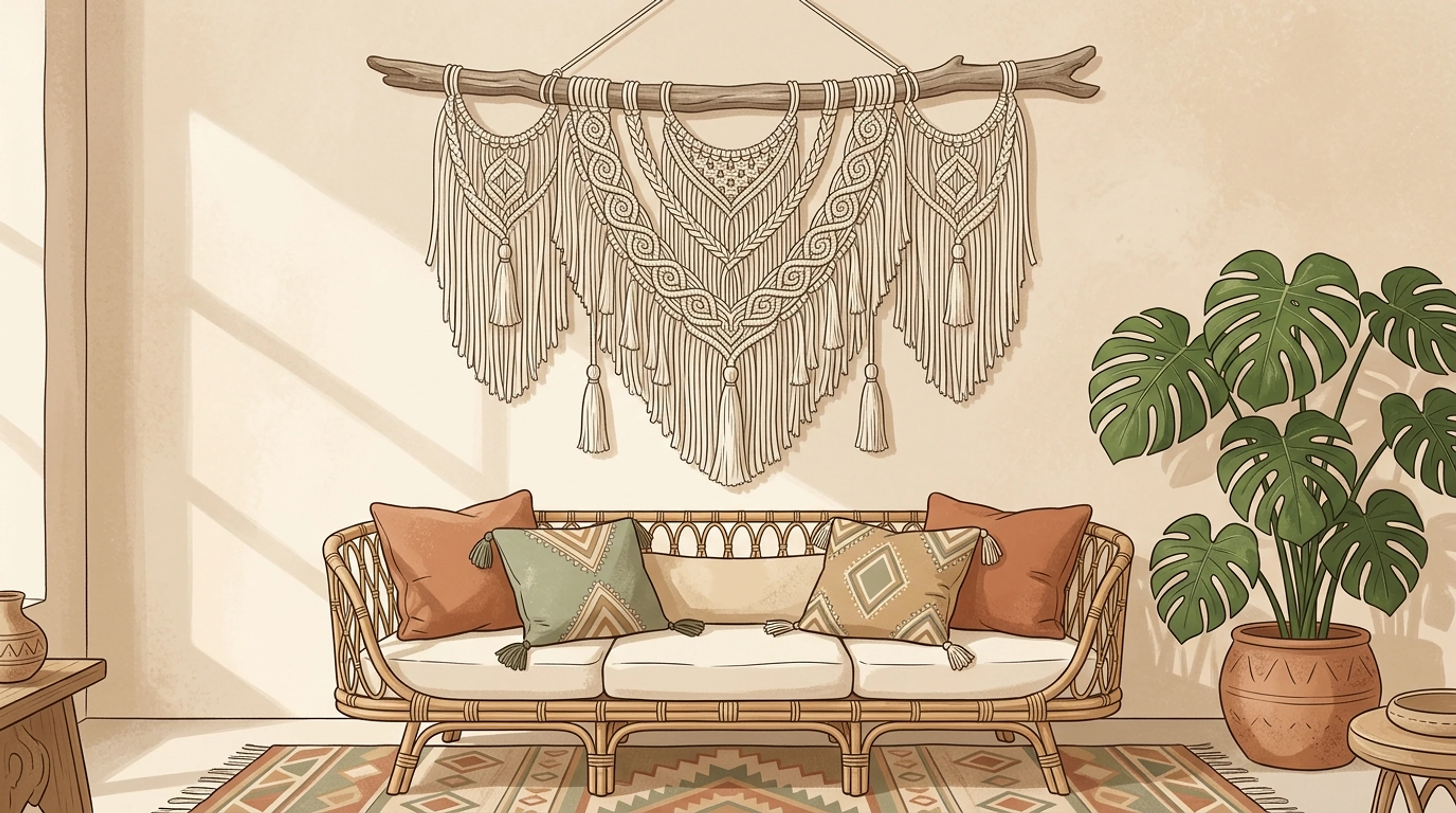
A macrame wall hanging is one of the simplest ways to add softness and handmade character to a room. Knotted cord catches the light, casts gentle shadows and works with almost any style, from relaxed bohemian to calm Scandinavian. This guide explains what to look for and how to make one look its best on your wall.
What is macrame?
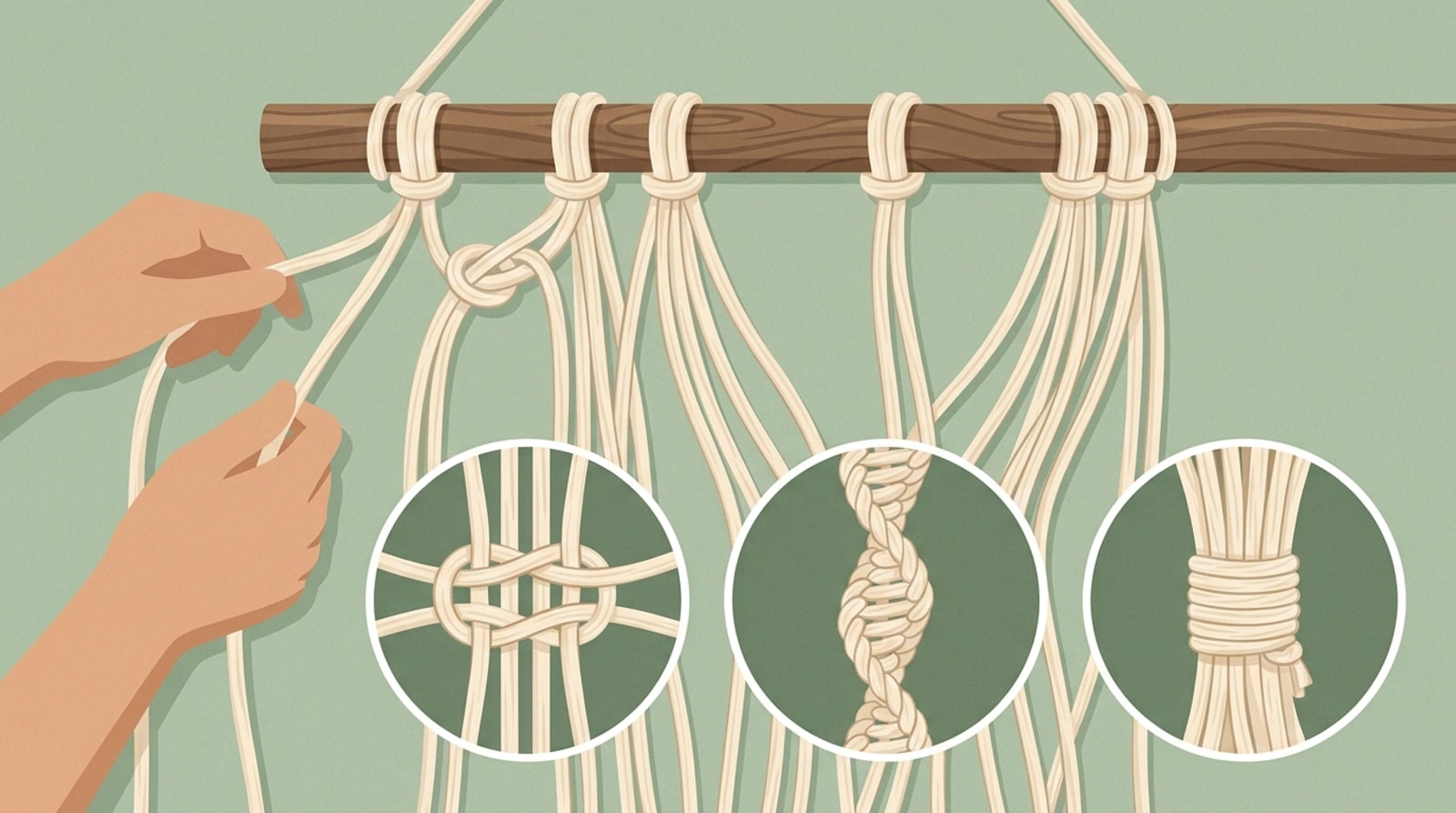
Macrame is the craft of creating textiles by tying knots rather than weaving or knitting. Cords are attached to a dowel, branch or ring and then knotted in patterns such as squares, spirals and diamonds. The ends are left as fringe or trimmed into shapes. Because everything is done by hand, no two pieces are quite alike.
Macrame vs tapestry vs woven wall hanging
The terms overlap, so here is how to tell them apart.
- Macrame wall hanging: made entirely from knotted cord. It is textured and dimensional, and often has long fringe.
- Woven wall hanging: made on a loom or frame with yarn passed over and under warp threads. It is flatter and often more colorful.
- Tapestry: a densely woven textile with a pictorial or patterned design, usually larger. See our guide on how to hang a tapestry.
- Macrame tapestry: a larger macrame piece, or one that combines knotting with weaving, designed as a statement for a wall.
Choosing the right materials
The cord defines how a hanging looks and wears.
- Cotton cord. The most popular choice. It is soft, holds knots well and comes in natural and dyed colors. Single-twist cord gives a defined, rope-like texture, while braided cord looks smoother.
- Jute and hemp. Strong and rustic with a natural golden tone. They can be coarser to the touch and shed fibers.
- Wool and blends. Warm and cozy, with a softer, fuzzier look.
- Recycled cotton. A sustainable option with a slightly speckled, textured appearance.
The dowel matters too. Driftwood and natural branches look organic, smooth wooden dowels feel modern, and metal rods or rings suit a minimalist look. Check that the cord is firmly attached so the piece hangs evenly.
Choosing the right size
Size has more impact than any other choice.
- Over a sofa or bed: aim for roughly two-thirds the width of the furniture. A piece that is too small looks lost on the wall.
- Large macrame wall hangings: a statement piece of around three to four feet wide suits a big, empty wall, an entryway or a high-ceilinged living room.
- Small and medium pieces: good for narrow walls, above a desk, in a hallway or in a gallery wall with other art.
- Include the fringe: measure the total length, since fringe can double the visual height of a piece.
Hang the center of the piece at around eye level, or about 6 to 10 inches above the top of a sofa or headboard, so it feels connected to the furniture below.
Styling ideas by room
- Living room: a wide hanging above the sofa, paired with a plant and a woven basket.
- Bedroom: centered above the headboard for a soft focal point. Choose a piece that is narrower than the bed.
- Entryway: a narrow, long design on the wall behind a console table.
- Dining area: a hanging above a sideboard or bench to soften hard surfaces.
- Home office: a small piece beside a desk adds texture without clutter.
Pair macrame with other natural textures, such as a jute rug, a linen throw or wooden furniture. A neutral cream hanging suits almost any palette, while dyed cords can pick up an accent color from the room.
What to look for when you buy
- Even, tight knots. Loose or uneven knots are a sign of lower quality.
- Strong attachment. The cords should be secured firmly to the dowel and not slip.
- Clean, even fringe. Trimmed edges look intentional and tidy.
- Appropriate weight. Heavy pieces need sturdy hanging hardware.
- Honest materials. Look for details about the cord, such as 100 percent cotton, and the dowel material.
- Fit for your wall. Measure your space before you order.
Caring for a macrame wall hanging
Dust is the main enemy. Vacuum gently with a brush attachment on low suction, shake the piece outdoors, and comb the fringe with a wide-toothed comb. Keep it away from direct sunlight, kitchen grease and damp rooms. For cleaning, washing and keeping cotton from yellowing, read our guide to macrame patterns, hanging and care.
Frequently asked questions
What size macrame wall hanging do I need? Choose one about two-thirds the width of the sofa or bed beneath it. For a bare wall, a large piece of three to four feet wide makes a statement.
What is the best cord for a macrame wall hanging? Cotton is the most popular because it is soft and holds knots well. Jute and hemp give a rustic look.
Where should I hang macrame? On a wall away from direct sun and moisture, such as above a sofa, bed or console table.
Is macrame the same as a tapestry? No. Macrame is knotted cord, while a tapestry is a woven textile. Larger macrame pieces are sometimes called macrame tapestries.
Does macrame go out of style? It has returned in many forms since the 1970s. Simple, neutral pieces tend to stay timeless.
Related guides
The Kindred Weave editors. We write practical guides to handmade rugs and tapestries. Learn more about us.