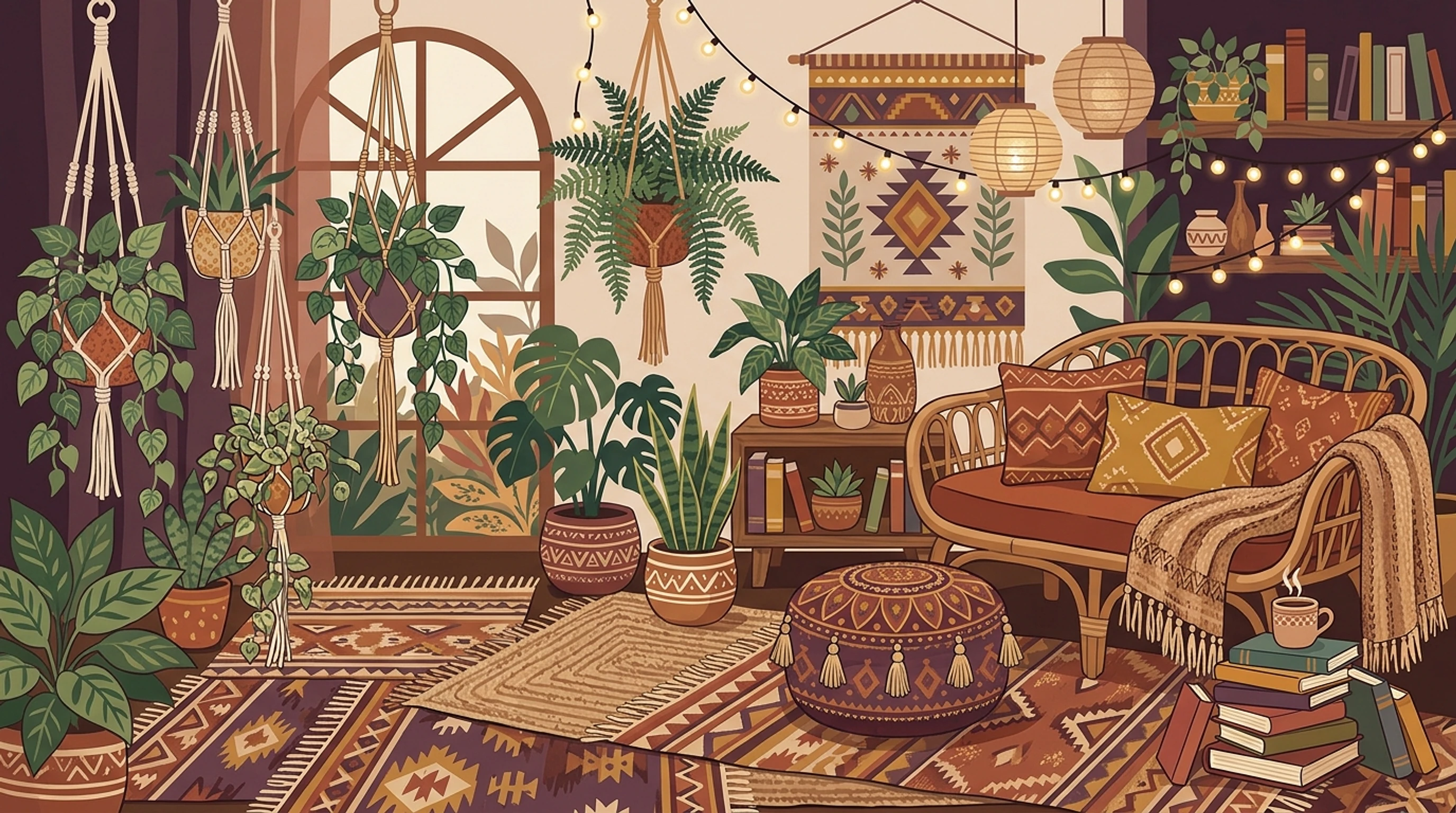
Boho, short for bohemian, is a decorating style built on warmth, texture and personality. Rooms feel collected over time rather than bought in one go. Rugs sit at the heart of it, because layers of pattern and texture underfoot set the tone for everything above. This guide explains what boho decor really is, which rugs suit it and how to build the look so it feels relaxed rather than cluttered.
What is boho home decor?
Bohemian style takes its name from artistic, free-spirited lifestyles that valued creativity over convention. In a home, that means:
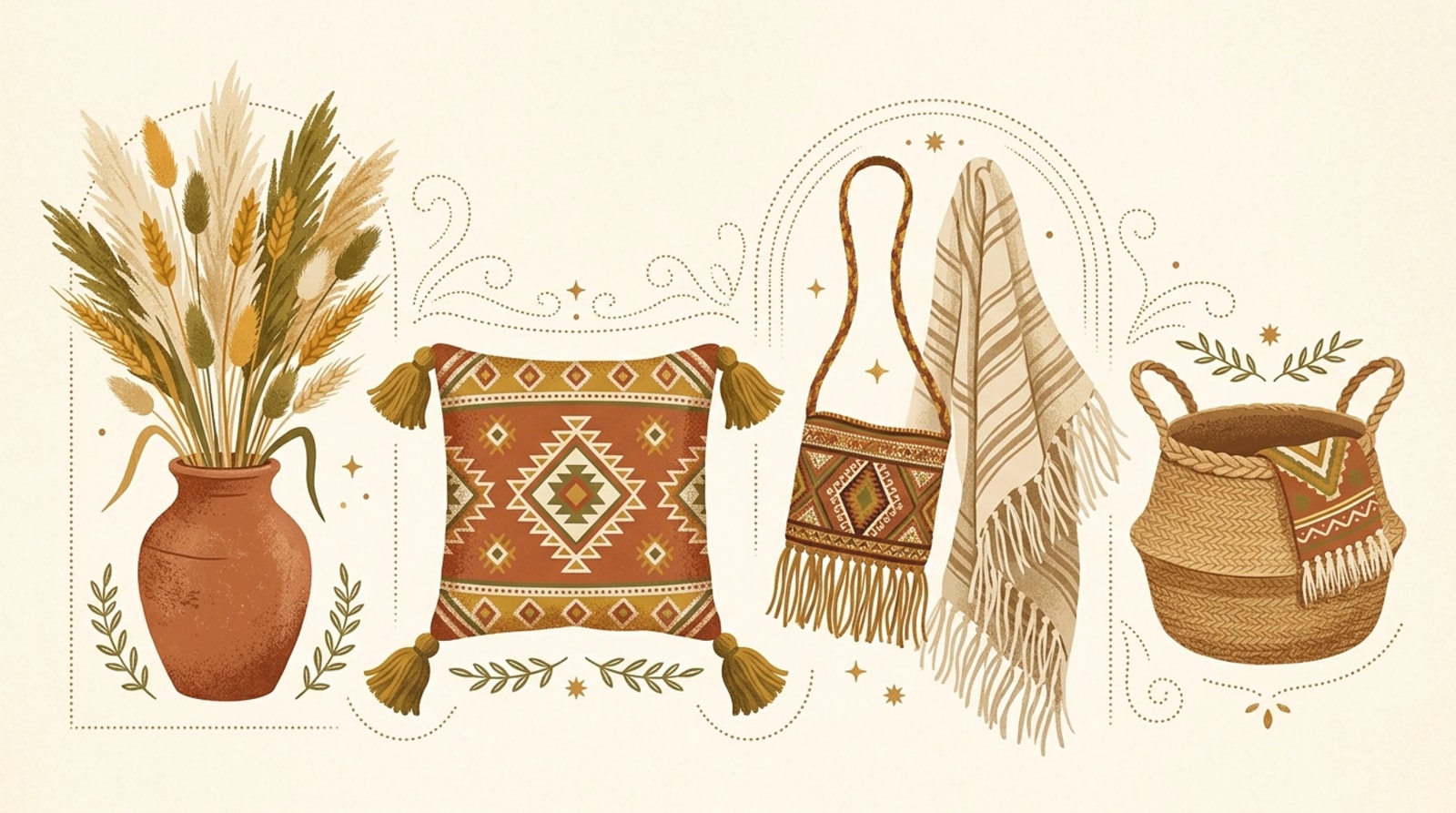
- Layered textiles such as rugs, throws, cushions and curtains
- Global and handmade pieces, from kilims to woven baskets
- Natural materials like rattan, wood, jute, cotton and clay
- Warm, earthy colors with the occasional jewel tone
- Plants and vintage finds that give a room character
- A relaxed, imperfect feel where nothing has to match exactly
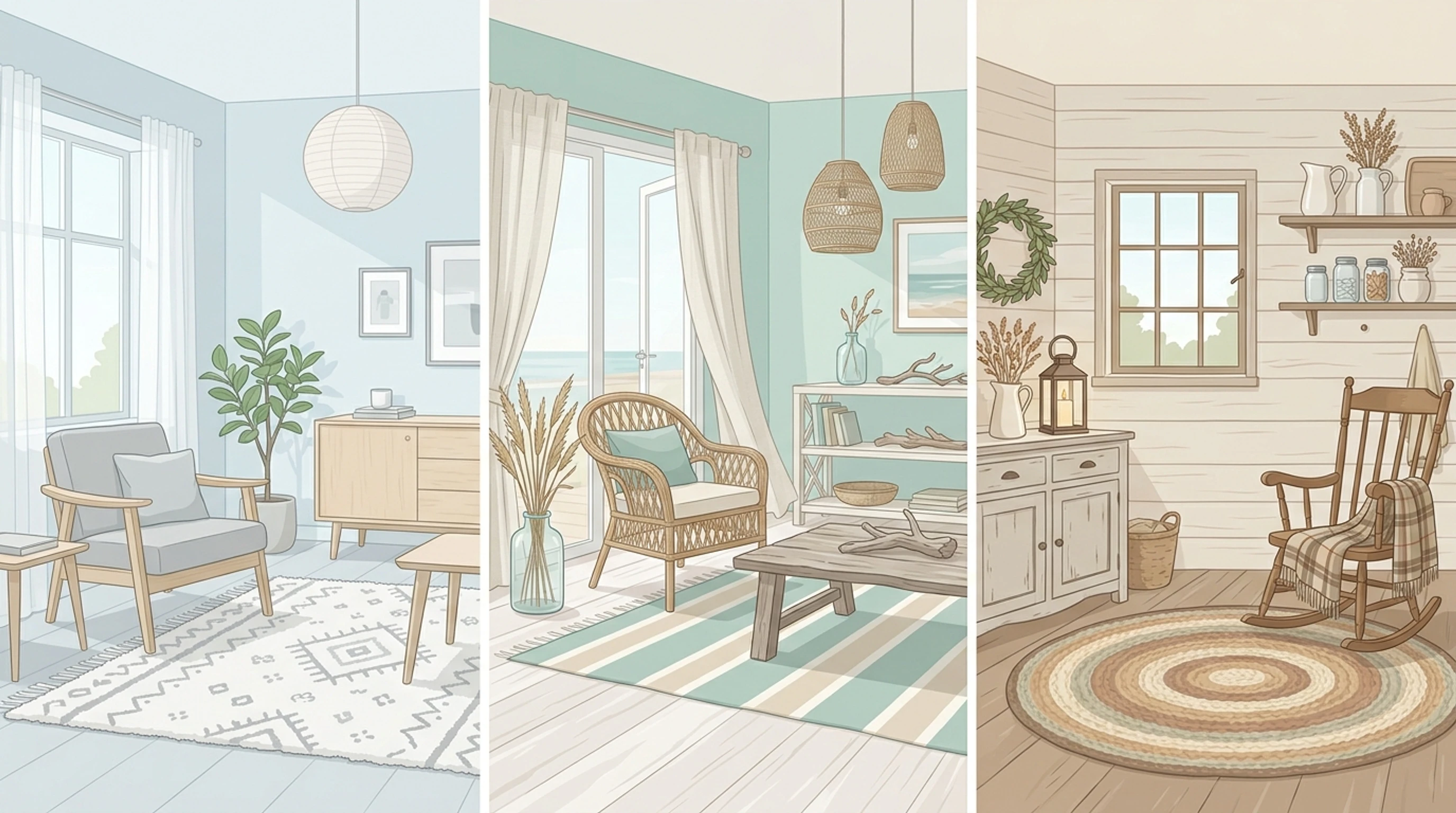
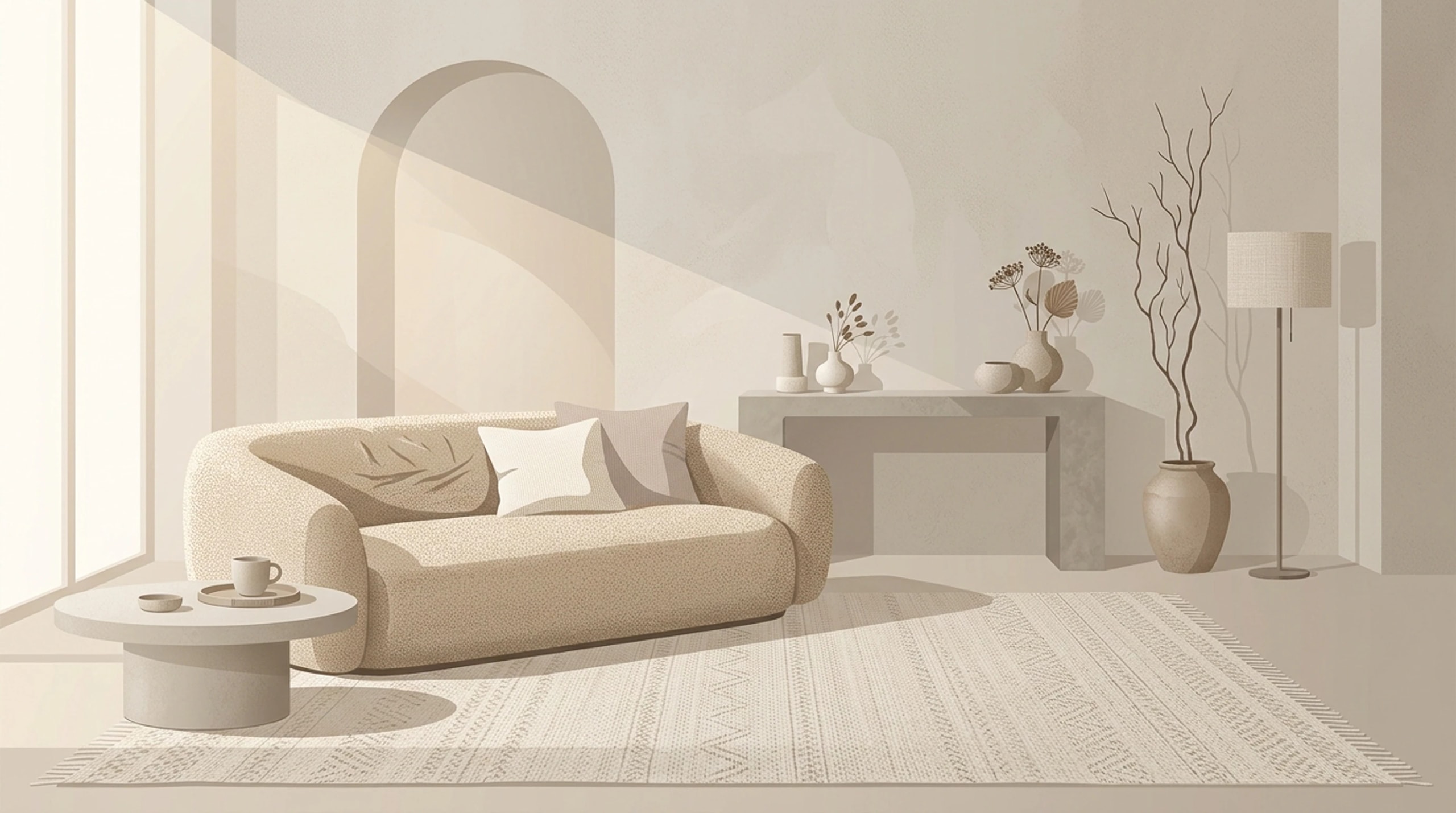
It overlaps with other styles, including Scandinavian boho (lighter and calmer), modern boho (cleaner lines) and bohemian eclectic (richer colors and more pattern).
The best rugs for boho style
Kilims and flatweaves
Colorful geometric kilims are a boho classic. They are light, affordable and easy to layer. See our guide to kilim and Persian-style rugs.
Moroccan rugs
A cream Beni Ourain or a bright Boucherouite brings a handmade, global feel. Read our Moroccan rug guide.
Jute and natural fiber rugs
A large jute rug makes a textured, neutral base that suits layering. Our jute rug guide explains how to choose and care for one.
Vintage-style and faded rugs
Rugs with worn, softly faded patterns look as if they have a story. Traditional medallion designs in muted colors often feel at home in boho rooms.
Fringed and tasseled rugs
Fringe adds movement and softness. Keep it combed and untangled so it looks intentional, and see our fringe tips.
Layering: the signature boho move
Layering rugs is what gives boho rooms their depth.
- Start with a large neutral base, such as jute or sisal, that covers most of the seating area.
- Add a smaller patterned rug on top, slightly off-center for a relaxed look.
- Keep a visible border of the base rug on at least two sides.
- Vary the pile and texture, for example a flat kilim over a chunky jute.
- Secure the layers with a rug pad under the base rug to prevent bunching.
Our guide to how to layer rugs covers sizes and combinations in detail, and our rug pad guide explains how to keep everything in place.
Boho colors
- Earthy neutrals: cream, sand, oatmeal and tan form the base.
- Warm accents: terracotta, rust, mustard and ochre.
- Deeper tones: plum, forest green, indigo and burgundy.
- Soft touches: blush, sage and dusty blue for a lighter take.
Choose a base of three or four colors and repeat them across the room, so the variety feels intentional.
Boho wall hangings
Walls are an easy place to add texture. Popular choices include:
- Macrame wall hangings: soft, knotted and a natural fit. See our macrame wall hanging guide and the guide to patterns, hanging and care.
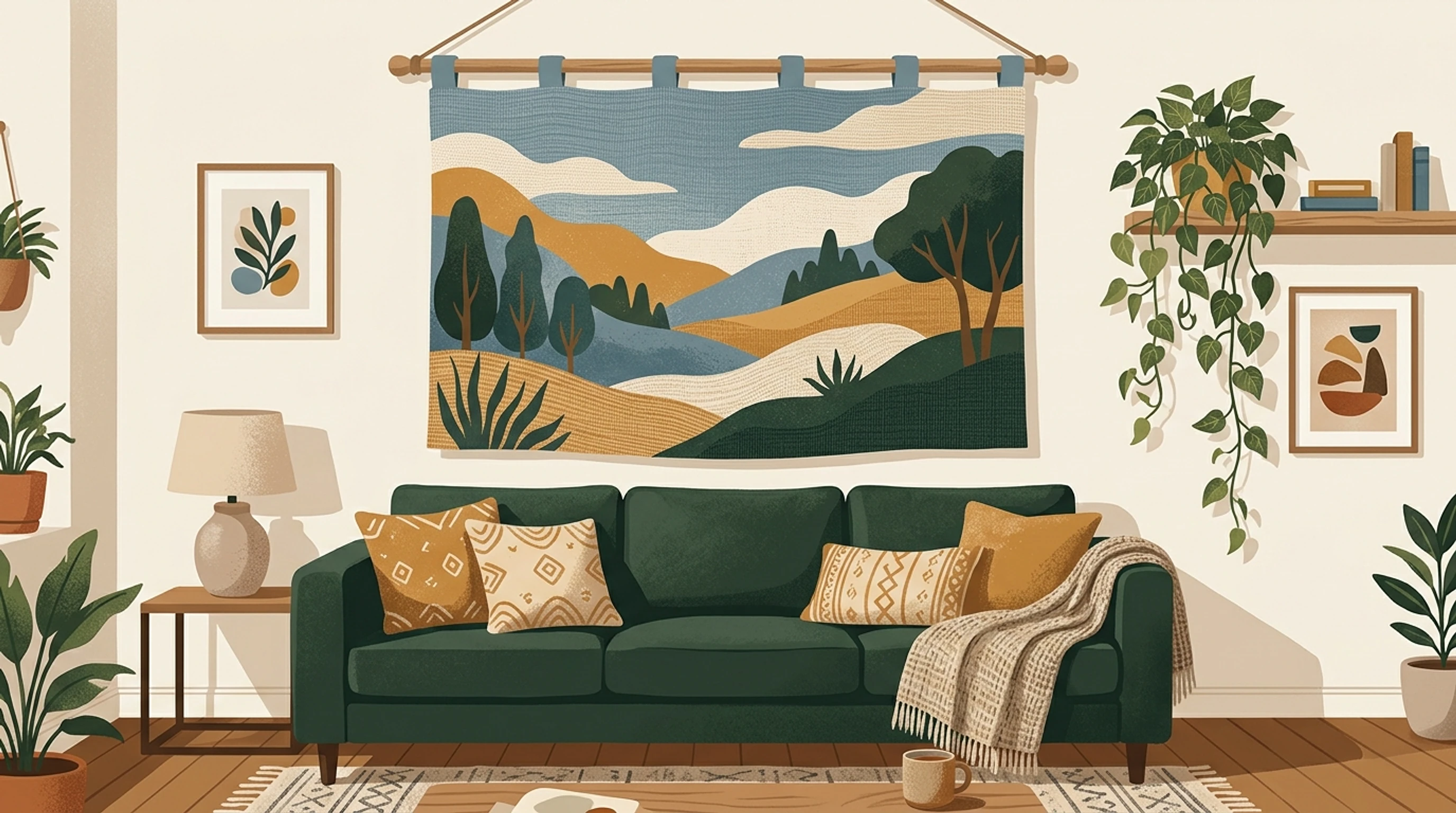
- Woven wall hangings and tapestries: add color and handmade character. Read how to hang a tapestry safely.
- Baskets and woven plates: arranged in groups on a wall.
- Framed textile art or vintage prints.
Group pieces in odd numbers and vary the sizes, with a larger hanging as the anchor.
How to build the look, step by step
- Begin with the rug. Choose a base rug that suits your room and sets the palette.
- Choose a few main furniture pieces in natural materials, such as a rattan chair, a wooden coffee table or a linen sofa.
- Layer soft textiles: cushions in different patterns and sizes, a chunky throw and curtains in natural fabric. Our guide to adding texture to a room has more ideas.
- Add plants at different heights, in baskets or terracotta pots.
- Introduce handmade accents: ceramics, woven baskets, wall hangings and a few vintage finds.
- Soften the lighting with warm bulbs, paper shades or string lights.
- Edit. Step back and remove one or two things. Boho should feel collected, not crowded.
Common mistakes to avoid
- Too many competing patterns. Repeat colors and vary scale so everything works together.
- Clutter without a base. A calm foundation, such as a neutral rug and plain walls, lets the layers shine.
- Matching everything. Boho looks best when pieces share a mood but not a set.
- Ignoring comfort. Add a rug pad, soft cushions and good lighting so the room is as practical as it is pretty.
- Forgetting scale. A tiny rug under large furniture looks lost. Use our rug size guide to choose the right dimensions.
Boho on a budget or in a rental
- Start with one large neutral rug and layer a smaller secondhand kilim on top.
- Use removable adhesive hooks for lightweight wall hangings.
- Shop vintage and thrift stores for baskets, frames and textiles.
- Add plants and cuttings instead of expensive decor.
- Pick fabrics you can move to your next home.
Caring for a boho room
Natural fibers and handmade textiles need regular care. Vacuum rugs with suction only, shake out throws and cushions, dust macrame and wall hangings and keep textiles out of strong sun. If you have wool pieces, follow our guide to cleaning a wool rug.
Frequently asked questions
What is a bohemian rug? A rug with a handmade, global or vintage feel, often a kilim, Moroccan, jute or faded traditional design, used in layered, relaxed rooms.
What is boho home decor? A relaxed, layered style that mixes natural materials, handmade textiles, plants and vintage pieces in warm, earthy colors.
How do you layer rugs in a boho room? Place a smaller patterned rug over a larger neutral base such as jute, leave part of the base visible and use a rug pad underneath.
What colors are used in boho decor? Earthy neutrals with warm accents such as terracotta, mustard and rust, and sometimes deeper tones like plum and indigo.
What is the difference between boho and bohemian? Boho is the short form of bohemian. They describe the same style, though boho often suggests a lighter, more modern take.
The Kindred Weave editors. We write practical guides to handmade rugs and tapestries. Learn more about us.