Mid-century modern design has stayed popular for decades because it balances warmth and simplicity. Clean lines, natural wood and playful geometry all work together, and the rug often ties the look together. Choosing one is easier once you know the key motifs, the typical colors and where it fits among other terms such as modern, contemporary and minimalist.
What is mid-century modern style?
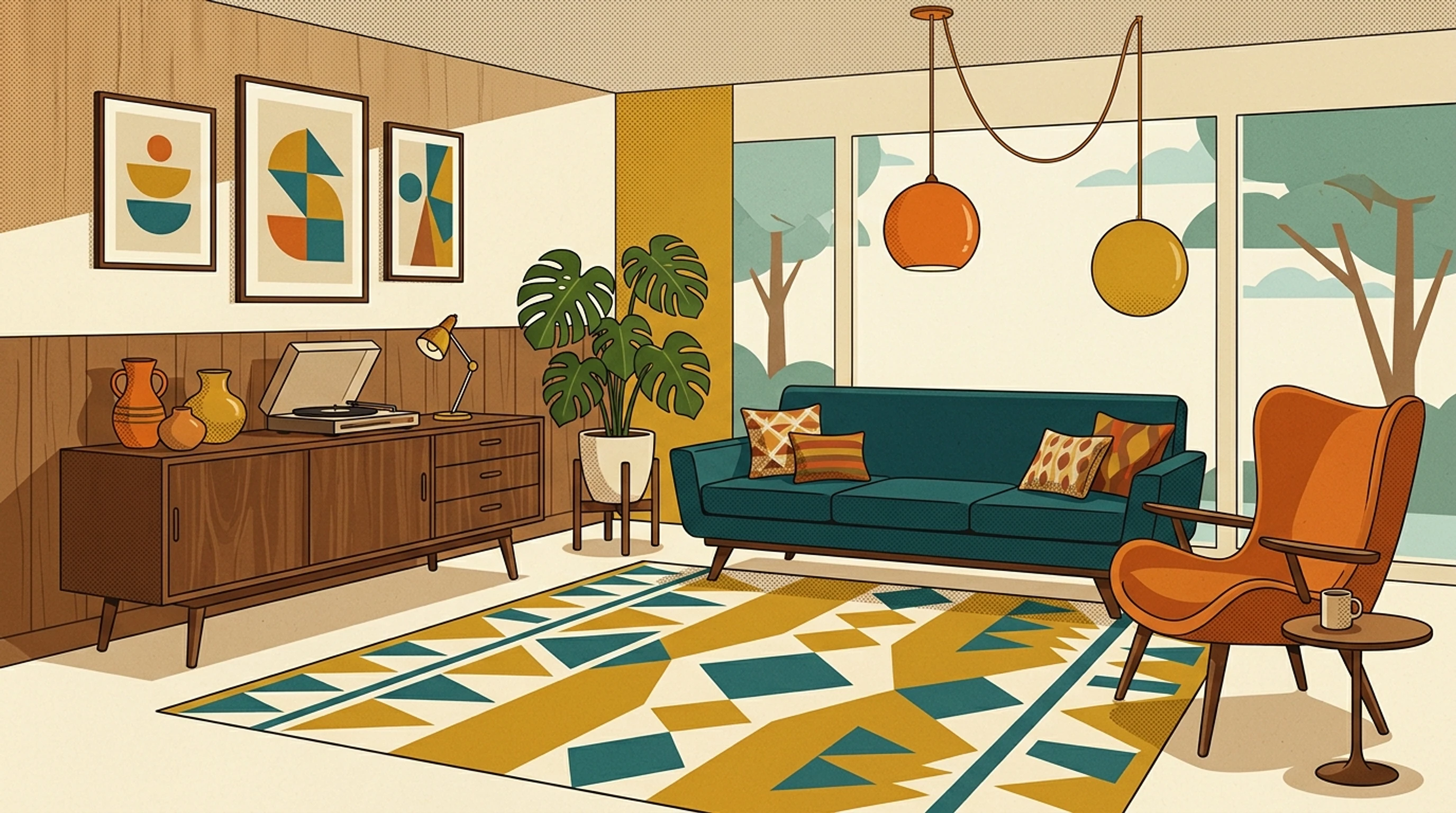
Mid-century modern refers to design from roughly the mid-1940s to the late 1960s. The look grew out of Scandinavian and American design and focused on function, honest materials and shapes inspired by nature and the atomic age.
Typical features include:
- Furniture with tapered legs and low, clean profiles
- Warm woods such as teak and walnut
- Organic curves alongside crisp geometry
- Bold accent colors against neutral backgrounds
- Large windows and a connection to the outdoors
Mid-century modern rug styles
Rugs from this period, and rugs inspired by it, tend to follow a few themes.
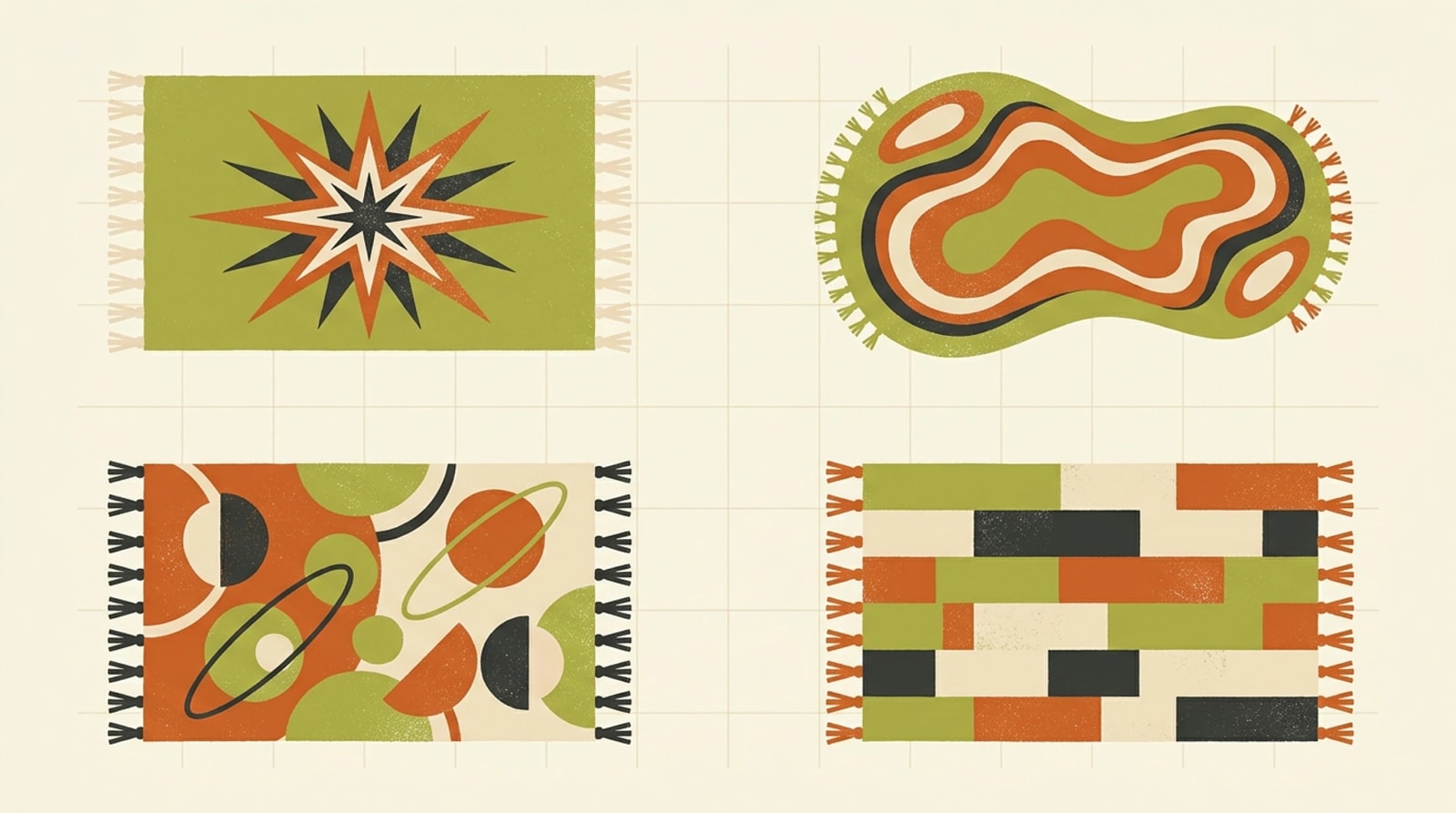
Starburst and atomic motifs
Radiating lines and spiky star shapes echo the "atomic age" designs of the 1950s. They look best on a calm rug field so the motif stays a feature rather than noise.
Organic shapes
Kidney shapes, soft blobs and flowing curves bring a relaxed, almost abstract feel. They suit rooms with rounded furniture and curved lamps.
Geometric patterns
Overlapping circles, staggered rectangles, triangles and grids give structure. Pair geometry with simpler furniture, so the pattern is not competing with the room.
Color-blocked and abstract designs
Large panels of color or loose, painterly abstractions feel playful and artistic, a good choice if you like a gallery look.
Shaggy rya rugs
Scandinavian rya rugs, with a long, textured pile, were a mid-century favorite and are back in fashion. They add a soft, tactile layer to a room full of wood and leather.
The mid-century color palette
Classic combinations include:
- Mustard yellow and teal on a cream background
- Burnt orange with olive or avocado green
- Walnut brown and cream for a calmer look
- Charcoal and warm white for a quieter, more graphic effect
- Dusty pink and sage for a softer, modern take
Pick one or two colors from the rug and repeat them in cushions, art or a single armchair. Our guide to choosing rug colors and patterns explains how to repeat colors without matching everything.
Mid-century modern vs modern vs contemporary vs minimalist
These words are often mixed up, and rug sellers use them loosely.
- Mid-century modern: a specific historical look from the 1940s to 1960s, with organic and atomic shapes and warm, retro colors.
- Modern: in design terms, early to mid-20th century style. Shoppers often use "modern" to mean clean, simple and current.
- Contemporary: what is being designed now. It changes over time and can combine abstract patterns, soft palettes and mixed textures.
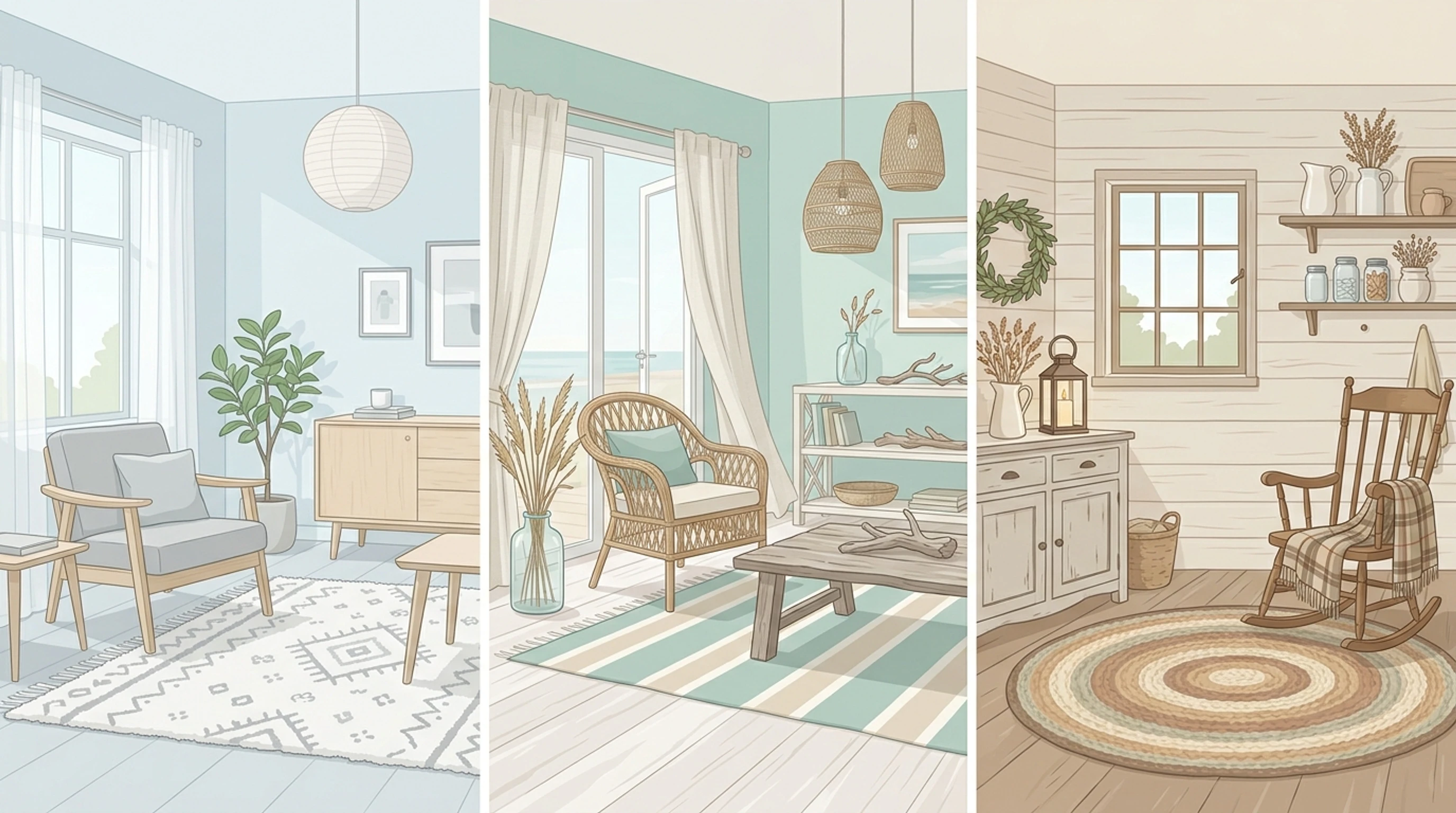
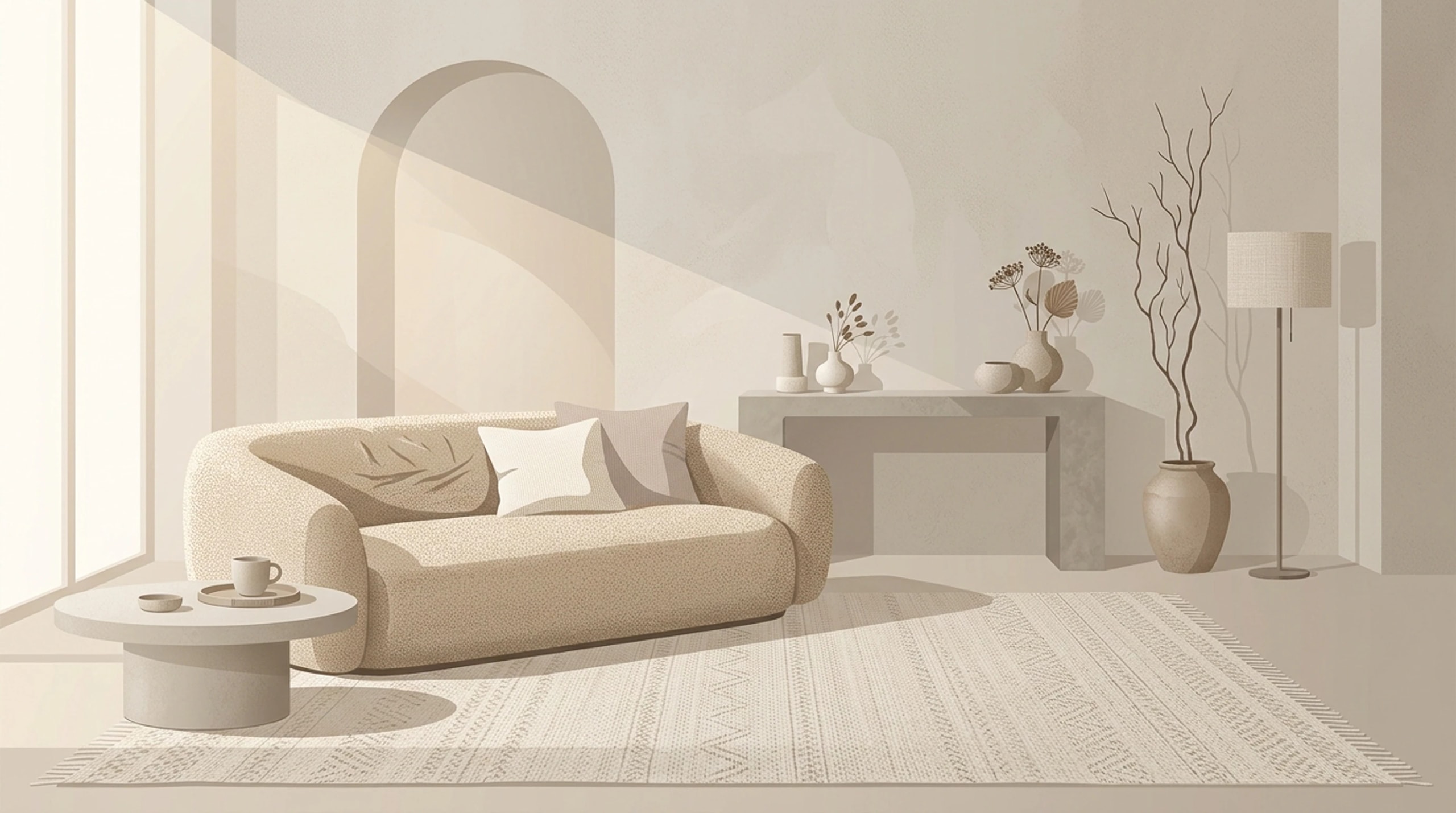
- Minimalist: very simple, with plain or tonal surfaces, little pattern and subtle texture. A minimalist rug is calm and quiet, often solid or with a fine weave.
If you like the idea of a mid-century room but prefer less pattern, a tonal or solid wool rug in mustard, olive or walnut gives the same warmth without the print.
Materials that work
- Wool: the best all-round choice. It holds crisp geometric patterns well and wears for years. See our wool rug guide.
- Jute and natural fibers: add organic texture and suit the earthy side of the style. Read our jute rug guide.
- Flatweaves: thin and graphic, good for dining rooms and under low furniture.
- Wool-blend and synthetic options: more affordable and sometimes easier to clean, though less resilient than wool.
Choosing the right size and shape
Mid-century rooms have low, horizontal furniture, so a generous rug helps anchor the space. For most living rooms an 8x10 works, with at least the front legs of the sofa on the rug. For dining tables, choose a rug that extends well beyond the chairs. Use our rug size guide and our guide to rug size for a dining table for exact measurements.
Round and oval rugs echo the organic curves of the era and soften rooms with a lot of straight lines.
How to style a mid-century rug
- Start with the furniture. Teak, walnut and leather pieces are the foundation. Choose a rug that contrasts with the wood tone rather than matching it.
- Let one thing be bold. If the rug is a statement, keep walls and upholstery simple. If the room is calm, add the rug pattern for energy.
- Repeat shapes. A rounded coffee table and an organic rug pattern work together.
- Mind the scale. Large patterns suit big rooms, while smaller geometric prints suit tighter spaces.
- Add texture. Combine the rug with wool throws, linen cushions and ceramics. Our guide to adding texture to a room has more ideas.
Caring for your rug
Use a felt and rubber rug pad to keep low-profile rugs flat and in place, vacuum with suction only, and rotate the rug every few months. For stains, follow our guide to cleaning a wool rug.
Frequently asked questions
What makes a rug mid-century modern? Geometric or organic patterns, such as starbursts, circles and kidney shapes, in warm retro colors like mustard, teal and burnt orange.
What color rug goes with mid-century furniture? Cream, mustard, teal, olive or burnt orange all work. Pick a rug that contrasts with the wood tone of the furniture.
What is the difference between modern and contemporary rugs? Modern describes a historical design period or a clean, simple style, while contemporary describes what is being designed now.
What size rug is best for a mid-century living room? An 8x10 for most rooms, a 9x12 for large spaces, with at least the front legs of the sofa on the rug.
Is a minimalist rug the same as a modern rug? Not exactly. Minimalist rugs are very simple, often plain or tonal, while modern rugs can have bold patterns.
The Kindred Weave editors. We write practical guides to handmade rugs and tapestries. Learn more about us.