A bare wall can feel cold, especially in a room that already has a hard floor and clean lines. Textile wall art softens it. Woven hangings, macrame, framed fabric and woven baskets add texture and color without the weight of a large painting.
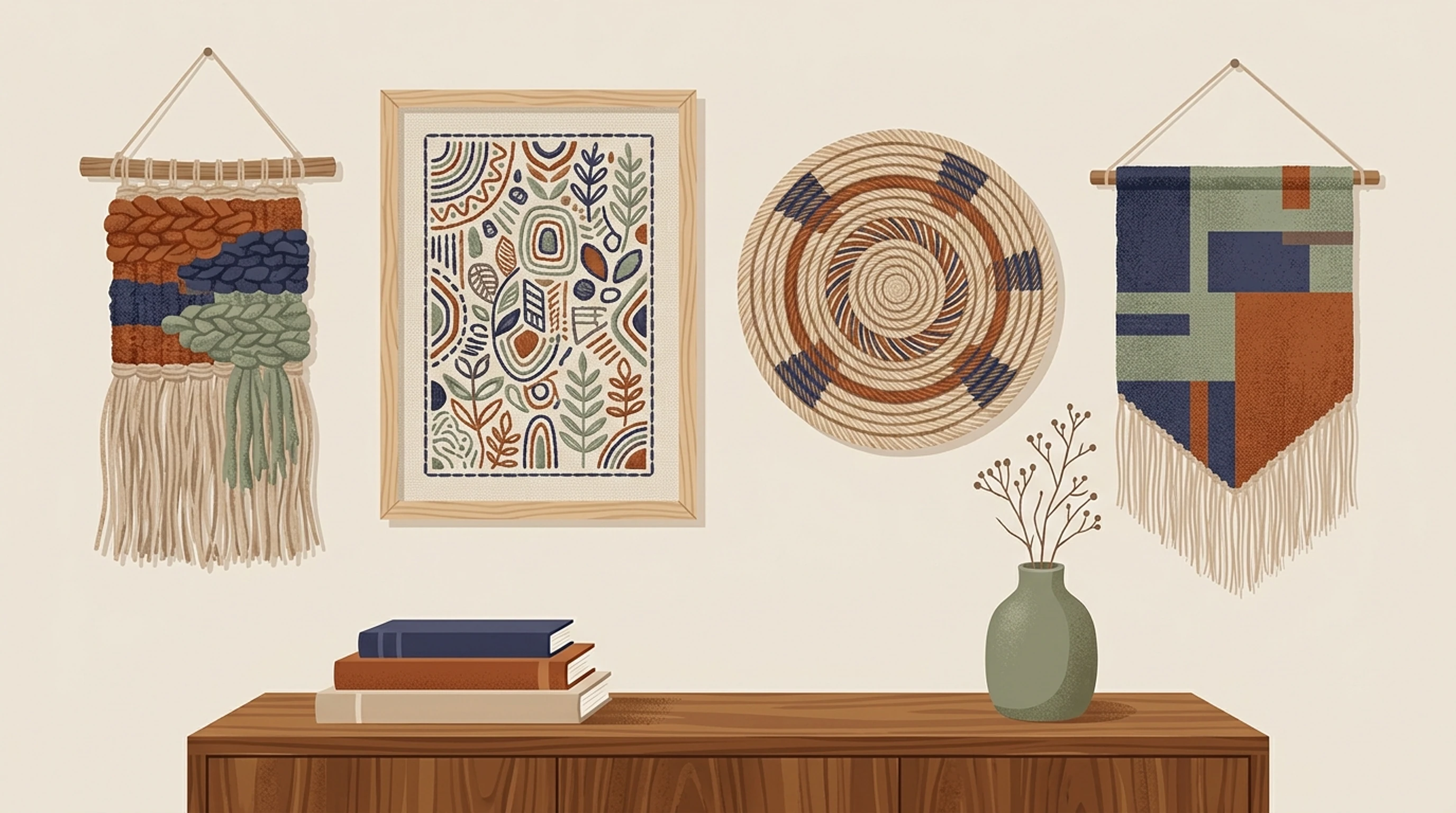
Five textile pieces that work on a wall
- Woven wall hangings. Tapestry-style pieces are the classic choice. See how to hang a tapestry and the history of tapestry weaving.
- Macrame. Knotted cord brings a relaxed, airy look. Read the macrame wall hanging guide.
- Framed textiles. Embroidery, appliqué or a vintage textile under glass gives a more formal finish.
- Woven baskets and plates. Round, flat pieces work well in grids and above a bed or sofa.
- Fabric banners. A long, narrow textile with a rod works in hallways and stairs.
Hang at the right height
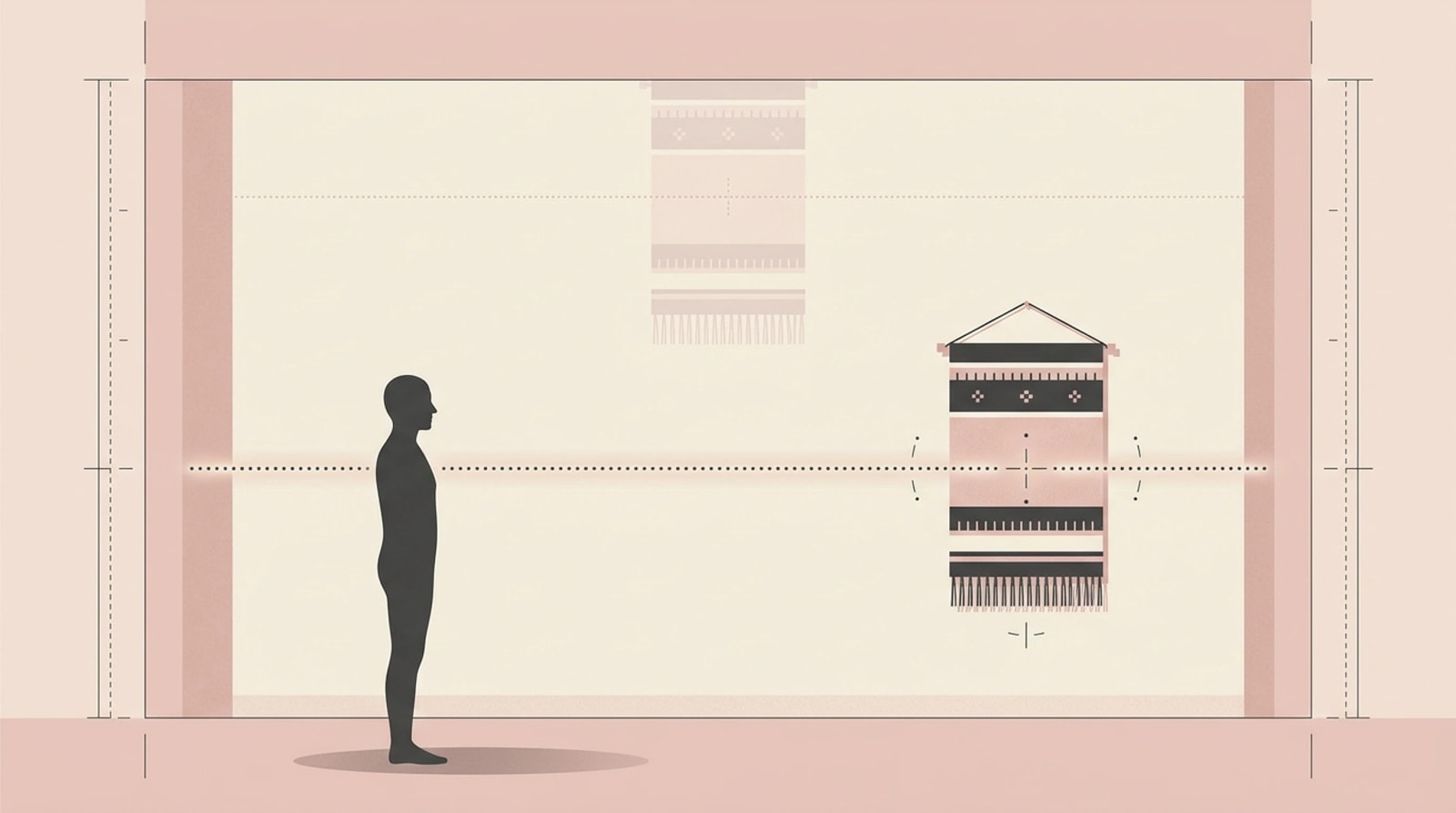
Hang the centre of a piece at eye level, around 57 to 60 inches from the floor. Above a sofa or sideboard, leave 6 to 10 inches between the furniture and the bottom of the piece.
For large pieces, keep the bottom of the hanging about 8 to 12 inches above the furniture so the eye moves easily from object to wall.
Group pieces for impact
A single piece can be enough. For a stronger look, group three or five:
- Mix sizes. One large piece, two medium and one small.
- Keep a shared palette. Repeat two or three colors across the group.
- Leave space. Keep 3 to 4 inches between pieces so each one reads clearly.
Textile art by room
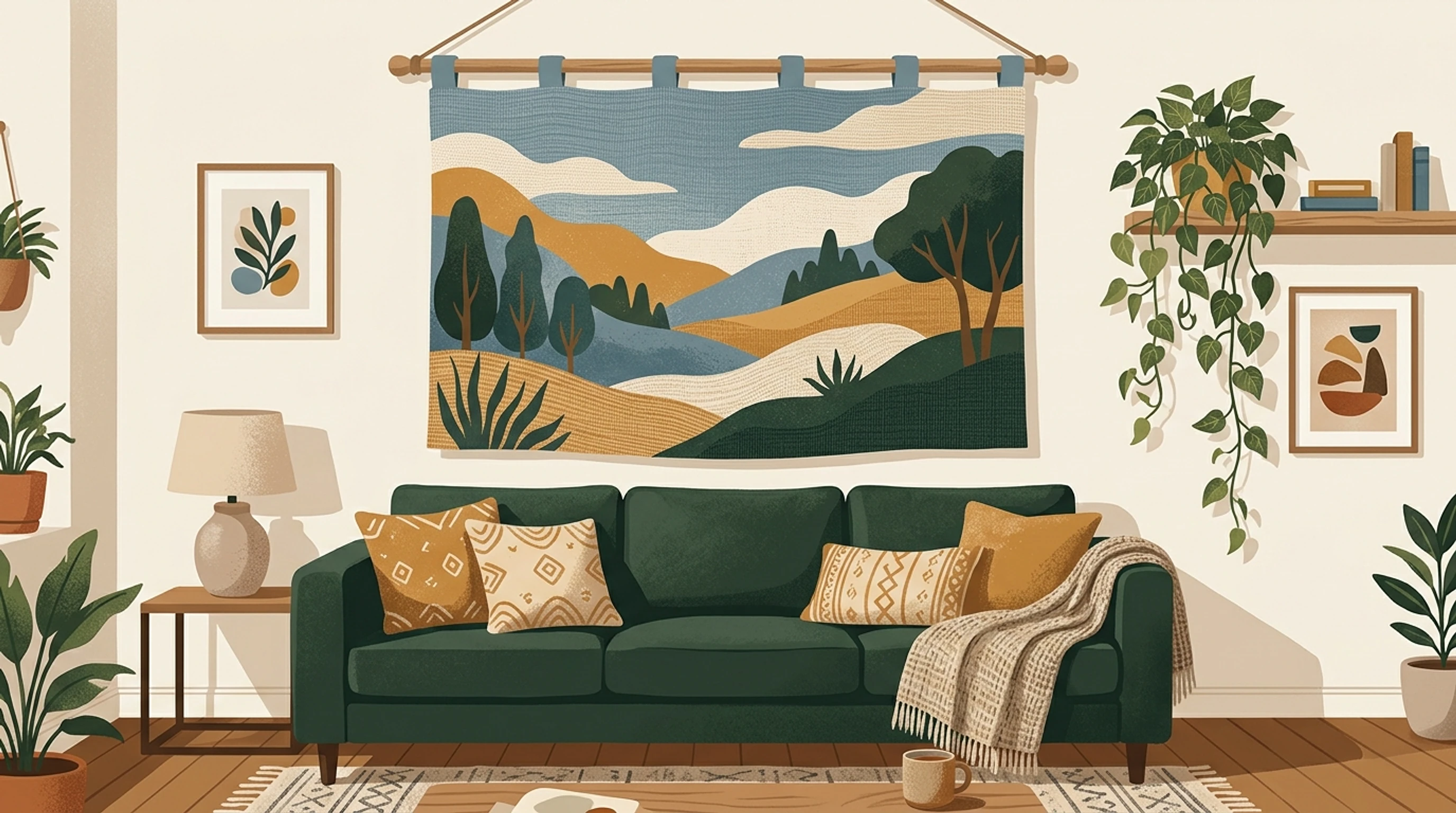
- Living room: a large woven hanging above the sofa is a strong focal point.
- Bedroom: a soft macrame piece behind the bed creates a calm backdrop. Pair it with a bedroom rug.
- Hallway: a fabric banner or a row of small baskets suits a narrow wall.
- Dining room: a framed textile above a sideboard works well. See dining room rugs.
Protect your textile art
Keep textiles out of direct sunlight, which fades natural dyes. Avoid steamy kitchens and damp bathrooms. Dust gently with a soft brush, and rotate or rehang pieces now and then to ease the weight on one area. For more on care, see how to add texture to a room for ways to balance textiles with the rest of the space.
The Kindred Weave editors. We write practical guides to handmade rugs and tapestries. Learn more about us.