A patterned rug can do the work of a piece of art. Geometric designs add order, abstract designs add personality and stripes add movement. Each also behaves differently in a room, and the same pattern can look calm or chaotic depending on its scale and colors. This guide explains how to pick the right one and how to make it work with the rest of your space.
Geometric rugs
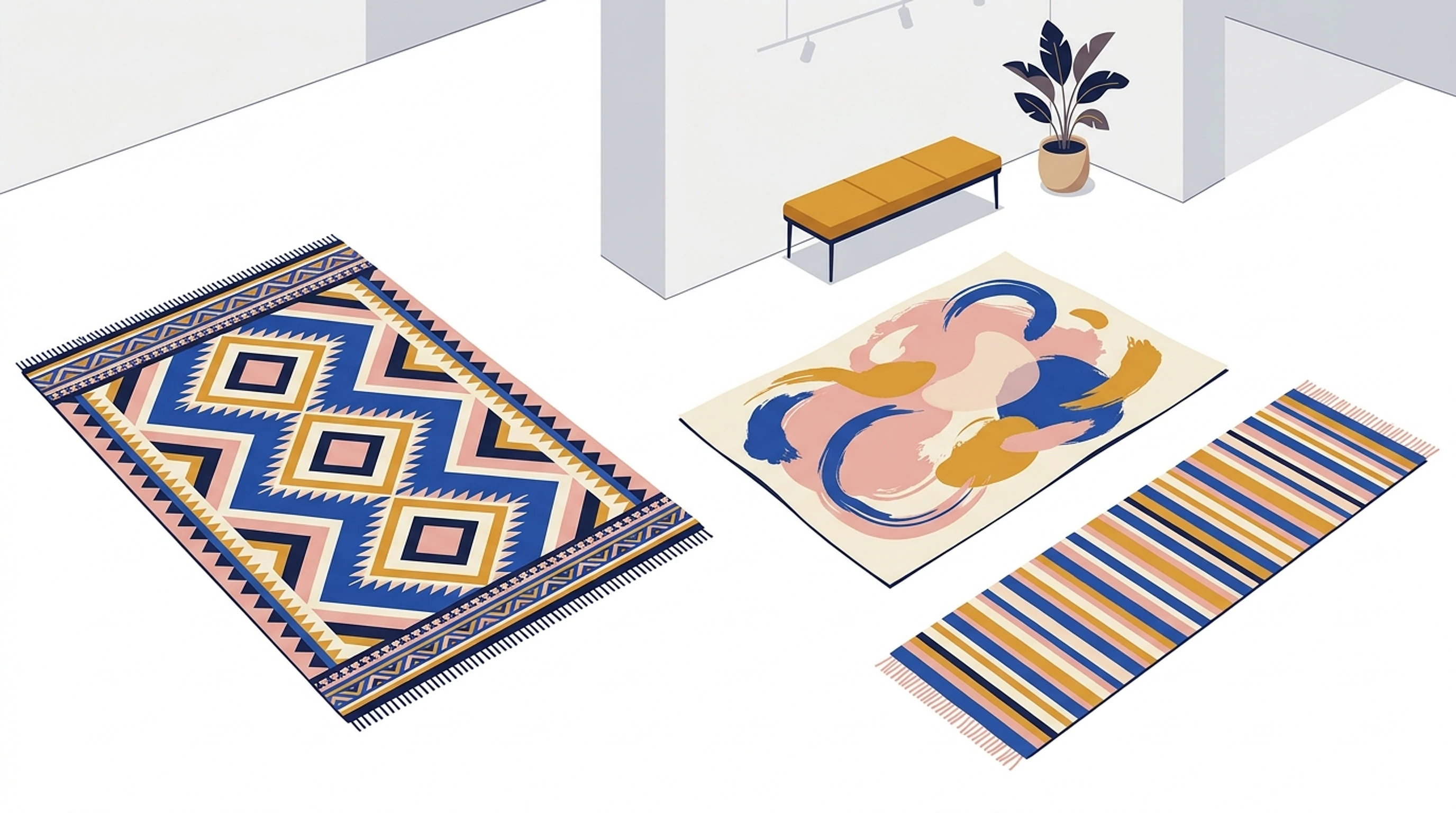
Geometric rugs are built from repeating shapes and lines. Popular designs include:
- Diamonds and lozenges: a classic shape that works in both modern and traditional rooms.
- Chevrons and herringbone: zigzag lines that add energy and direction.
- Trellis and lattice: interlocking lines that feel airy and structured.
- Hexagons and circles: softer, more playful shapes that suit contemporary spaces.
- Grids and checks: orderly and graphic, a good fit for minimal rooms.
Best for: living rooms, hallways and dining rooms, where a regular pattern gives the eye something to rest on. Repeating patterns also hide crumbs and small marks well.
Watch out for: very small, high-contrast repeats can feel busy up close and make a room seem smaller. If you want calm, choose lower contrast between the pattern and the background.
Abstract rugs
Abstract rugs use organic shapes, brush strokes, color fields or loose, irregular lines instead of a repeating motif. They are close to a painting on the floor and often have a hand-drawn, artistic feel.
Best for: neutral rooms that need a focal point, such as a white living room with simple furniture. Let the rug supply the color and everything else stay quiet.
Watch out for: with so much going on, an abstract rug works best when the rest of the room is plain. Pick two or three colors from the rug and repeat them in cushions, throws or art so the room feels planned. Our guide to choosing rug colors and patterns shows how to do that.
Striped rugs
Stripes are one of the most versatile patterns, and they are easy to live with because they feel orderly.
- Pinstripes: fine lines that read almost like a solid from a distance.
- Bold or awning stripes: wide bands that bring a graphic, fresh feel.
- Ticking stripes: narrow stripes with a traditional, cottage look.
- Ombre and tonal stripes: soft shifts of one color that add depth without pattern.
Stripes also shape how a space feels:
- Stripes running along the length of a room make it look longer.
- Stripes running across a room make it look wider.
- Runners with lengthwise stripes draw the eye down a hallway. See our guide to entryway and hallway rugs.
Flat-woven striped rugs, such as cotton or wool dhurries, are light, reversible and affordable, which makes them a popular choice for kitchens, dining rooms and children's spaces.
The key rule: pattern scale
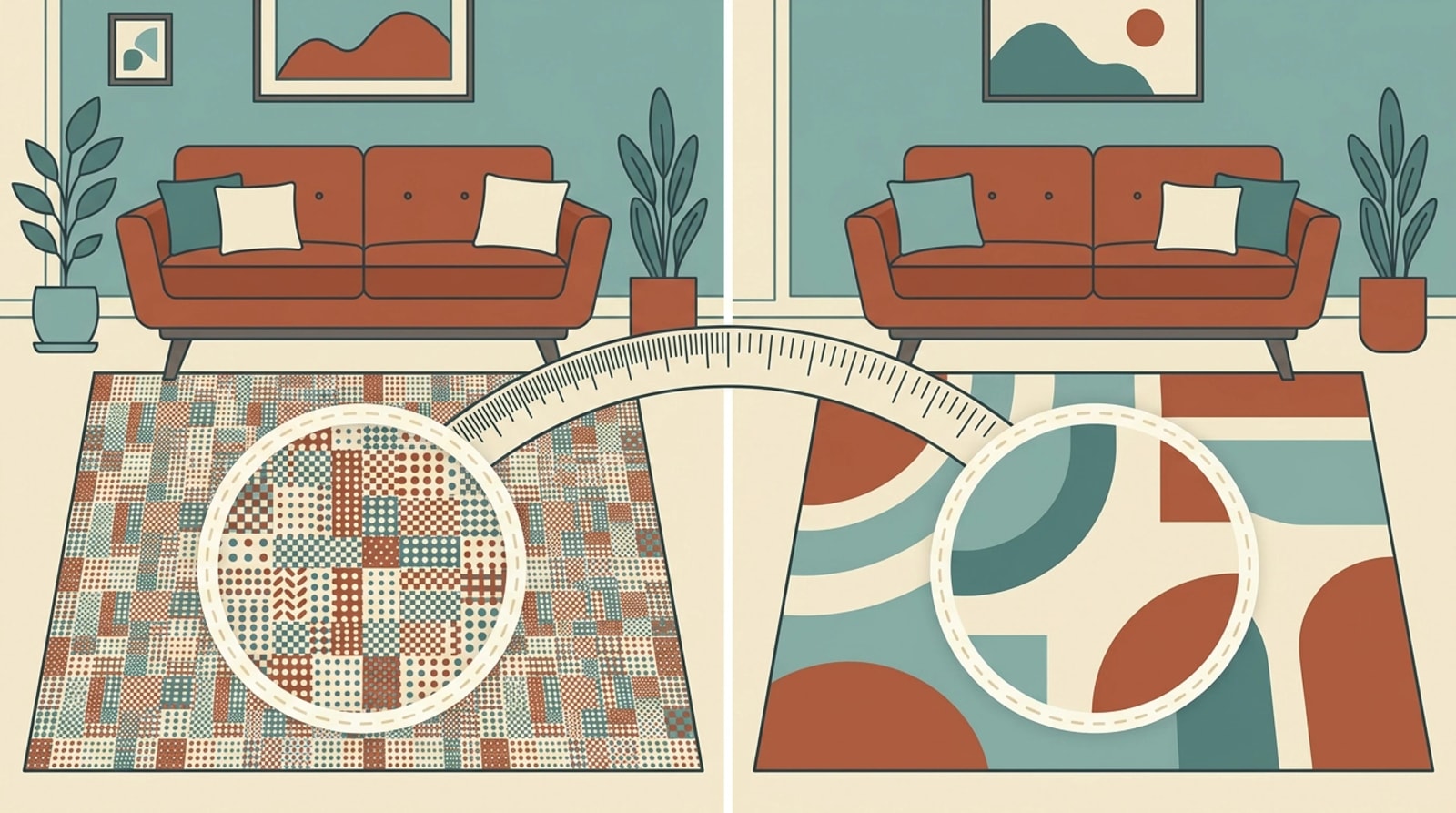
Scale matters more than the pattern itself.
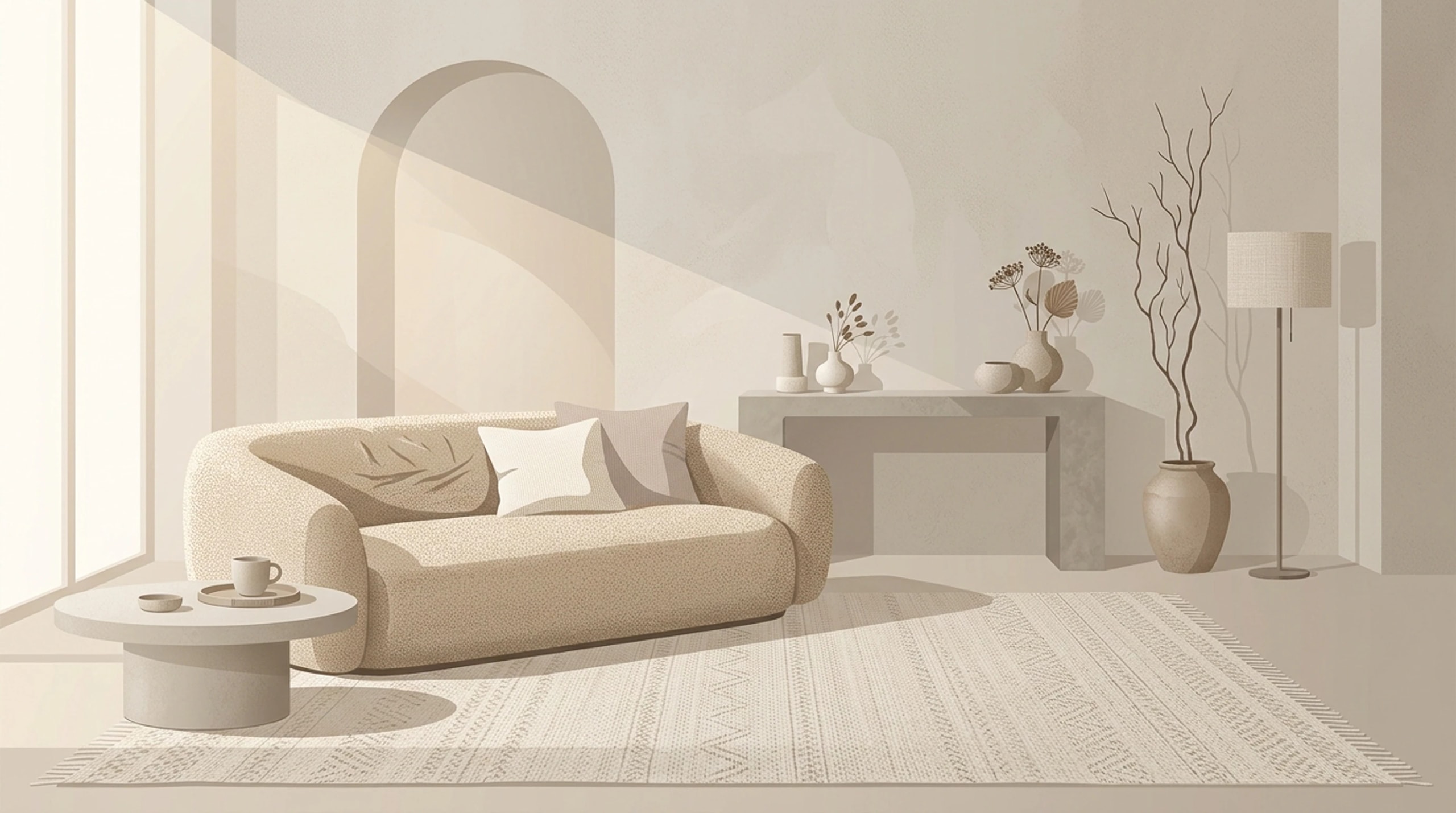
- Large-scale patterns feel calm and bold. They suit big rooms and make small rooms feel generous when the colors are soft.
- Small-scale patterns read as texture from a distance and hide wear well. They suit busy areas.
- Mixing patterns: vary the scale. A large geometric rug looks good with small-print cushions and a medium-width striped throw, as long as they share a color.
If you are unsure, hold a sample against your sofa and view it from across the room, not just up close.
Choosing colors
- Neutral with one accent: cream and charcoal geometrics suit almost any home.
- Warm palettes: rust, mustard and olive feel cozy and pair well with wood.
- Cool palettes: blue, sage and gray are restful and good for bedrooms.
- Bright palettes: use them in rooms that are otherwise plain.
Where to use each pattern
- Living room: a large geometric or abstract rug under the seating area.
- Dining room: a geometric or small-scale pattern that hides spills. See rug size for a dining table.
- Bedroom: a soft abstract or tonal stripe for a calm feel.
- Hallway: a striped or geometric runner that guides the eye.
- Home office: a lively abstract to add energy to a small space.
Materials and construction
- Wool holds crisp geometric lines and lasts for years. Read our wool rug guide.
- Flatweaves show stripes and geometry well and are thin and easy to move.
- Jute and natural fibers work best for textured, low-contrast patterns. See our jute rug guide.
- Hand-tufted rugs often carry abstract designs at a lower price than hand-knotted pieces. Our guide to handmade vs machine-made rugs explains the differences.
Sizing and placement
A bolder pattern needs a rug large enough to anchor the furniture, so the design reads as a deliberate feature and not a small island. Use our rug size guide and our guide to choosing a living room rug for exact dimensions. Add a felt and rubber rug pad to keep the pattern flat and straight.
Frequently asked questions
Do geometric rugs go out of style? Classic shapes such as diamonds, stripes and trellis designs have stayed popular for generations. Lower-contrast versions in neutral colors age best.
Can you mix a striped rug with other patterns? Yes. Keep the scales different, such as wide stripes with small prints, and repeat at least one color.
Do striped rugs make a room look bigger? They can. Stripes along the length of a room make it look longer, and stripes across make it look wider.
What goes with an abstract rug? Keep furniture and walls simple and pull two or three colors from the rug into cushions or art.
Are patterned rugs better at hiding dirt? Generally yes. Busy or mid-tone patterns hide crumbs and small marks better than plain light rugs.
The Kindred Weave editors. We write practical guides to handmade rugs and tapestries. Learn more about us.