Home / Blog / Buying Guide
Small, Custom and Unique Area Rugs: How to Find One That Fits Your Space
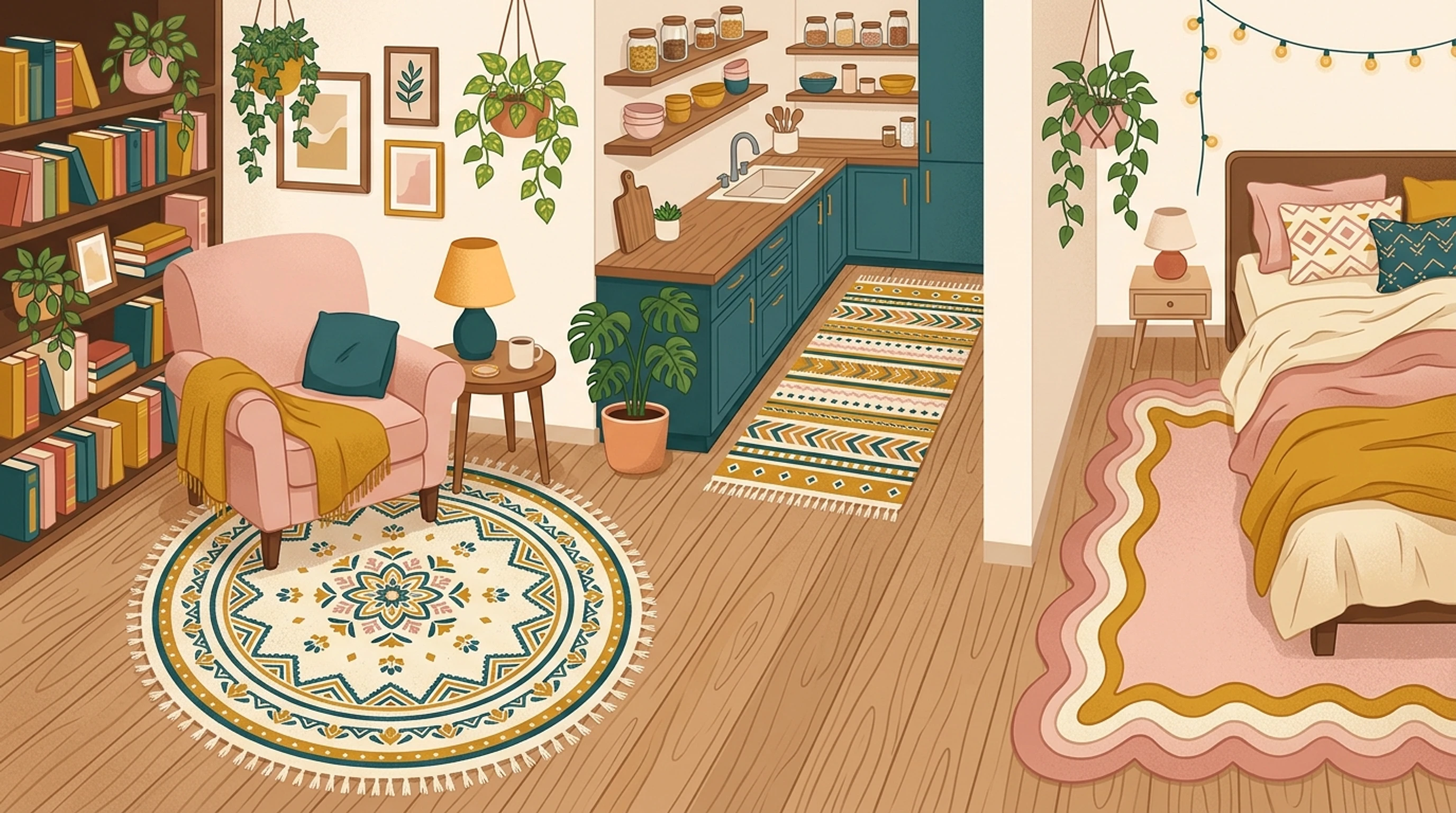
Not every room fits a standard rug. A small bathroom, a deep hallway, an alcove beside a bed or a round dining nook can leave you with a choice between a rug that is too big and one that looks lost. A small, custom or one-of-a-kind rug solves that, and it is often less work than you think.
Start with the room, not the catalog
Measure the floor you have, then decide what the rug needs to do.
- Leave a border. In most rooms, keep 12 to 18 inches of bare floor around the rug.
- Anchor the furniture. Front legs of seating and the whole bed should rest on the rug where possible.
- Match the shape to the room. Round rugs suit round tables and cozy corners. Runners suit long, narrow spaces.
Our rug size guide lists the standard sizes and where each one works.
Small rugs that still make a statement
A small rug is not a doormat if you choose it well.
- Pick a bold pattern. A small, busy rug reads as a feature piece.
- Use a runner for narrow spaces. A runner suits a kitchen, hallway or the foot of a bed.
- Layer it. A small rug on top of a larger neutral base adds depth. See how to layer rugs.
If your room is tight on space, a rug pad helps a small rug stay flat and safe.
When a custom rug makes sense
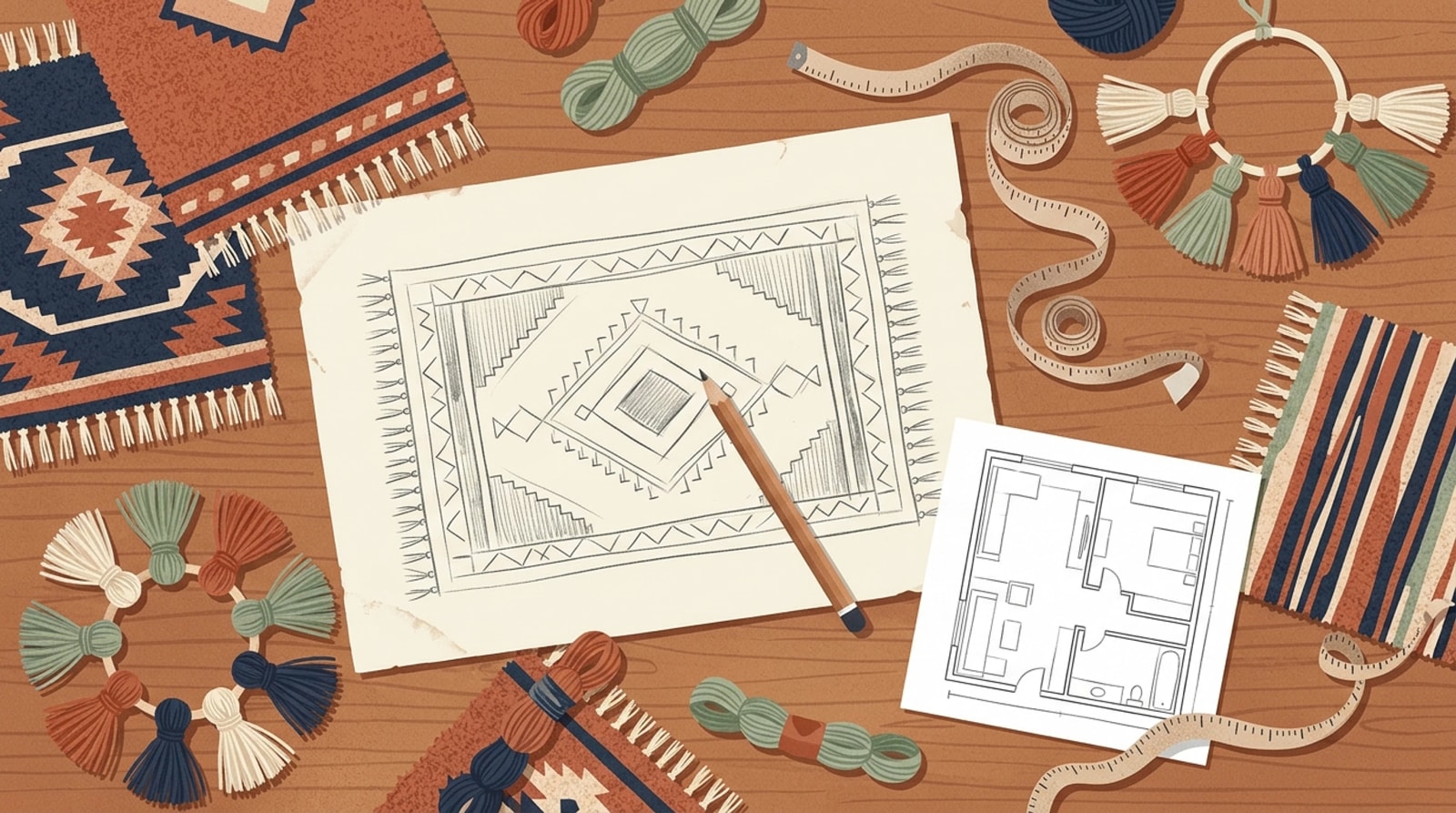
Custom rugs are worth it when a standard size simply does not fit: an unusual floor shape, a specific color to match a room or a rug that must sit under built-in furniture.
Before you commission one, ask the maker:
- Which construction and fiber? Hand-knotted wool lasts longest. Hand-tufted and flatweave options cost less.
- What is the lead time and deposit? Custom rugs often take weeks or months.
- Can you send a sample or a digital mock-up? Colors shift between screen and floor, so check in your room's light.
- What is the return policy? Custom orders are often final.
Our handmade vs machine-made guide explains what to look for in construction.
Unique finds: vintage and one-of-a-kind rugs
A vintage or handmade one-off has character that a new rug rarely matches. Check the back for hand-knotting, look for even edges and test for odor before buying. Our handwoven and fair trade rugs guide covers how to judge a maker's work.
Care for a one-of-a-kind piece
Unique rugs often need more care than mass-produced ones. Vacuum gently, rotate them regularly and treat stains quickly. For wool, see how to clean a wool rug. For jute, see how to clean a jute rug.
The Kindred Weave editors. We write practical guides to handmade rugs and tapestries. Learn more about us.