Behind every handmade rug is a person, or a team, who spent days or weeks making it. Words such as handwoven, handmade and fair trade appear on rug labels all the time, but they do not all mean the same thing, and not every label can be trusted. This guide explains what each term means, how handwoven rugs are made and how to check that a rug really is what the seller says.
Handwoven, handmade, hand-knotted and hand-tufted
These terms are used loosely, so it helps to know what they describe.
- Handwoven: made on a loom operated by hand. The weaver passes the weft threads through the warp. Flatweaves such as kilims and dhurries are typically handwoven.
- Hand-knotted: each knot is tied by hand around the warp threads to form a pile. This is the most labor-intensive method and the one used for traditional Persian and Moroccan rugs.
- Handmade: a broad term that covers any rug made with significant hand work, including hand-tufted rugs.
- Hand-tufted: yarn is punched into a backing with a handheld tool and then glued and finished. It is quicker and cheaper than knotting, but also less durable.
Our guide to handmade vs machine-made rugs shows how to tell them apart.
How a handwoven rug is made
- Wool is sheared, cleaned and spun into yarn, or cotton and other fibers are prepared.
- Yarn is dyed, with natural or synthetic dyes, and dried.
- The loom is set up with the warp threads that form the rug's structure.
- The weaver builds the rug row by row, following a design from memory, a drawing or a pattern.
- The rug is finished: loose ends are secured, the surface is trimmed or washed, and the fringe is formed.
A medium-sized rug can take weeks, and fine or large rugs can take months. That time is the main reason handwoven rugs cost more.
Who makes handwoven rugs?
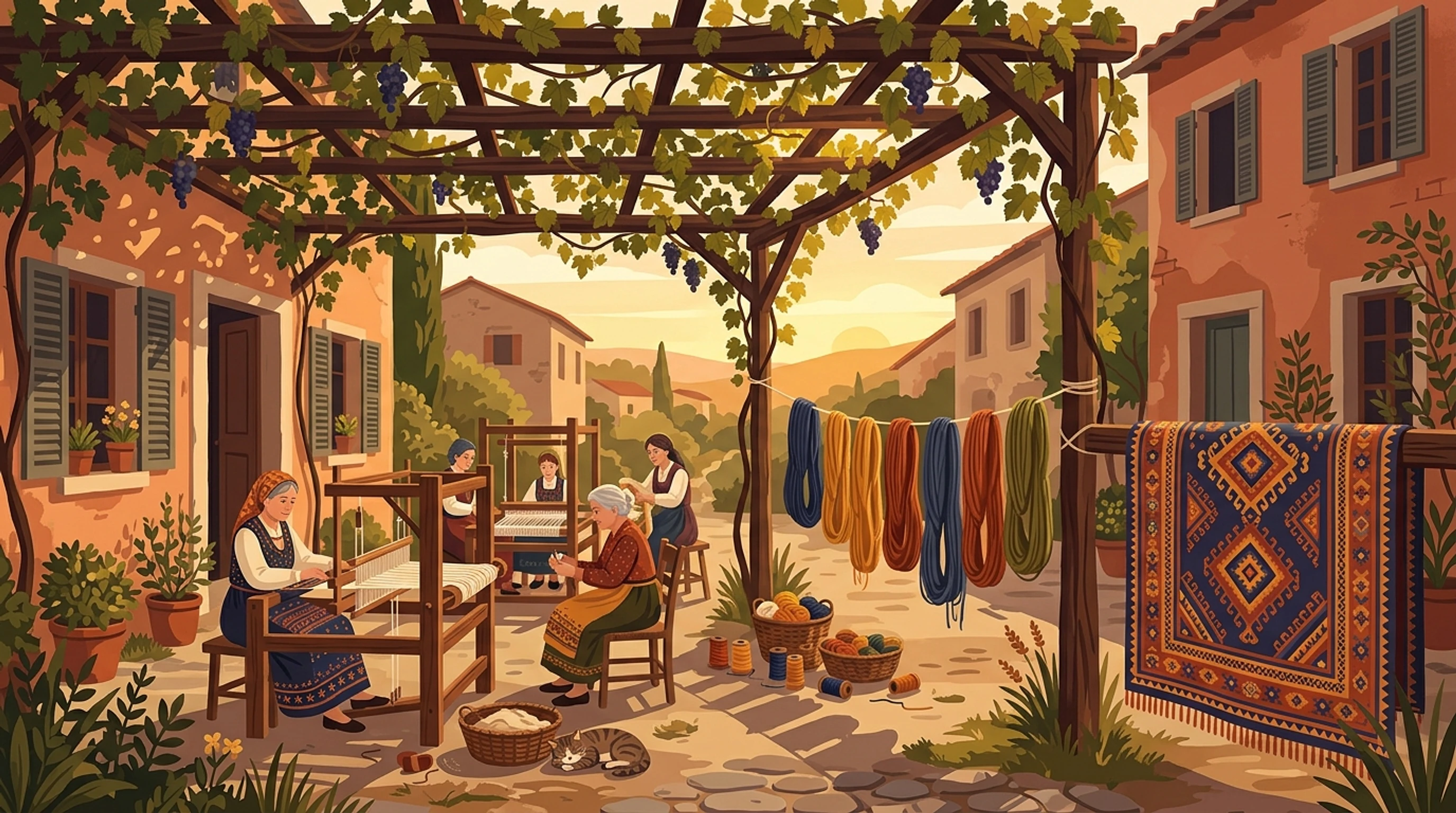
Handwoven rugs are produced all over the world, often in regions with long weaving traditions. Weavers may work:
- At home, within a family, often passing skills from one generation to the next
- In cooperatives, which share looms, materials and market access
- In workshops and studios, where several weavers work together
Weaving is often a main source of income for these households, so the way a rug is bought and paid for matters a great deal.
What does fair trade mean?
Fair trade is a set of principles that aim to give producers a better and more secure deal. In practice, fair-trade rugs are meant to reflect:
- Fair wages and prices that cover living costs
- Safe, healthy working conditions
- No child or forced labor
- Transparency about the supply chain and who made the product
- Long-term, respectful relationships between buyers and producers
- Environmental care, including responsible dyes and materials
Certifications and labels to look for
Because "fair trade" can be used loosely, independent certification helps. Examples of schemes that apply to rugs and textiles include:
- GoodWeave: a certification focused on ending child labor in the rug industry, with inspections and a label on certified rugs.
- Fair Trade Certified and Fairtrade schemes: certify that products meet fair-trade standards for pay and conditions. Availability for rugs varies.
- World Fair Trade Organization (WFTO): a membership body whose members are assessed against fair-trade principles.
Check the name of the certifier on the label and look it up. A genuine certification can be verified on the certifier's own website.
How to check a seller's claims
Ask these questions before you buy:
- Where and by whom was the rug made? A good seller can name the region, workshop or cooperative.
- How was it made? Handwoven, hand-knotted or tufted should be stated clearly.
- What is it made of? Fibers and dyes should be specified.
- Is it independently certified? Ask for the certification and verify it.
- How are weavers paid? A seller that works with a cooperative or a certified partner can usually explain.
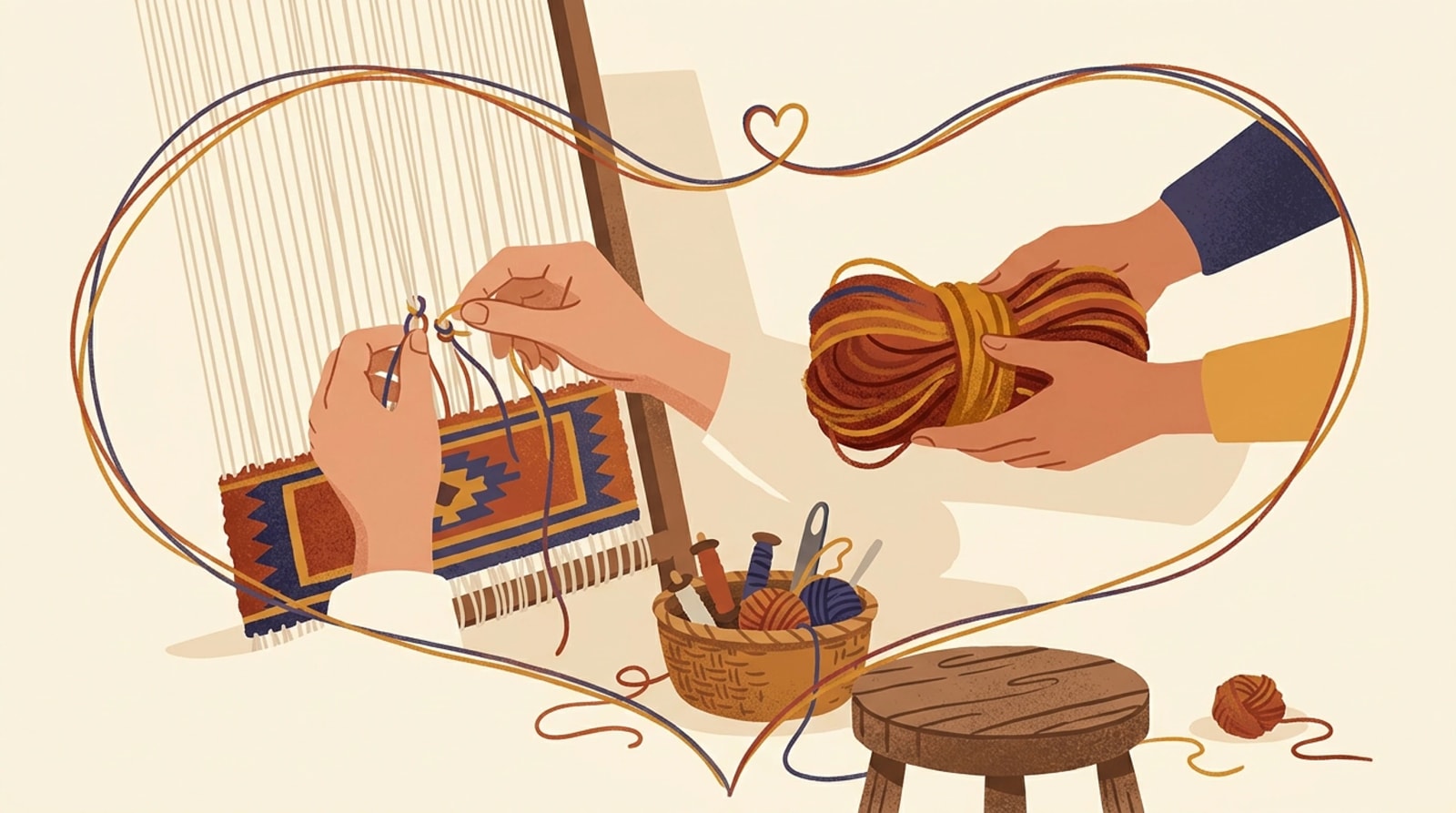
- Can they show the process? Photos or stories from the workshop are a good sign.
Red flags
- Vague claims such as "ethically sourced" with no detail
- Prices far below those of comparable handmade rugs
- No information about origin or materials
- Stock photos of weavers that are not connected to the seller
Why handwoven and fair-trade rugs cost more
You are paying for time, skill, materials and fair pay. A rug that costs very little cannot have been made by hand under fair conditions. Handmade rugs also tend to last longer and can be repaired, so the cost per year of use is often lower than it first looks. Our guide to choosing a quality area rug explains how to judge value.
Caring for a handwoven rug
Most handwoven rugs are wool or cotton and benefit from simple care.
- Vacuum with suction only and avoid the fringe.
- Use a felt and rubber rug pad.
- Blot spills and follow our guide to cleaning a wool rug.
- Rotate the rug and keep it out of strong sun.
Frequently asked questions
What does handwoven mean for a rug? The rug was woven on a loom operated by hand, rather than by a power loom.
Is handwoven the same as hand-knotted? No. Handwoven rugs are woven flat, while hand-knotted rugs have a pile created by tying individual knots.
What does fair trade mean for rugs? It means weavers receive fair pay and work in safe conditions, without child or forced labor, and that the supply chain is transparent.
How can I tell if a rug is fair trade? Look for an independent certification such as GoodWeave, check the certifier's website and ask the seller who made the rug.
Why are handwoven rugs expensive? A rug can take weeks or months to weave, and the price reflects the time, skill and materials involved.
Related guides
The Kindred Weave editors. We write practical guides to handmade rugs and tapestries. Learn more about us.