Moroccan rugs are among the most recognizable handmade textiles in the world. They are woven by Berber (Amazigh) communities across Morocco, and each region has its own materials, colors and patterns. Whether you want a soft cream rug for a calm bedroom or a bold, colorful piece to energize a room, there is a Moroccan style for it. This guide explains the main types, how to choose a good one and how to use it at home.
The main types of Moroccan rugs
Beni Ourain
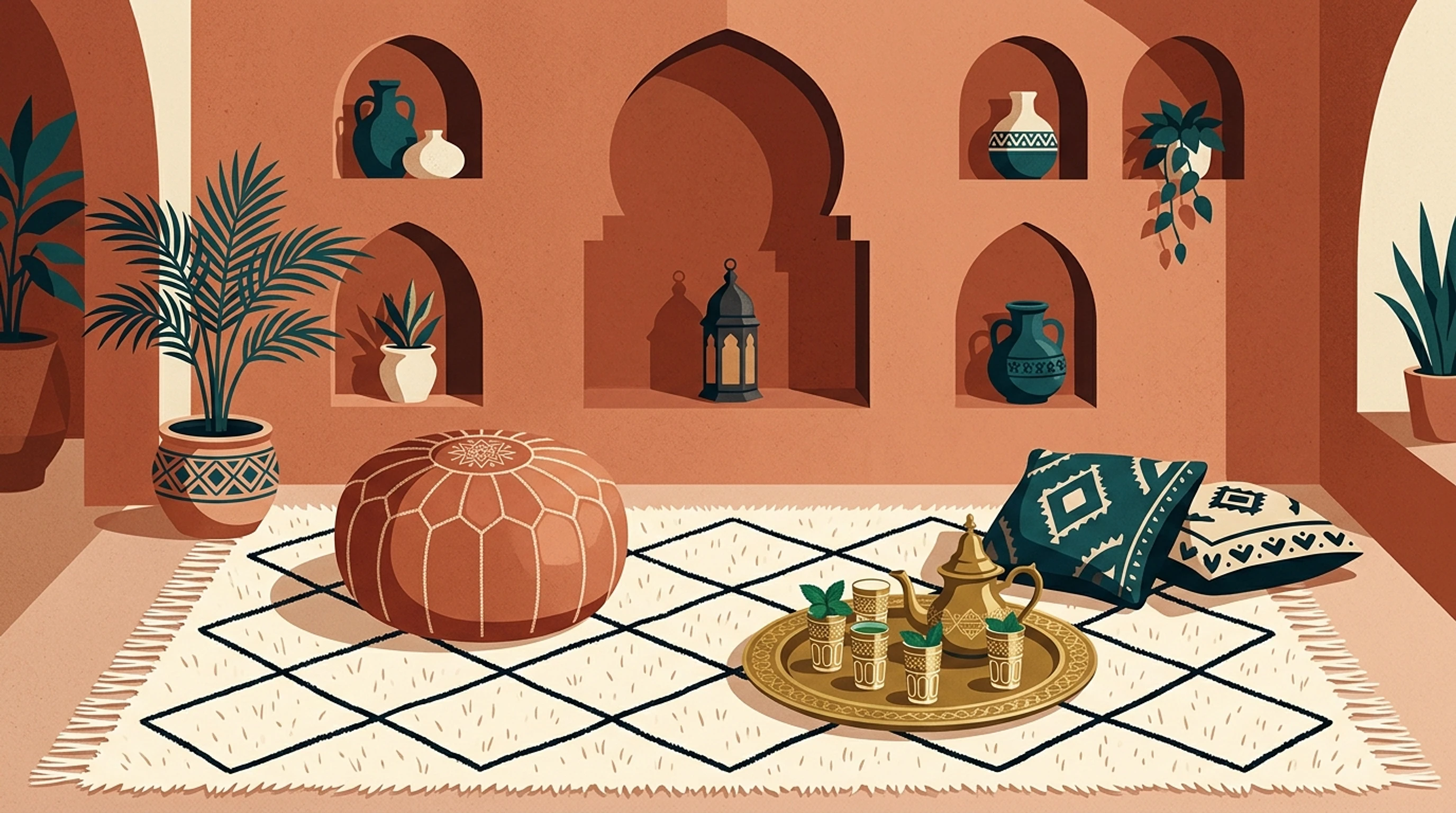
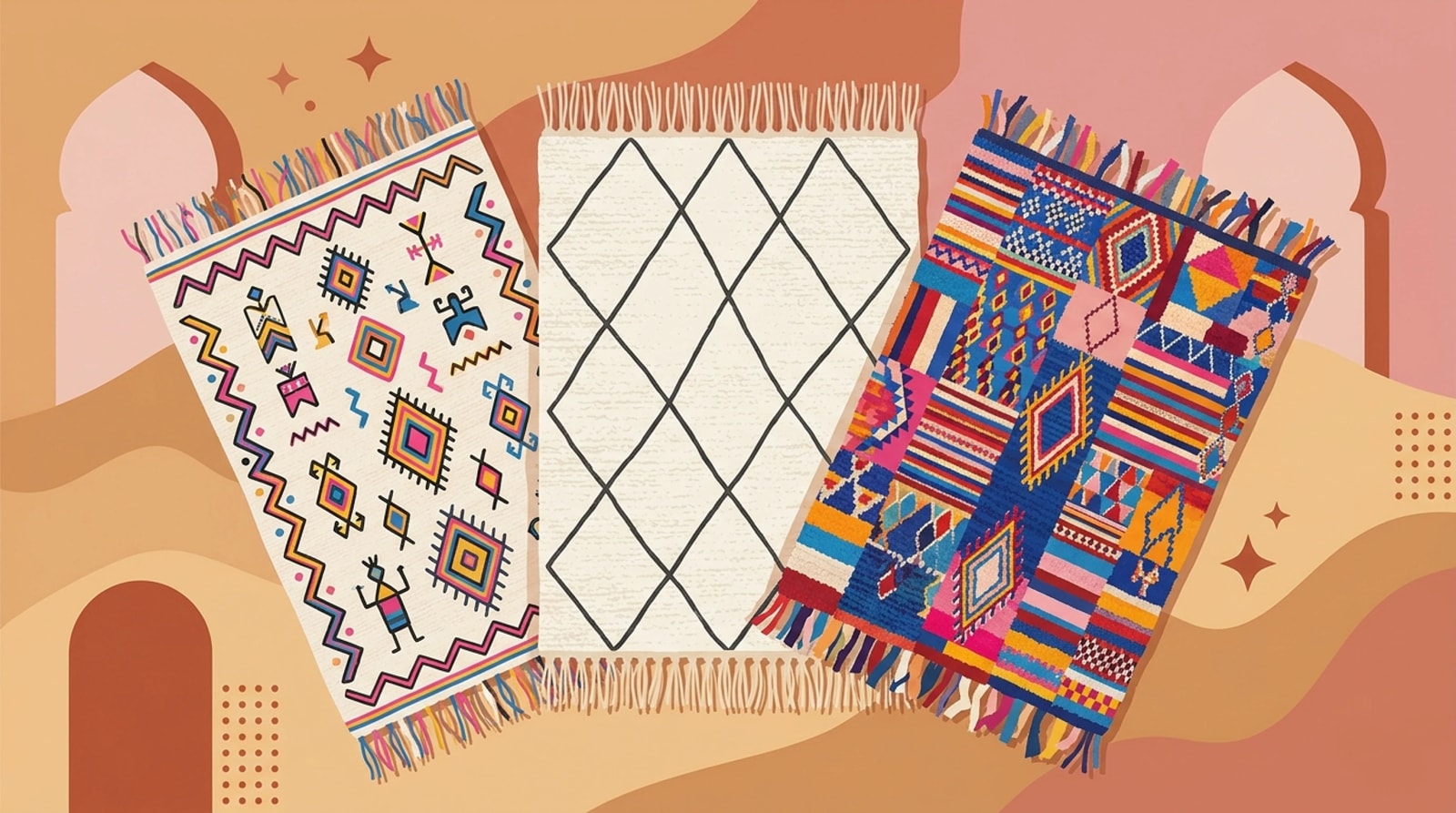
The most famous style. Beni Ourain rugs come from the Middle Atlas mountains and are traditionally hand-knotted from thick, undyed wool in creamy white. Black or dark brown lines form a simple lattice of diamonds, often with an irregular, hand-drawn look. The pile is deep and soft, which makes them popular for bedrooms and living rooms. Their minimal design suits modern, Scandinavian and neutral interiors.
Boucherouite
Boucherouite rugs are made from scraps of recycled fabric and yarn knotted into a flat, textured surface. The result is a bright, patchwork-style rug with colors that clash happily. Each one is completely unique, which makes it a great accent piece for a kitchen, hallway or bohemian space.
Azilal
Azilal rugs come from the High Atlas region. They usually have a cream background with abstract, expressive designs in vivid colors, such as lines, zigzags and symbols that feel almost like paintings. Weavers often improvise the design, so no two are alike. They suit contemporary and eclectic rooms.
Beni Mrirt
Similar to the Beni Ourain but often shaggier and plusher, Beni Mrirt rugs are typically cream wool with soft, muted accents of pink, orange or gray. They are very cozy and best in low-traffic rooms such as bedrooms.
Flatwoven Moroccan rugs
Hanbel and other flatweaves have no pile, so they are lighter, easier to clean and a good option for dining rooms and entryways. They often feature stripes and geometric bands. To understand how knotted and machine-made construction differ, read our guide to handmade vs machine-made rugs.
Tribal motifs and what they mean
Many Moroccan rugs use traditional Berber symbols, and these tribal patterns are part of their appeal. Common motifs include diamonds, zigzags, crosses and lines. Their meanings are passed down within communities and vary by region, so treat any single interpretation as a tradition rather than a rule. Diamonds, for example, are often described as symbols of protection or fertility, while zigzags are sometimes said to represent water or mountains. The pleasure of the rug is in the irregular, hand-drawn quality of the designs.
How to choose a good Moroccan rug
- Check the back. In a handmade rug the pattern is visible on the reverse and slightly irregular. Perfectly uniform backs usually signal a machine-made copy.
- Feel the wool. Authentic Beni Ourain wool is thick, lofty and a little lanolin-rich. Very slick or stiff fibers suggest synthetic blends.
- Look for irregularity. Slightly wobbly lines, uneven edges and subtle shifts in color are signs of handwork.
- Ask about origin and materials. A reputable seller can tell you the region, the wool type and whether the rug is hand-knotted or flat-woven.
- Match the pile to the room. Deep pile is wonderful in a bedroom, but a flatweave is easier to maintain in busy areas.
- Mind the size. Choose a rug large enough to anchor your furniture. Use our rug size guide to pick the right dimensions.
How to style a Moroccan rug
- Keep the rest neutral with a Beni Ourain. The rug becomes the texture in the room, so pair it with linen, wood and soft whites.
- Let a Boucherouite lead. Use plain furniture and walls so the rug's color is the star.
- Layer with other textures. A cream rug works beautifully beside a jute rug or under a leather pouf and a woven basket.
- Mix patterns with care. Pair bold Moroccan geometry with solids and one or two small-scale patterns. Our guide to choosing rug colors and patterns covers this in more detail.
- Hang a smaller piece on the wall. Flatweaves and small rugs can double as wall hangings above a bed or sofa.
Where to use them
- Bedroom: a thick Beni Ourain or Beni Mrirt beside or under the bed.
- Living room: under a sofa and coffee table, with the front legs on the rug.
- Hallway or entryway: a flatweave or Boucherouite that hides dirt.
- Dining room: a low-pile or flatwoven option, since thick pile traps crumbs.
- Home office: a small colorful piece to add personality.
Caring for a Moroccan rug
Most Moroccan rugs are wool, so the usual wool care applies.
- Vacuum with suction only, avoiding the beater bar, and expect some shedding in the first months.
- Blot spills at once and avoid soaking. Read our guide to cleaning a wool rug.
- Use a felt and rubber rug pad for grip and cushioning.
- Rotate the rug a few times a year, and keep it out of direct sun to protect the wool.
- Have a specialist clean thick-pile rugs every one to three years.
Frequently asked questions
What is a Beni Ourain rug? A hand-knotted rug from the Middle Atlas mountains in Morocco, traditionally made of undyed cream wool with dark diamond lines.
What is a Boucherouite rug? A colorful rug made from recycled scraps of fabric and yarn, with a patchwork look and a flat, textured surface.
Are Moroccan rugs good for living rooms? Yes. Choose a medium pile or a flatweave for high-traffic areas, and keep very plush rugs for quieter rooms.
Do Moroccan rugs shed? Thick wool rugs usually shed some loose fibers in the first months. Regular vacuuming reduces this over time.
How can I tell if a Moroccan rug is authentic? Look for an irregular pattern that is visible on the back, thick natural wool and small imperfections that show it was made by hand.
Related guides
The Kindred Weave editors. We write practical guides to handmade rugs and tapestries. Learn more about us.