A colorful rug is the quickest way to give a room energy. It can warm a white space, tie together mismatched furniture or become the artwork of the whole room. Many people avoid bold color because they worry about clashing. The good news is that a handful of simple principles make it easy to choose and style a colorful rug with confidence.
Start with the role the rug will play
Decide first whether the rug should be the star or a supporting player.
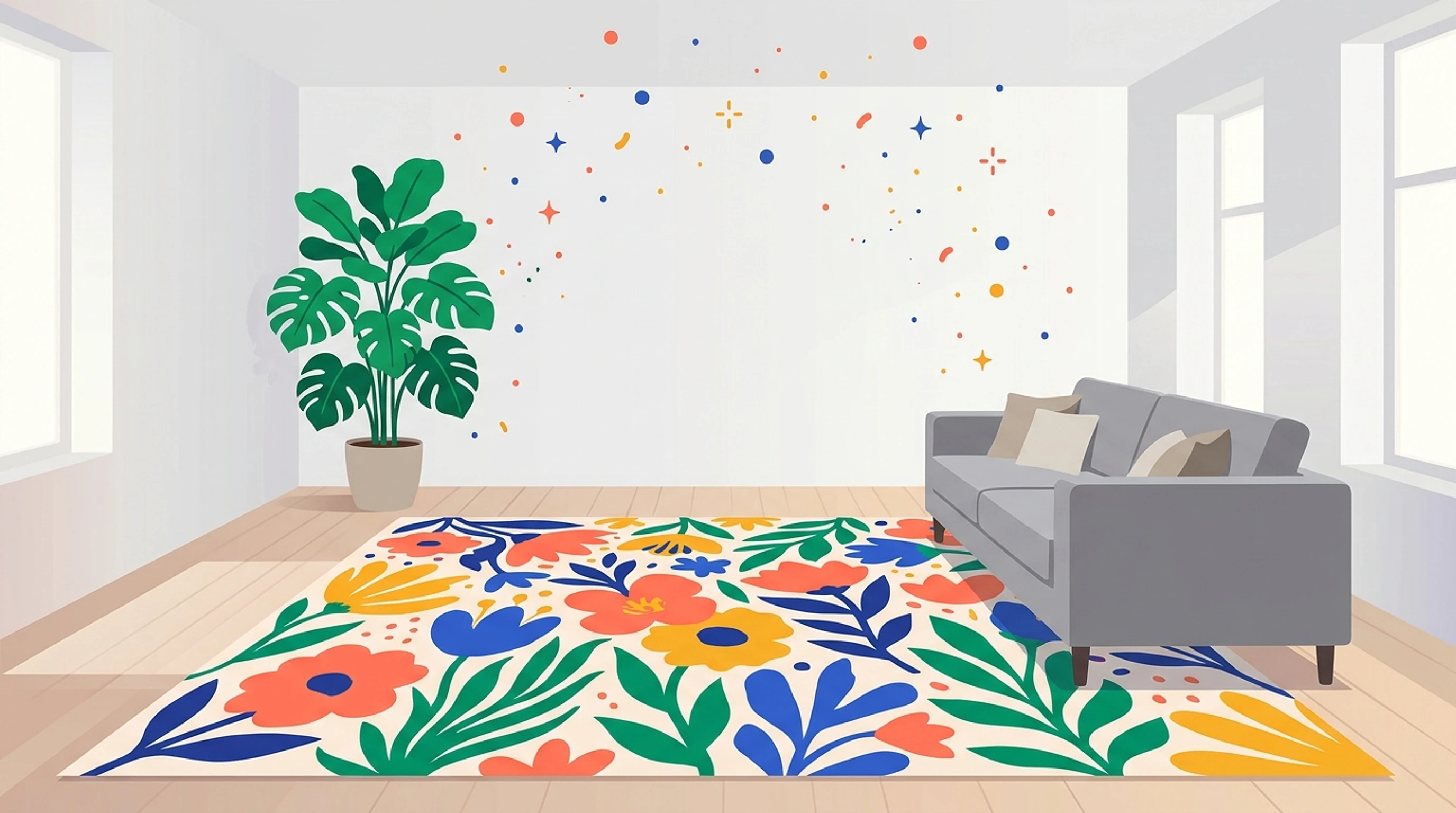
- The star: a bold, multicolored rug in a room with calm walls and plain furniture. Keep everything else quiet and let the rug lead.
- The supporting player: a rug with one or two muted colors in a room that already has color from sofas, curtains or art.
Trying to make everything bold at once is where most clashing comes from.
Color harmony in plain language
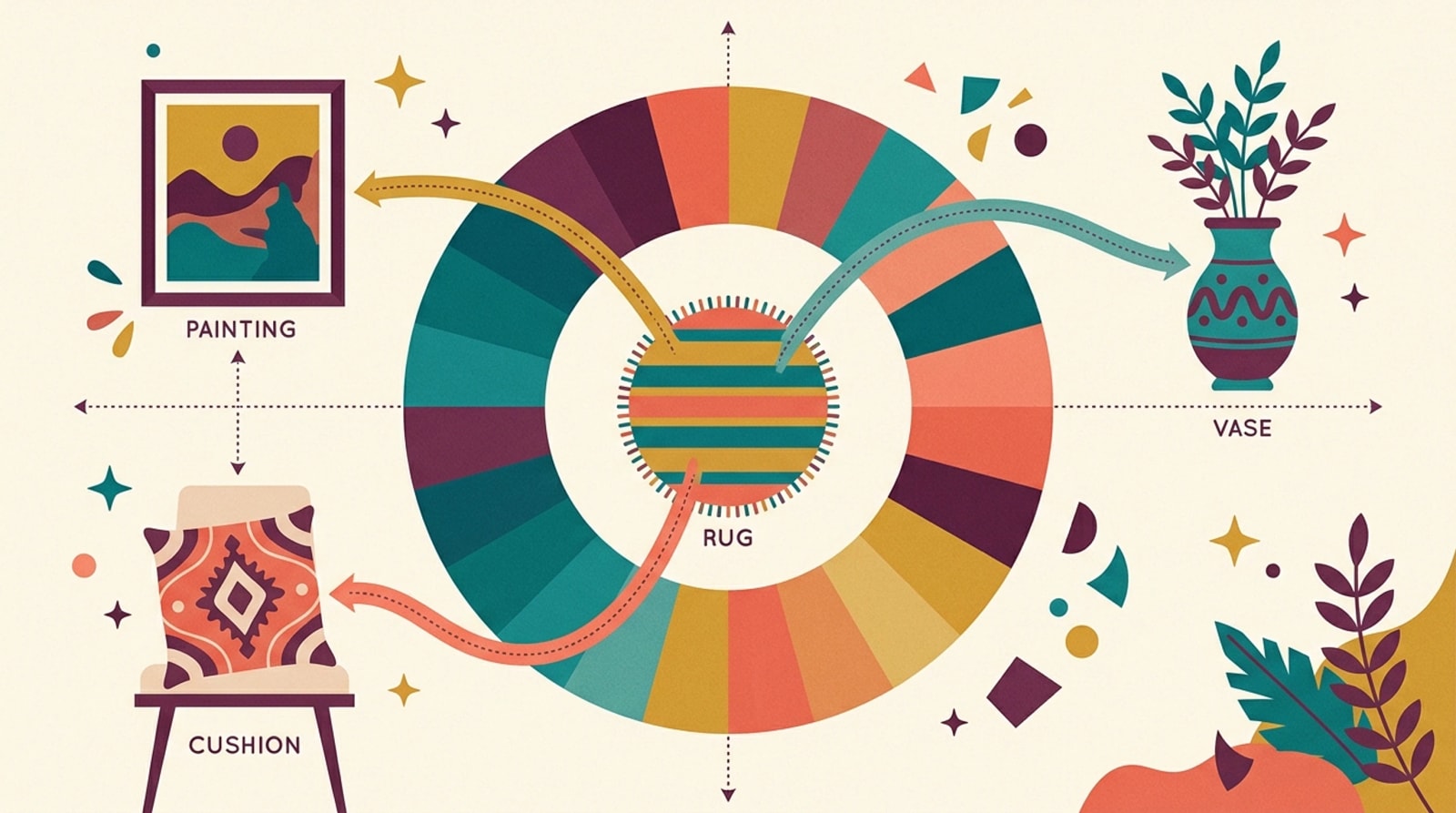
A color wheel helps you see which colors naturally work together.
- Analogous colors sit next to each other, such as terracotta, orange and gold. They feel warm and harmonious.
- Complementary colors sit opposite, such as blue and orange. They create lively contrast.
- Triadic colors are evenly spread around the wheel, such as teal, coral and mustard. They feel playful and balanced.
- Monochrome uses shades of one color, such as a range of blues. It is calm and sophisticated.
A well-designed colorful rug usually follows one of these ideas, which is why it looks cohesive even with many shades.
The 60-30-10 rule
This classic decorating rule keeps color in proportion:
- 60% dominant color, usually walls and large furniture
- 30% secondary color, such as upholstery or curtains
- 10% accent color, such as cushions, art and accessories
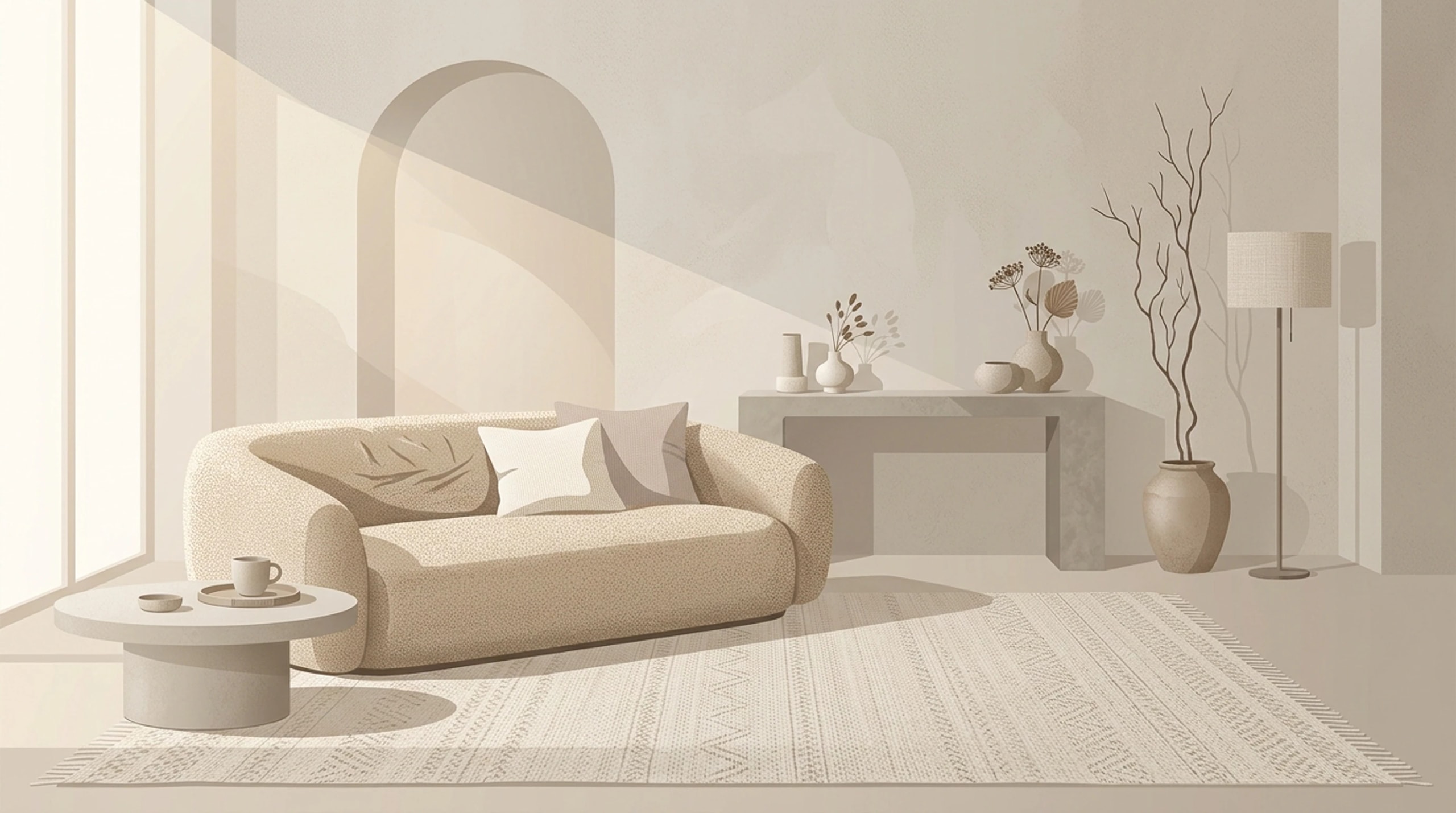
A colorful rug can fill the 30% or the 10%, depending on its size and boldness. In a neutral room, a large bright rug often becomes the 30% on its own.
How to pick a rug that works with your room
- Look at what you already have. Notice the colors in your sofa, curtains, art and flooring.
- Find a shared color. Choose a rug that repeats at least one of those colors, even in a small amount.
- Limit the palette. Aim for no more than three or four main colors in the rug.
- Check the undertones. A warm yellow-orange rug will clash with a very cool pink wall, for example.
- Test a sample in your room in natural daylight and in the evening.
- Decide on contrast. High contrast is lively, while softer blends are easier to live with.
How to repeat colors around the room
Once you have the rug, echo its colors. The color wheel illustration in this guide shows the idea: pick three colors from the rug and repeat them in one cushion, one vase and one piece of art, so the rug feels connected to the rest of the room. Repeating colors in odd numbers, and in different sizes and materials, looks natural and not matched.
Mixing a colorful rug with other patterns
You can absolutely combine patterns, as long as you follow a few rules.
- Vary the scale. A large-pattern rug works with small-scale cushions and a medium-scale throw.
- Share a color. One repeated color ties different patterns together.
- Mix pattern types. Pair a geometric rug with organic shapes, such as a floral cushion or a macrame wall hanging.
- Give your eyes a rest. Add plain surfaces, such as a solid sofa or painted wall, between patterns.
Rug and wall hanging together
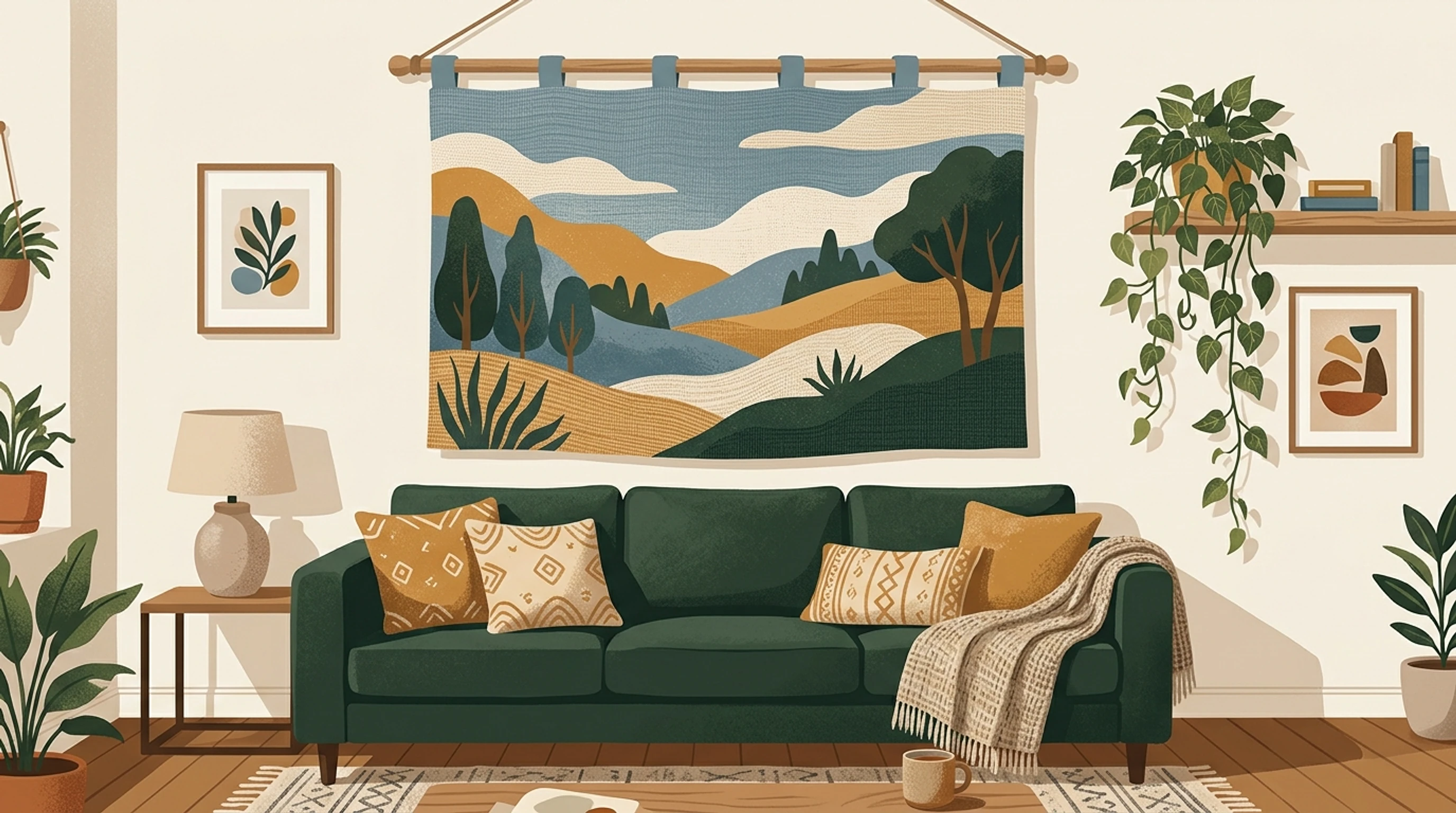
A rug and a wall hanging can both carry pattern if they differ in kind and share a color. Try a bold geometric rug with a soft, cream macrame piece, or a colorful kilim with a simple woven tapestry. Choose the hanging in a color already present in the rug. Our guides to how to hang a tapestry and geometric, abstract and striped rugs have more ideas.
Where colorful rugs work best
- Living room: a bold rug under neutral seating becomes the centerpiece. See our guide to choosing a living room rug.
- Bedroom: choose softer blends of color for a calm effect.
- Entryway and hallway: a bright runner makes a cheerful first impression. See entryway and hallway rugs.
- Kitchen and dining areas: busy patterns hide crumbs and spills.
- Children's rooms and home offices: playful color adds energy.
Styles that use bold color
- Moroccan Boucherouite and Azilal rugs have vivid, expressive color. See our Moroccan rug guide.
- Kilims use strong geometric color. Read about kilim and Persian-style rugs.
- Boho rugs layer warm colors and textures. See our guide to bohemian rugs and boho decor.
- Mid-century rugs use mustard, teal and burnt orange. See mid-century modern rugs.
Care for colorful rugs
- Keep the rug out of direct sunlight, which fades dyes over time.
- Rotate it every few months so the color wears evenly.
- Test any cleaner on a hidden corner, and blot spills rather than rubbing. Our guide to cleaning a wool rug explains safe methods.
- Use a felt and rubber rug pad to protect the fibers.
Common mistakes
- Choosing a rug before the room, so nothing relates to it.
- Too many bold elements, with no calm area for the eye.
- Ignoring undertones, which makes colors look off next to each other.
- A rug that is too small, which makes bold color look like a patch. Check our rug size guide.
Frequently asked questions
How do I choose a colorful rug? Pick one that repeats a color from your room, limit it to three or four main colors and test a sample in your own light.
Can a colorful rug work in a small room? Yes. Choose softer blends or a pattern with plenty of light background so it does not feel heavy.
How do you mix patterns with a rug and a wall hanging? Vary the scale and type of pattern, and make sure both share at least one color.
What is the 60-30-10 rule? A guide to proportion: 60 percent dominant color, 30 percent secondary and 10 percent accent.
Will a bright rug fade? Direct sun can fade dyes over time. Position the rug away from strong sunlight and rotate it regularly.
The Kindred Weave editors. We write practical guides to handmade rugs and tapestries. Learn more about us.